



Indonesia shifts disaster policy toward prevention
JAKARTA, thekabarnews.com—Indonesia is moving its disaster-management policy away from a predominantly emergency-response model. It is shifting toward long-term risk reduction as climate threats...

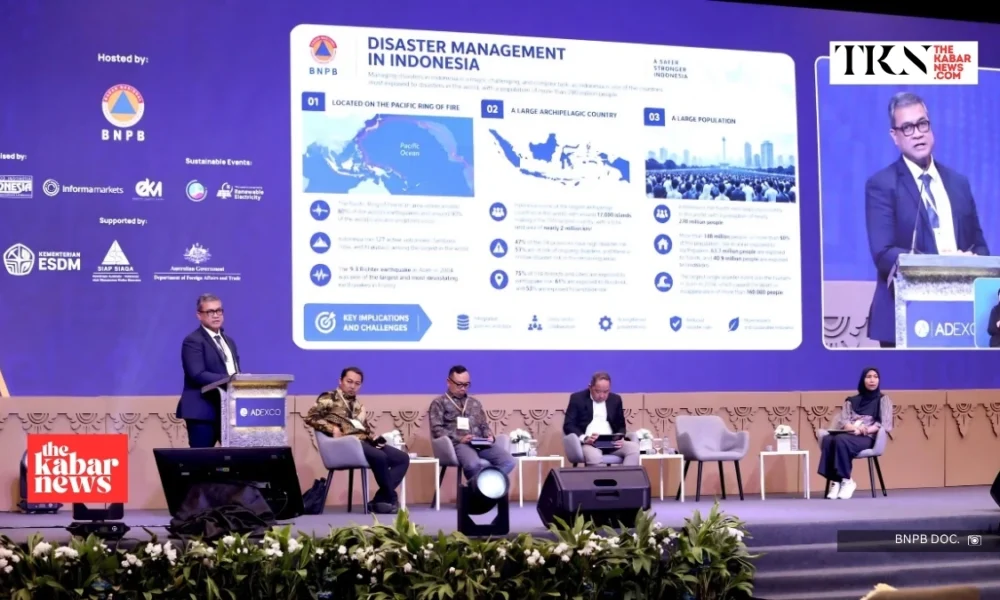
JAKARTA, thekabarnews.com—Indonesia is moving its disaster-management policy away from a predominantly emergency-response model. It is shifting toward long-term risk reduction as climate threats place greater pressure on communities and public finances.
National Disaster Mitigation Agency (BNPB) deputy for system and strategy Raditya Jati outlined the shift during the Third Global Forum for Sustainable Resilience in Jakarta on Thursday, September 10.
The two-day forum brought together government representatives and other stakeholders to discuss how Indonesia can integrate disaster resilience into development.
Raditya said development and spatial-planning decisions often determine the scale of disaster losses. A natural hazard becomes a disaster when it reaches exposed communities, infrastructure or economic assets that lack adequate protection.
Indonesia must therefore manage climate and disaster risks within the same policy framework, he said. Treating them separately could allow one disruption to trigger further social and economic consequences.
“Climate finance, disaster risk finance and development finance can be better connected to support long-term resilience that prioritizes prevention,” Raditya said in an official BNPB statement.
The government’s approach combines adaptation measures with efforts to reduce greenhouse gas emissions. Adaptation programs seek to strengthen food and water security while protecting health services and infrastructure.
Community programs such as the Climate Village Program encourage residents to harvest rainwater and use household land for food production.
Indonesia’s mitigation policy includes the forestry and other land-use sectors. The government estimates this sector could contribute up to 60 percent of the country’s potential emissions reductions.
Presidential Regulation No. 110/2025 governs carbon-pricing instruments. It also handles the preparation of Indonesia’s nationally determined contribution and the monitoring of national greenhouse gas emissions.
Indonesia submitted its second NDC to the United Nations Framework Convention on Climate Change in October 2025. The document sets emissions targets toward 2030 and 2035.
The Paris Agreement’s 1.5-degree target refers to efforts to limit long-term global warming above pre-industrial levels. This target is different from a separate temperature deadline for 2030.
The policy shift also rests on Presidential Regulation No. 87/2020, which established Indonesia’s Disaster Management Master Plan for 2020–2044.
The 25-year framework guides ministries, security agencies and regional governments through five-year implementation stages.
The question of financing remains very acute. Indonesia ranks third in the WorldRiskReport 2025 after the Philippines and India. The report assessed 193 countries based on their exposure and vulnerability to disasters.
The Finance Ministry estimates that calamities cause economic losses of Rp22.8 trillion annually.
The government usually allocates around Rp5 trillion a year for its disaster reserve. This means there is a shortfall of around Rp17.8 trillion.
The 2026 reserve can still increase when emergency needs require additional funding.
To strengthen fiscal protection, the government has developed its Disaster Risk Financing and Insurance strategy. It has also formed the Pooling Fund for Disasters.
The fund can combine resources from the national budget, regional budgets and other lawful sources. These resources support preparedness, emergency operations and recovery.
“This is not an abstract challenge,” Raditya said.
“This is a challenge that determines whether resilience policy truly changes people’s lives.”
Indonesia’s policy framework now places prevention at the center of disaster governance.
Its effectiveness, however, will depend on whether national and regional authorities can turn the plans into coordinated programs. These programs must be backed by sustainable financing.






No Comment! Be the first one.