




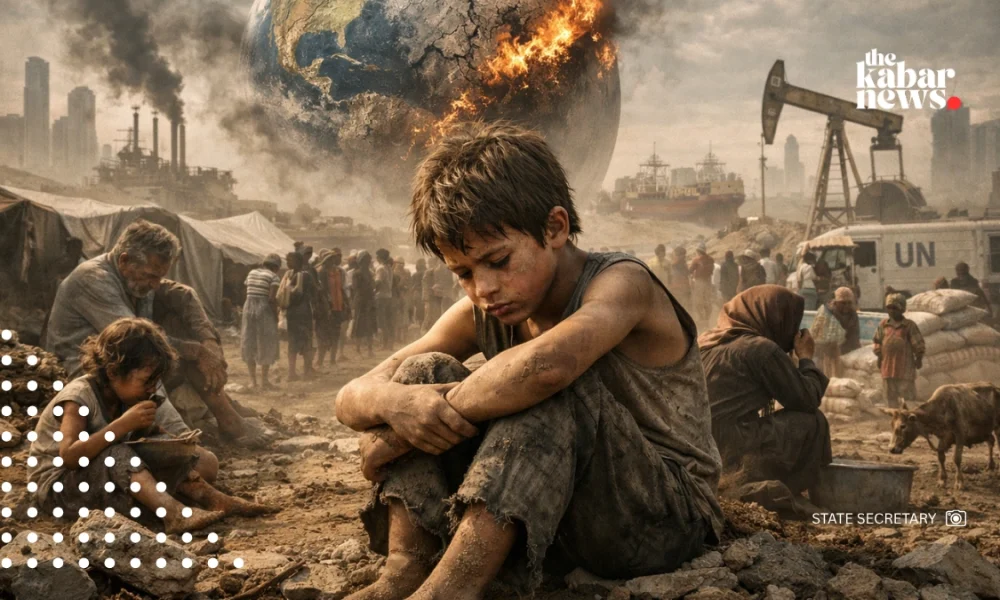
Thekabarnews.com—The United Nations Development Programme (UNDP) has released a new report. The report predicts the ongoing crisis in Iran might push well over 32 million people around the world into poverty.
The agency warned that the world economy is going through a “triple shock.” Oil prices are going up, food costs are going up, and economic growth is slowing down.
These forces working together will probably hit impoverished countries the hardest, possibly reversing years of work to lower poverty.
UNDP officials stated that global markets are already feeling the impact of the violence, even without a guaranteed truce. Furthermore, they said that the effects on the economy will probably be different in different places. However, the effects might be extremely substantial.
Alexander De Croo, administrator of the UNDP, argued that the situation was a giant setback. This setback affects efforts to make the world a better place.
A conflict like this represents development in reverse. Even if the war stops, a ceasefire is obviously very, very welcome. But the impact is already there,” he said.
The energy markets have suffered the most. Prices have gone up a lot since the US and Israel initially attacked Tehran. Moreover, things became worse when Iran tried to block access to the Strait of Hormuz. The Strait of Hormuz is a key conduit for oil and gas supplies throughout the world.
The issues in the Strait of Hormuz have made consumers more apprehensive about having insufficient energy, which has made the energy markets less stable. Additionally, higher gasoline prices have made transportation and production pricier. This situation is making global inflation worse.
The spike in energy costs has also changed how food is grown and shipped. This shift is because higher fuel prices make it more expensive to farm and ship goods. This has made things considerably harder for individuals with low incomes, especially in nations that depend on imports a lot.
These things could make inequality worse and make life extra challenging for people who are already in a critical situation. Developing economies are most at risk. They usually do not have the money to deal with these kinds of shocks.
The UNDP report makes it obvious that the world needs to work together right away to resolve the problem. Moreover, policymakers are being asked to do things to protect the weak, stabilize the markets, and help the economy get back on its feet.
Long-term volatility might make global supply chains and economic growth even worse if tensions between countries rise. The event highlights how connected today’s economies are, such that troubles in one place can quickly spread to everyone else.
The results are a clear indication that events in the arena of politics can have long-term repercussions on poverty, development, and global stability.

No Comment! Be the first one.