



Indonesia begins nationwide rollout of B50 biodiesel
JAKARTA, thekabarnews.com—Indonesia has entered the full implementation phase of its mandatory B50 biodiesel policy. This policy places a 50-percent biofuel blend at the center of President Prabowo’s...

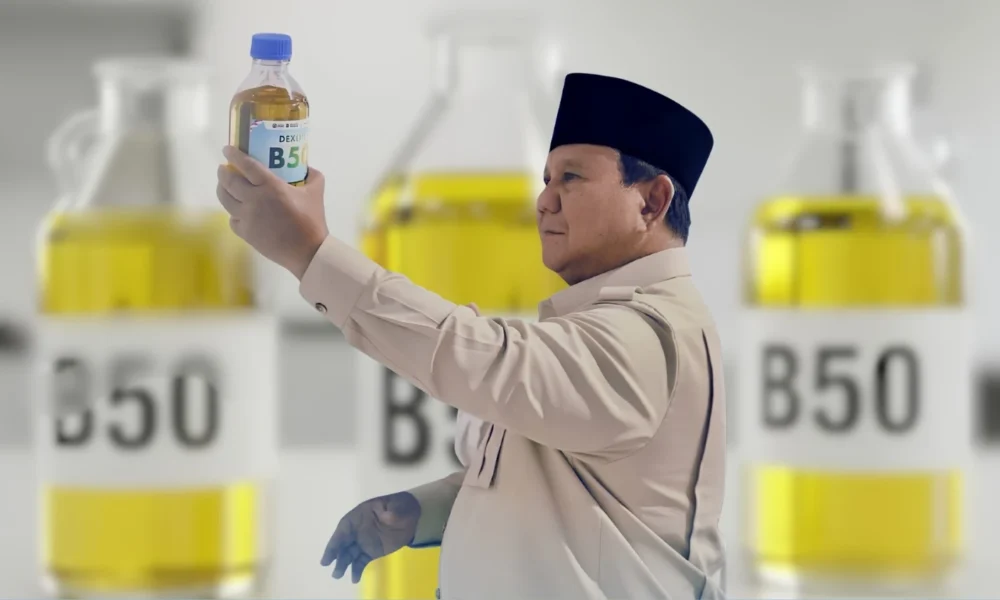
JAKARTA, thekabarnews.com—Indonesia has entered the full implementation phase of its mandatory B50 biodiesel policy. This policy places a 50-percent biofuel blend at the center of President Prabowo’s drive to reduce the country’s dependence on imported diesel.
The government began implementing B50 on July 1, 2026, before Prabowo formally launched the program at the KM 57 rest area in Karawang, West Java, on July 9. Fuel suppliers received a three-month transition period. During this time, they could use their remaining B40 stocks and adjust blending facilities.
B50 consists of 50 percent petroleum diesel and 50 percent fatty acid methyl ester, or FAME, produced mainly from palm oil. In addition, the government describes Indonesia as the first country to introduce a nationwide mandatory blend at this level.
“With the launch of this program, Indonesia has officially become the first country in the world to implement a mandatory B50 biodiesel policy,” Prabowo said.
“This is not merely a technological achievement. It proves that Indonesia can use its natural resources for the benefit of its people. This is an important milestone on the path toward energy self-reliance,” he added, according to the official presidential transcript.
Indonesia consumes between 38 million and 40 million kiloliters of diesel annually. Before B50, the country imported an estimated 3 million to 4 million kiloliters of diesel products each year, according to the Energy and Mineral Resources Ministry.
Energy Minister Bahlil Lahadalia said the higher biodiesel blend could eliminate those imports and save up to Rp170 trillion in foreign exchange. Besides these benefits, the policy is also expected to increase domestic demand for palm oil.
“With B50 implementation, we are no longer importing diesel products into our country,” Bahlil said at the program’s launch. The claim refers to certain diesel products, particularly CN 48 diesel, rather than eliminating every form of petroleum import.
By mid-September, B50 had reached 6,050 of Indonesia’s 6,412 fuel stations, or about 94 percent. Seventy-six of 104 distribution terminals had begun supplying the blend. Meanwhile, the remainder were completing the transition from B40, the ministry reported.
Before nationwide implementation, the government tested B50 in road vehicles, agricultural machinery, mining equipment, ships, power generators and trains. Automotive trials included distances of up to 50,000 kilometers for lighter vehicles and 40,000 kilometers for heavier units.
The initial inspections found that engines, lubricants and fuel systems remained within manufacturers’ recommended conditions, according to the Energy Ministry. Authorities plan periodic evaluations as fuel producers and engine users report operational performance.
The government says biodiesel can reduce greenhouse-gas emissions and some forms of urban air pollution. Moreover, research cited by the International Council on Clean Transportation indicates that palm biodiesel can lower particulate matter, carbon monoxide and hydrocarbon emissions at the exhaust.
Its overall climate impact, however, depends on how the palm oil is produced. For example, clearing forests or draining peatlands to expand plantations can generate substantial emissions. These emissions may offset savings from replacing petroleum diesel, an ICCT life-cycle assessment found.
B50 may strengthen Indonesia’s energy security, but its long-term credibility will depend on consistent fuel quality and transparent evaluation. Preventing deforestation in the biodiesel supply chain will also be essential for the program to deliver genuine environmental benefits.






No Comment! Be the first one.