



ICW flags Rp5.54tn risk in village pickup truck deal
Indonesia Corruption Watch (ICW) has questioned pricing and transparency in a pickup truck program for Red-and-White village cooperatives (KopDes Merah Putih). Its Rp5.54 trillion estimate...

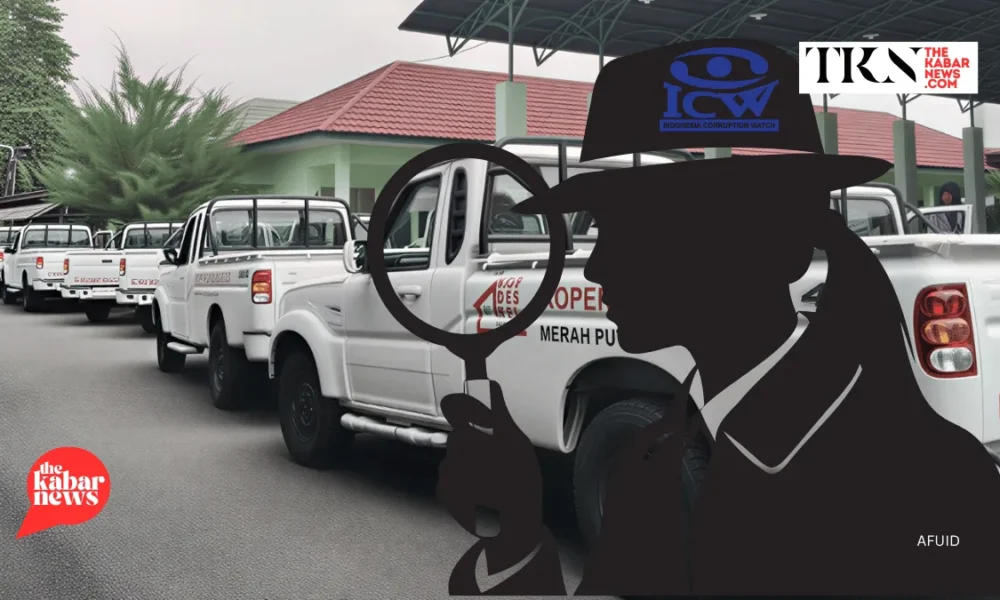
Indonesia Corruption Watch (ICW) has questioned pricing and transparency in a pickup truck program for Red-and-White village cooperatives (KopDes Merah Putih). Its Rp5.54 trillion estimate extrapolates an alleged per-unit price gap across 80,000 vehicles. However, it is not an audited state loss. Agrinas says that Mahindra, not Agrinas, has appointed the intermediary PT Bumi Indo Gemilang to date.
JAKARTA, thekabarnews.com—Indonesia Corruption Watch (ICW) has called for greater scrutiny of a nationwide pickup-truck procurement program for the Red-and-White village cooperatives (KopDes Merah Putih). ICW cited an estimated pricing gap that could reach Rp5.54 trillion.
ICW presented its findings on July 10, 2026. They examined supply-chain and export-import records related to vehicles that state-owned PT Agrinas Pangan Nusantara (APN) procured.
ICW failed to establish that corruption occurred, and its calculation is not an official finding of state loss. No court, auditor or law-enforcement agency has publicly confirmed the allegation.
ICW said APN’s listed purchase price was Rp255 million per four-wheel-drive pickup. Based on import records, it estimated an average factory-to-importer price of Rp168.8 million.
After adding an assumed distributor margin and costs of 10% to 15%, ICW calculated a benchmark price of approximately Rp185.7 million to Rp194.1 million. The estimated difference was therefore Rp60.9 million to Rp69.3 million per vehicle.
Applied to the government’s original target of 80,000 pickups, that difference would equal approximately Rp4.86 trillion to Rp5.54 trillion. This figure is according to ICW’s analysis reported by Riau Pos.
The Rp5.54 trillion figure is an extrapolation. The publicly reported Mahindra order involved 35,000 pickups. Using the same assumptions, the calculation would produce an estimated gap of Rp2.13 trillion to Rp2.43 trillion. Import taxes, nationwide delivery, warranties, spare parts and after-sales support could also affect the final price.
“If the margin is reasonable and can be explained, of course it is not a problem,” ICW Legal and Investigation Division Head Wana Alamsyah said.
He argued that Agrinas should disclose the price components so the public can assess the intermediary’s added value.
ICW questioned why PT Agrinas routed the vehicles through PT Bumi Indo Gemilang (PT BIG) instead of purchasing them directly from Mahindra & Mahindra.
The ICW said PT BIG only added new-car retail activities to its business registration in July 2025 and appeared to have no previous vehicle-import record. Investigators visiting its registered address also reported limited visible office activity.
These findings raise questions about capacity but do not, by themselves, prove wrongdoing or illegality.
Agrinas President Director Joao Angelo de Sousa Mota disputed the suggestion that APN selected the intermediary.
“Mahindra appointed PT BIG, not us,” Joao said in an investigation published by BandungBergerak.
Joao said Agrinas contracted with the principal manufacturer and that Mahindra selected its distributor.
He also said the manufacturer had committed to establishing service centers and mobile repair services across Indonesia.
Published reports said attempts to obtain a detailed response from PT BIG were unsuccessful.
Finance Minister Purbaya Yudhi Sadewa said the government would release public funds only for procurement that passed an audit.
“I will only pay what has been audited,” Purbaya said on July 14, according to Katadata.
ICW has urged the Corruption Eradication Commission (KPK) to examine the procurement process, pricing, intermediary selection and any potential conflicts of interest. As of July 26, authorities had not announced an official audit conclusion or criminal determination.


No Comment! Be the first one.