



Kubu Raya Mangrove charcoal trade draws scrutiny
KUBU RAYA, thekabarnews.com—The reported movement and storage of mangrove charcoal from Batu Ampar has drawn scrutiny in Kubu Raya, West Kalimantan. However, authorities have not publicly classified...

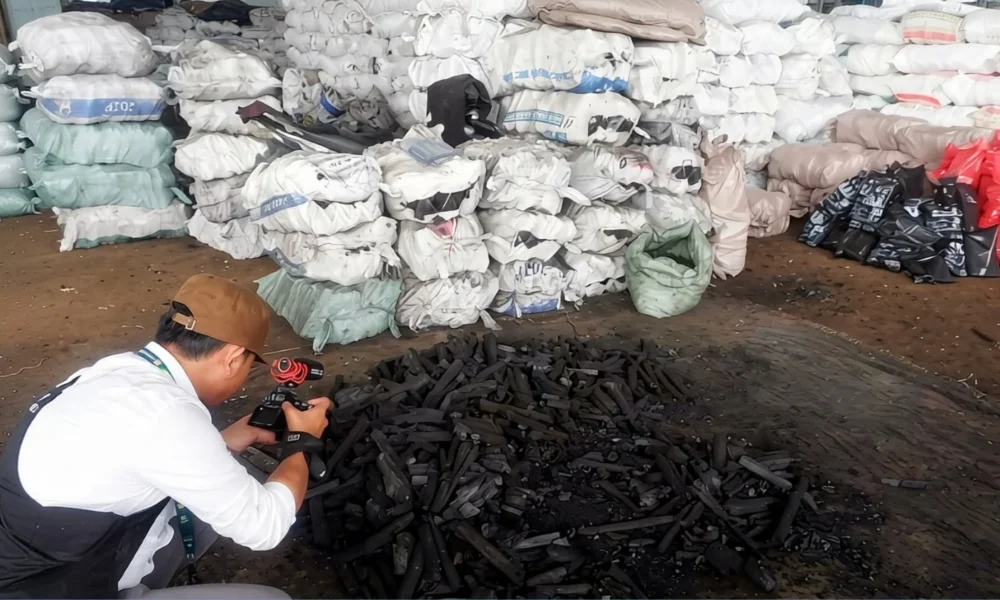
KUBU RAYA, thekabarnews.com—The reported movement and storage of mangrove charcoal from Batu Ampar has drawn scrutiny in Kubu Raya, West Kalimantan. However, authorities have not publicly classified the goods as illegally produced or traded.
Local reports identified a building-materials shop owner, by the initials AK, as the buyer of charcoal. Workers transported the charcoal to a warehouse on Arteri Supadio Road in Sungai Raya district.
The reports said Kubu Raya Police had summoned AK for questioning. However, no publicly accessible police statement had confirmed the summons or disclosed his legal status as of Friday, Oct. 3.
The absence of police tape around the warehouse does not by itself establish whether investigators have opened a criminal case. It also does not clarify if they have seized any goods.
Police may question a person or examine commodities without immediately confiscating property. The outcome depends on the evidence and stage of an inquiry.
AK said he had purchased the charcoal from a person identified only as UD, whom he described as a forestry official.
“I bought this charcoal from someone from the Forestry Office,” AK said.
Another local account quoted the shop owner as saying he sourced the product from Batu Ampar. He then resold it to grilled-fish vendors in West Kalimantan.
Publicly available information reviewed for this article did not establish UD’s identity or official position. It also did not include documents verifying the charcoal’s source, transport or sale.
The presence of mangrove charcoal is not sufficient on its own to prove a forestry offense. Investigators must determine the wood species, harvesting location, and land status and verify whether the supply chain had the required permits and transport documents.
Field accounts said a vessel unloaded dozens of tonnes of charcoal at a pier on Adisucipto Road on Sept. 29. Workers reportedly transferred the bags to pickup trucks that travelled to the Arteri Supadio warehouse. When this article was prepared, no government agency had publicly confirmed the reported shipment’s volume, origin or legal status.
The concern follows an official enforcement operation involving charcoal shipped from the same regency. In January 2026, a joint team intercepted two containers holding approximately 74 tonnes of mangrove charcoal at Jakarta’s Tanjung Priok Port.
The Forestry Ministry said officers had tracked the consignment from Tirta Ria Port in Kubu Raya. Unlike the current unverified allegations, authorities found that the January shipment lacked quarantine documents and valid environmental and forestry permits.
Officials estimated that producing the seized charcoal had required between 1,400 and 1,500 mature mangrove trees. They placed the potential state loss at about Rp1.7 billion.
“Mangroves naturally protect coastlines from abrasion, high waves and seawater intrusion,” Forestry Law Enforcement Director General Dwi Januanto Nugroho said after the seizure.
Indonesia had 3.45 million hectares of mangroves in 2025, accounting for about 23 percent of the global total, according to the Forestry Ministry. Around 2.73 million hectares lie within state forest areas.
Therefore, to be able to make a credible determination of the Arteri Supadio case, the authorities need to conduct a trace back to the place of production and review the relevant documents. Until investigators publish their findings, the allegations have not been proven. In addition, AK still has the presumption of innocence.



No Comment! Be the first one.