



Homeschooling population continues to rise worldwide, new data shows
Thekabarnews.com—In several developed nations, homeschooling has transformed from a fringe educational movement into a mainstream option for families. New figures show a significant rise in the...

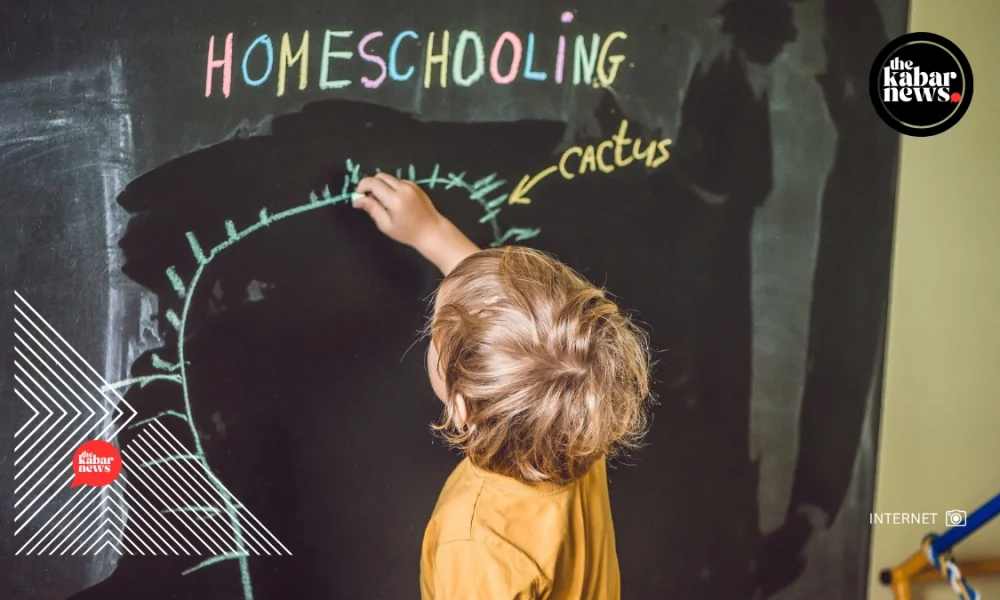
Thekabarnews.com—In several developed nations, homeschooling has transformed from a fringe educational movement into a mainstream option for families. New figures show a significant rise in the number of children receiving education outside the traditional classroom.
Statistics reveal the exponential growth of homeschool populations post the COVID-19 pandemic. This accelerated a trend that was already underway before schools closed around the world in 2020.
This is a reflection of the change in parents’ attitudes regarding education, flexibility, child welfare, and academic personalization.
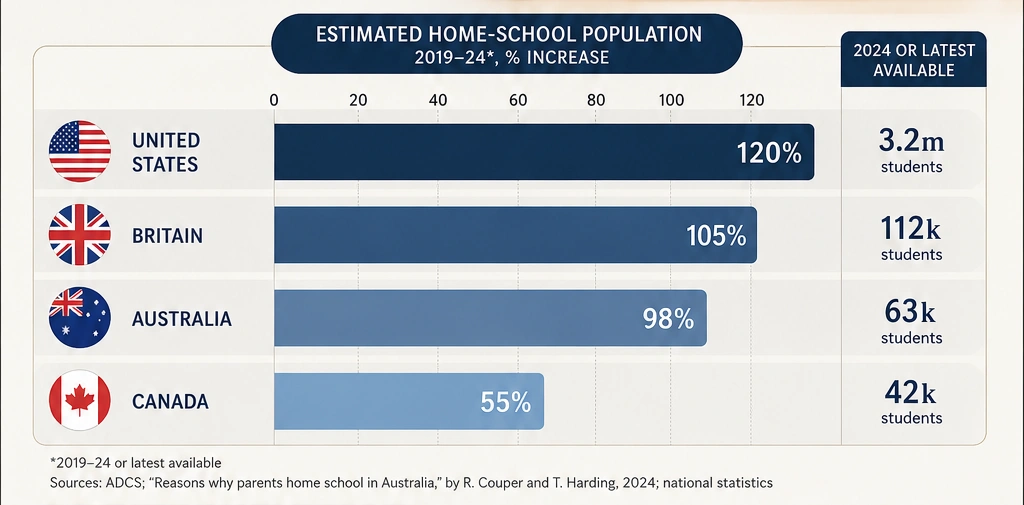
New data from ADCS show the number of children homeschooled in various English-speaking countries soared from 2019 to 2024.
The US recorded the largest increase in the number of homeschooled students, with an increase of about 120 percent. This brought the total to an estimated 3.2 million students.
The number of students in Britain who are being homeschooled also increased by a similar figure of around 105 percent. This brought the total to around 112,000 students.
In Australia it was around 98 percent, or some 63,000 homeschooled students. In Canada, it was about 55 per cent, or 42,000 students.
The rapid growth of homeschooling has changed the profile of families who are choosing this way to educate their children.
Before the 21st century, homeschooling in the United States was closely linked to the countercultural movements of the 1960s and 1970s.
During the 80s and 90s, many conservative and religious families chose to homeschool instead of sending their children to public schools for ideological reasons.
But today, homeschooling appeals to a much wider demographic. Families of all political, religious, and socioeconomic stripes are increasingly choosing homeschooling, not for ideological reasons, but because they believe it’s the best educational environment for their children.
The primary reasons modern homeschooling families choose this option are customized learning, flexible schedules, mental health issues, specialized educational needs, and concerns about school environments.
The pandemic is a significant moment. During the lockdowns, millions of first-time educators and parents worked tirelessly as schools shifted to remote learning.
It showed families different ways of learning and that education does not have to take place in a traditional classroom.
Some others felt that there were academic gaps or social issues with the transition, so they chose to continue homeschooling when schools reopened. In addition, some liked the flexibility option and the ability to adapt lessons to their learning style.
The rise of homeschooling has caught policymakers, educators and researchers flat-footed. Home schooling proponents say it leads to more family involvement and more individualized education.
Critics are concerned about the lack of standards, supervision and social interaction in homeschooling. But the trend doesn’t seem to be slowing down.
Technology, digital learning platforms, online curricula, and virtual communities have made homeschooling easier than ever.
Educational choice is on the fringes but increasingly possible as families have more access to educational resources.
The new figures suggest a more pragmatic, less ideological approach to homeschooling among parents. These parents want to create learning environments that best serve their children’s individual needs.
With education systems changing to meet the demands of the post-pandemic world, homeschooling looks set to remain an important part of the educational landscape. This is especially true in many developed countries.



No Comment! Be the first one.