



DPR approves Rp4,106 trillion 2027 budget
JAKARTA, thekabarnews.com—The House of Representatives (DPR) approved the 2027 state budget bill on Tuesday, September 29. The bill sets government expenditure at Rp4,106.26 trillion (US$234.6...

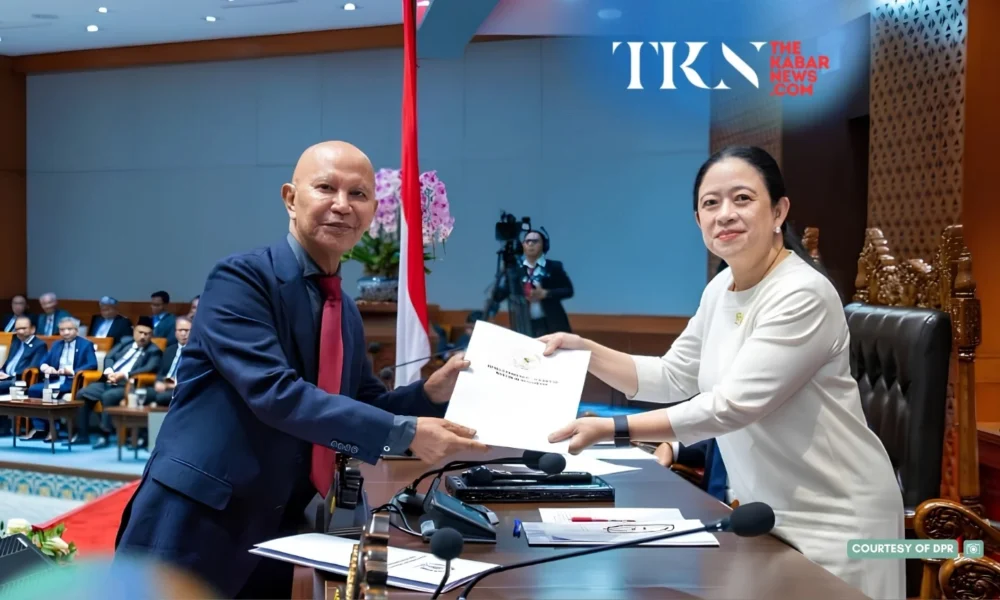
JAKARTA, thekabarnews.com—The House of Representatives (DPR) approved the 2027 state budget bill on Tuesday, September 29. The bill sets government expenditure at Rp4,106.26 trillion (US$234.6 billion). In addition, it adopts an economic growth target of 6 percent.
House Speaker Puan Maharani led the plenary session at the Nusantara II building in Jakarta after the parliamentary factions accepted the bill.
“We have now reached the point of seeking the factions’ approval of the 2027 state budget bill. Can it be approved and passed into law?” Puan asked.
“Approved,” lawmakers attending the session replied.
Under the approved fiscal plan, the government aims to collect Rp3,435.10 trillion in state revenue. The target includes Rp2,911.95 trillion in tax, customs and excise receipts, along with Rp522.48 trillion in non-tax state revenue.
Indonesian government spending will reach Rp3,371.26 trillion, while transfers to regional administrations will remain at Rp735 trillion.
The difference between revenue and expenditure leaves a planned deficit of approximately Rp671.2 trillion. This figure is equivalent to 2.4 percent of gross domestic product, according to the Finance Ministry.
The final budget is slightly larger than the government’s initial proposal. That proposal projected revenue of Rp3,426 trillion and expenditure of Rp4,097.2 trillion.
Parliamentary deliberations increased both sides of the budget by about Rp9.1 trillion without changing the planned deficit ratio.
House of Representatives Budget Committee (Banggar) head Said Abdullah said public expenditure alone would not be enough to deliver the 6 percent growth target.
The government must encourage private investment and strengthen exports, he added.
“It is impossible to rely solely on the state budget to achieve 6 percent economic growth. That is why private-sector involvement in economic development is important,” he said at the plenary session.
The budget assumes annual inflation of 2.5 percent and an average exchange rate of Rp17,500 per US dollar. It also sets the yield on 10-year government securities at 6.9 percent. It assumes an Indonesian crude oil price of $75 per barrel.
The government targets oil lifting at 612,500 barrels per day and gas lifting at 954,000 barrels of oil equivalent per day. These assumptions will influence energy revenue, subsidies and the government’s financing requirements.
The government also aims to lower the poverty rate to between 6 and 6.5 percent. The government targets an open unemployment rate of between 4.3 and 4.87 percent and plans to create between 2.57 million and 3.49 million new jobs.
The budget provides the legal spending framework for 2027, but its economic impact will depend on implementation.
Revenue collection, spending quality and the private sector’s response will determine whether the government can achieve its growth target while maintaining fiscal discipline.






No Comment! Be the first one.