



House approves 15 laws for Kalimantan localities
JAKARTA, TheKabarNews.com—Indonesia’s House of Representatives (DPR) approved 15 bills updating the legal foundations of districts and one city across three Kalimantan provinces during a plenary...

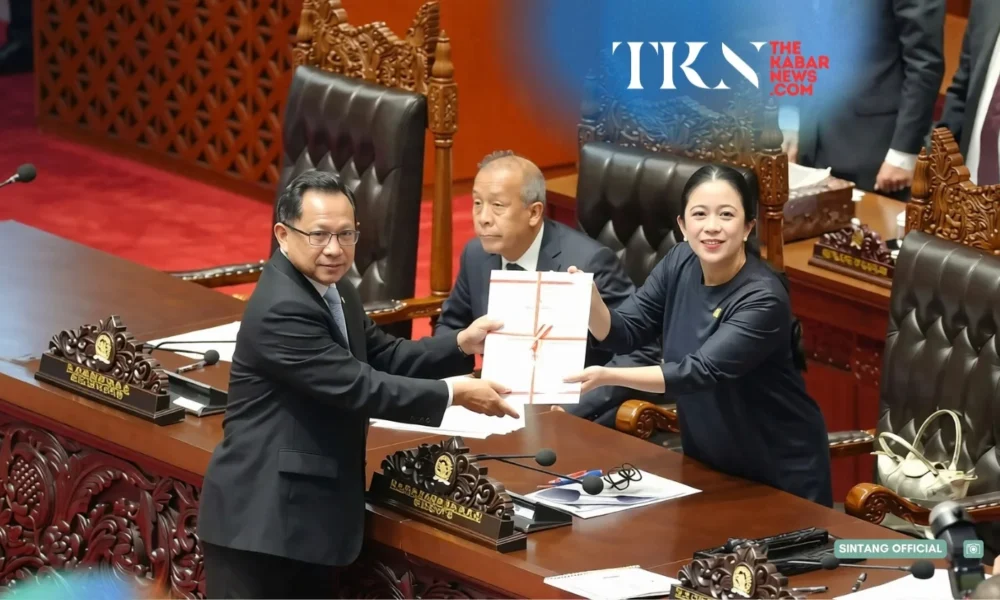
JAKARTA, TheKabarNews.com—Indonesia’s House of Representatives (DPR) approved 15 bills updating the legal foundations of districts and one city across three Kalimantan provinces during a plenary meeting in Jakarta on Tuesday, September 22.
The legislation covers seven localities in West Kalimantan, five in Central Kalimantan and three in South Kalimantan. It replaces or updates statutes that still trace their constitutional references to the 1950 Provisional Constitution.
The vote does not establish 15 new autonomous regions. Instead, each law provides an updated legal basis for an existing local government under the 1945 Constitution. It also incorporates administrative changes introduced since the region’s establishment.
Home Minister Muhammad Tito Karnavian said the revisions would give local administrations a clearer foundation for issuing derivative regulations. The process includes regional bylaws.
“The 15 bills were drafted to provide legal certainty without creating controversy and to serve as the basis for all regulations below them,” Tito said.
In West Kalimantan, the legislation covers the Kapuas Hulu, Sintang, Mempawah, Sambas, Sanggau and Ketapang regencies, as well as Pontianak city.
The Central Kalimantan laws apply to the Kapuas, Barito Utara, Barito Selatan, Kotawaringin Timur and Kotawaringin Barat regencies. In South Kalimantan, they cover Hulu Sungai Utara, Hulu Sungai Selatan and Hulu Sungai Tengah.
The House’s legislative body completed the harmonization process in June. Commission II and the government then approved the bills at the first level of deliberations on September 21. Afterward, they sent them to the plenary meeting for a final decision. The session was attended by 195 lawmakers.
Deputy House Speaker Cucun Ahmad Syamsurijal asked the meeting whether lawmakers agreed to pass all 15 bills. Participants responded, “Approved.”
Beyond replacing outdated constitutional references, the legislation adjusts each region’s legal description to reflect subsequent territorial divisions. It also clarifies the subdistrict in which a regency capital is located.
The laws recognize the individual geographical and social characteristics of each locality. Lawmakers described this provision as formal recognition of Indonesia’s regional diversity within the unitary state. However, they clarified this does not grant special autonomous status.
The updated statutes should also reduce uncertainty when local governments draft bylaws or make administrative decisions. Specifically, this applies to decisions that rely on their founding legislation.
However, their immediate effect is primarily legal and administrative. Parliamentary approval does not automatically alter regional boundaries or provide new funding.
Once the bill has passed the House, it will follow the normal course of enactment and promulgation. In practice, national and local authorities will show the impact of this by adapting existing regulations to the new legal framework.






No Comment! Be the first one.