



MUI responds after Jepara cleric calls MBG Haram
JAKARTA, thekabarnews.com—The Indonesian Ulema Council (MUI) has rejected a blanket judgment on the Free Meals (MBG) program after a cleric in Jepara declared it haram. MUI said the public must...

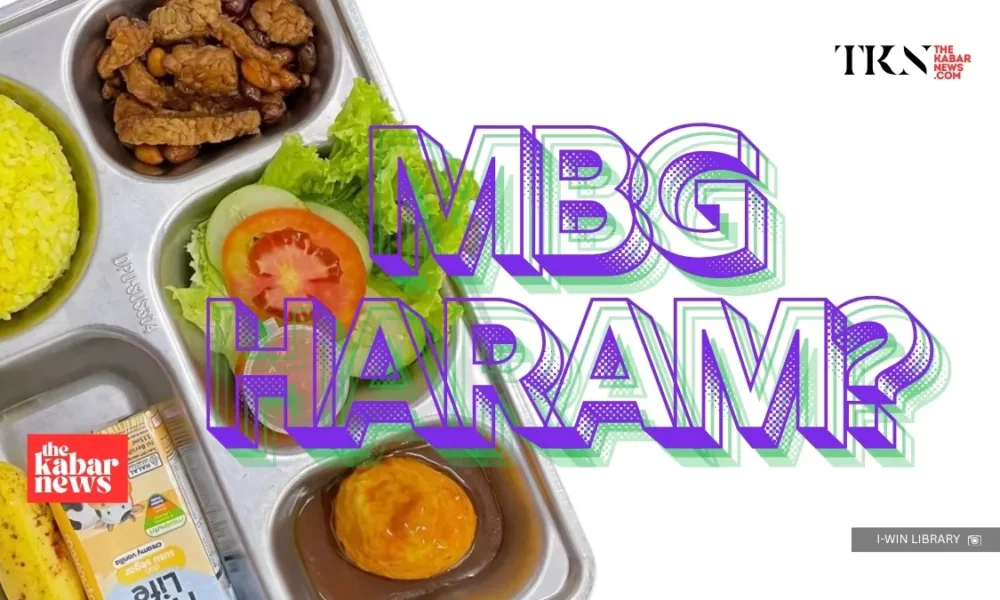
JAKARTA, thekabarnews.com—The Indonesian Ulema Council (MUI) has rejected a blanket judgment on the Free Meals (MBG) program after a cleric in Jepara declared it haram. MUI said the public must distinguish the policy’s purpose from misconduct or safety failures during implementation.
MUI Fatwa Division Chairman Asrorun Ni’am Sholeh delivered the response at the Nahdlatul Ulama headquarters in Central Jakarta on Thursday, September 3.
His comments addressed a video by Ahmad Muzaffar, head of Al-Husna International Islamic Boarding School in Mayong, Jepara, Central Java.
“From a conceptual perspective, the MBG program has a good foundation,” he said.
Asrorun said MBG reflected the state’s responsibility to help meet children’s nutritional needs. He argued that authorities must separately assess the policy’s objectives, its funding and its implementation.
His remarks did not amount to a newly issued MUI fatwa. Instead, he called for a comprehensive assessment before anyone applied a religious ruling to the entire national program.
Asrorun acknowledged that MBG required stronger supervision because poor food quality, unsafe preparation and misuse of public funds could undermine its intended benefits.
“There must be preventive mechanisms to address the risk of corruption, inadequate nutritional quality and food poisoning,” he said.
The government allocated Rp335 trillion to MBG in the 2026 state budget, according to the Finance Ministry. The scale of that allocation has intensified public demands for food-safety controls and transparent spending.
The National Nutrition Agency (BGN) said its internal evaluation linked approximately 80–90 percent of recorded food-safety incidents to failures to follow standard operating procedures.
The agency identified problems involving ingredient storage, temperature controls and consumption deadlines. The percentage represents BGN’s internal assessment, not an independent finding covering every reported illness.
The religious debate began with a video Ahmad uploaded to his TikTok account on July 10. In it, he announced that Al-Husna’s education units would stop accepting MBG meals.
“We therefore declare that accepting MBG is haram. Once again, accepting MBG is haram,” he said, as quoted by Suara.com.
Ahmad alleged that the program’s management created opportunities for large-scale corruption.
Publicly available information cited in the reports did not establish that allegation as a proven fact, and his declaration represented his own religious position rather than an MUI fatwa.
MUI’s response places the focus on accountability: a beneficial public policy does not excuse corruption or unsafe food, while implementation failures do not automatically make every meal or recipient religiously prohibited.
The debate will ultimately depend on whether authorities can translate MBG’s nutritional objective into safe and transparent delivery.





No Comment! Be the first one.