



How Singapore’s S$900 million energy relief plan works
SINGAPORE, thekabarnews.com—Singapore has introduced an additional S$900 million support package. It aims to protect households and small businesses from high energy prices linked to continuing...

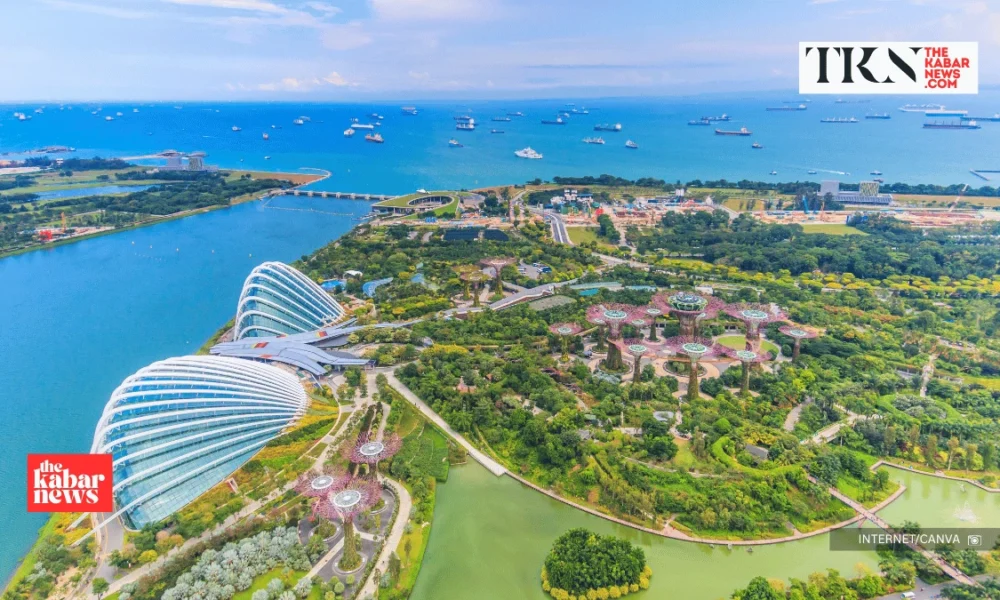
SINGAPORE, thekabarnews.com—Singapore has introduced an additional S$900 million support package. It aims to protect households and small businesses from high energy prices linked to continuing instability in the Middle East.
The second minister for finance, Jeffrey Siow, announced the measures on Wednesday, July 29.
The package includes S$300 in additional Community Development Council (CDC) vouchers for every Singaporean household. It also provides utility rebates and cash assistance for about 160,000 small and medium-sized enterprises (SMEs).
At Bank Indonesia’s late-July reference rate of approximately Rp13,922 per Singapore dollar, the package equals about Rp12.5 trillion.
Each household’s S$300 voucher allocation is worth approximately Rp4.18 million, although exchange-rate movements may change the rupiah equivalent.
The government will distribute the additional vouchers in January 2027. Singaporean households can spend them at participating supermarkets, food stalls and neighborhood businesses.
Eligible households will also receive additional U-Save rebates in October 2026 and January 2027 to reduce their utility bills. The government will direct about two-thirds of the package to households and allocate the remainder to businesses.
Singapore relies on imported natural gas for about 95 percent of its electricity generation. As a result, this leaves consumers exposed to changes in international energy prices.
The regulated electricity tariff rose 17 percent for the July–September 2026 quarter. It increased to 31.91 Singapore cents per kilowatt-hour before tax.
The increase adds an estimated S$17.14 to the average monthly electricity bill of a four-room public housing household. This is according to Singapore’s Energy Market Authority.
Prime Minister Lawrence Wong said the measures expanded support already introduced earlier in the year.
“These measures build on the support we have already provided, and I hope they will give Singaporeans greater confidence as we work our way through this period of uncertainty together,” said Wong.
Every eligible SMEs employing at least one local worker will receive a cash grant of at least S$500. Total assistance will vary according to the company’s number of local employees and will be capped at S$2,500 per business.
The government expects the grants to reach approximately 160,000 SMEs in November. Cooked-food hawkers will separately receive up to S$1,200 in rental assistance, while market stallholders can receive S$600 over six months.
Singapore will also increase the government’s risk share under two business financing schemes from 50 percent to 70 percent. This will ease access to loans for eligible firms during the high-cost period.
The latest measures follow a separate package worth nearly S$1 billion that Singapore announced in April. Combined support now approaches S$2 billion, excluding measures already included in its 2026 budget.
The assistance should not be described as a direct “tax refund.” Instead, it is a government-funded fiscal support package distributed according to household and business eligibility. The amount does not depend on how much tax each recipient previously paid.
Indonesia also operates social-protection programs, including the Family Hope Program and Basic Food Card assistance.
Its 2026 budget allocated Rp28.7 trillion to the former and Rp43.8 trillion to the latter. This data comes from the Finance Ministry’s Directorate General of Budget.
Singapore’s model could offer lessons in automatic distribution, clear eligibility rules and public disclosure. Indonesia would need to adapt any similar mechanism to its much larger population, geographic reach and fiscal capacity.


No Comment! Be the first one.