



Major US cities lose residents as immigration slowdown reshapes population growth
Thekabarnews.com—Population declines in some of the country’s biggest cities between 2024 and 2025 signal changing demographic trends. Moreover, there is a slowdown in the immigration that has...

Thekabarnews.com—Population declines in some of the country’s biggest cities between 2024 and 2025 signal changing demographic trends. Moreover, there is a slowdown in the immigration that has traditionally powered urban growth.
The latest population estimates from the U.S. Census Bureau show that big metros like New York City, Los Angeles, and Dallas had their populations shrink in the last year.
The Census Bureau’s 2025 population estimates, highlighted in a recent study, show that slowing immigration continues to affect population growth trends in many urban centers.
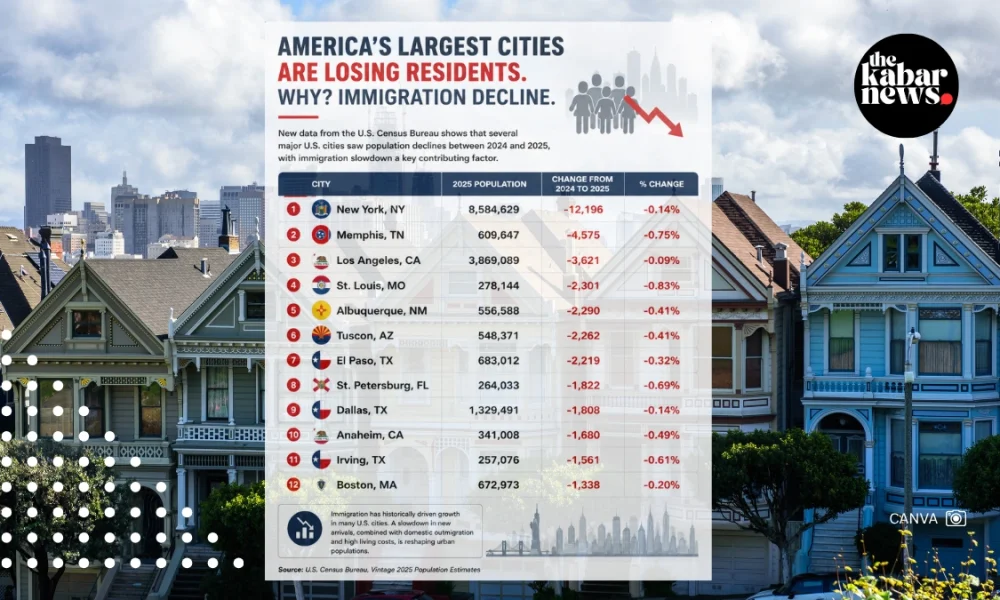
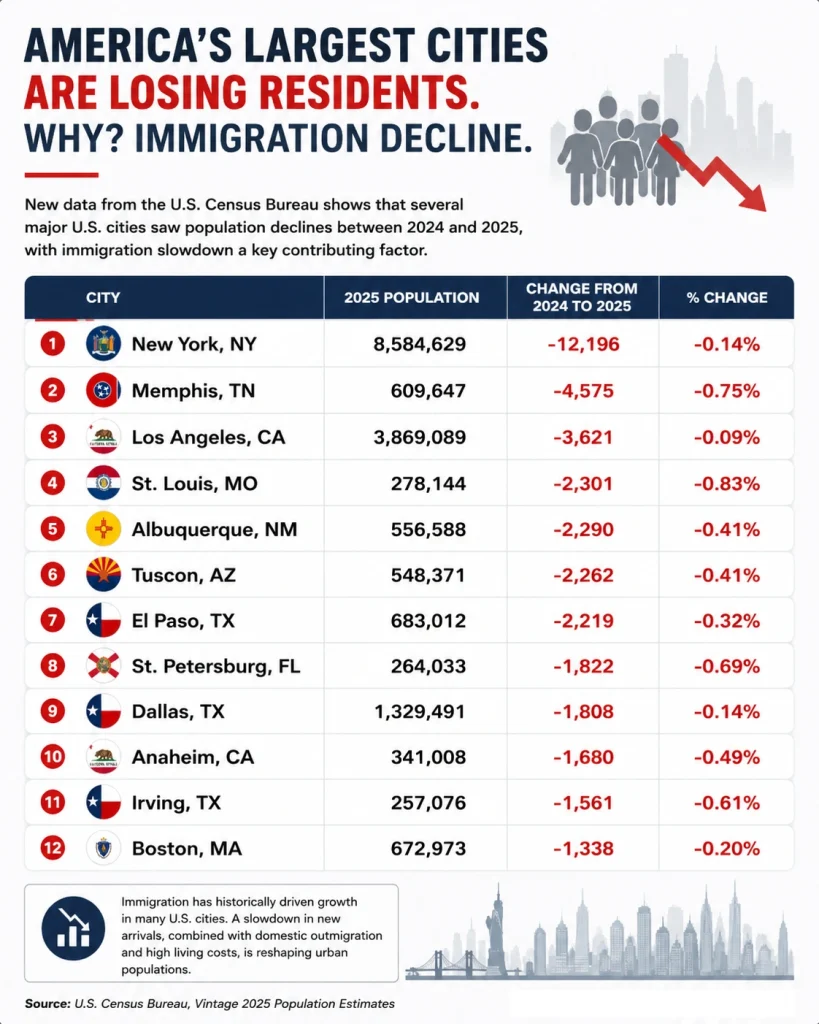
New York City had the largest loss in terms of sheer numbers, losing almost 12,196 inhabitants between 2024 and 2025, as cited in USA TODAY.
The city remains the most populous municipality in the United States. Its estimated population is roughly 8.58 million notwithstanding the downturn.
Other cities also had giant losses. At the same time, Memphis, Tenn., lost about 4,575 residents, and Los Angeles lost more than 3,600 residents.
St. Louis, Missouri, was one of the cities with the biggest percentage declines, with its population down 0.83 percent.
Other cities losing population included Albuquerque, Tucson, El Paso, St. Petersburg, Anaheim, Irving, and Boston.
Longtime drivers of population growth in many U.S. cities, demographers say, include immigration.
Big cities have fewer babies, they’re getting older, and people are moving around the country to suburbs or places where it costs less to live. Therefore, they tend to rely on people coming in from other countries to fill up that hole.
If immigration slows, towns could stagnate or shrink, particularly if residents move elsewhere in search of cheaper housing or jobs.
This pattern also mirrors broader trends over time following COVID-19.
Some Americans are leaving traditional urban centers as remote work, rising housing costs, and changing lifestyle preferences take hold.
For instance, New York and Los Angeles are still struggling with housing affordability, cost of living, and infrastructure stress.
Population movements can greatly affect local economies. Specifically, a shrinking population can have consequences for consumer spending, the size of the labor force, tax receipts, the demand for housing, and long-run economic growth.
But some experts warn against reading one year of population reduction as a sign of irreversible urban collapse.
Many great cities still attract investment, international talent, and corporate activity despite demographic shifts.
The Census Bureau results came as national debates continue about immigration restrictions and employment shortages.
Business groups have often stressed the necessity of immigration for economic growth, innovation, and labor market stability.
The new figures suggest a clear correlation between migration and urban population shifts for policymakers.
As economic uncertainty and demographics change in the United States, population growth in the country’s biggest cities will be a significant indicator. This will show the country’s long-term economic health and competitiveness.






No Comment! Be the first one.