



Rupiah weakens to Rp17,300 per US dollar, government cites global pressures
JAKARTA, Thekabarnews.com—The rupiah dropped to Rp17,300 per US dollar in Thursday trading, April 23. This sparked reactions from government officials and monetary authorities amid ongoing global...

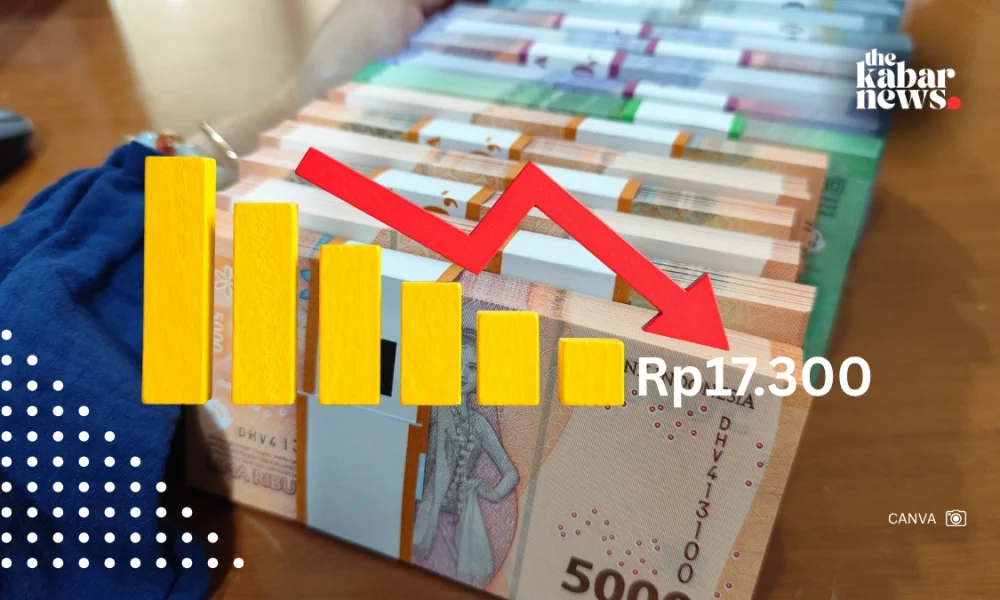
JAKARTA, Thekabarnews.com—The rupiah dropped to Rp17,300 per US dollar in Thursday trading, April 23. This sparked reactions from government officials and monetary authorities amid ongoing global pressures on the currency.
Bank Indonesia is responsible for ensuring the stability of the exchange rate, according to Coordinating Economic Affairs Minister Airlangga Hartarto. However, he admitted that external factors played a role in the rupiah’s depreciation. In particular, he cited the geopolitical tension between the United States and Iran as significant.
“We will closely monitor the situation. We cannot respond to exchange rate movements every day because Bank Indonesia handles that responsibility,” said Airlangga Hartarto at his office in Jakarta, as quoted by IDX Channel.
He said the conflict has disrupted the global flow of energy, particularly because of concerns about the Strait of Hormuz. The Strait of Hormuz is a crucial shipping route for oil supplies. As a result, this disruption has pressured the rupiah and other global currencies.
Meanwhile, Bank Indonesia governor Perry Warjiyo confirmed the central bank has increased its intervention measures to stabilize the currency.
“BI is intervening in the offshore and domestic foreign exchange markets,” he said.
These measures include transactions in the offshore non-deliverable forward (NDF) market. They also include spot and domestic non-deliverable forward (DNDF) transactions in Indonesia.
“This is part of our integrated strategy to mitigate external pressures on the rupiah,” Perry said at a central bank policy meeting.
Furthermore, Bank Indonesia has also adjusted its monetary instruments to make Indonesian financial assets attractive to foreign investors.
The central bank tries to attract capital inflows and strengthen domestic market stability by tightening interest rate structures.
The central bank has also changed several rules governing transactions in foreign currencies. Among them are increasing the thresholds for purchases of foreign currency using rupiah. It has also raised the limits on DNDF and forward transactions. In addition, the central bank is widening the swap transaction thresholds for both buying and selling.
These policy measures were expected to provide more flexibility in the foreign exchange market. They came into force in April 2026. They were said to be strengthening liquidity and stability.
Broader global uncertainties, particularly in energy markets and geopolitical developments, reflect the rupiah’s move.
Indonesia will need to maintain close coordination between its fiscal and monetary authorities to tackle these external challenges.
Despite the current pressures, officials remain optimistic that sound fundamentals and proactive measures by Bank Indonesia will help preserve confidence in Indonesia’s financial markets.
In the coming weeks, the rupiah will be very sensitive to global developments. Geopolitical tensions and energy supply dynamics will largely determine this trend.






No Comment! Be the first one.