



Netanyahu reportedly accepts Trump’s request not to retaliate against Iran
Thekabarnews.com—Israeli media reported Prime Minister Benjamin Netanyahu has allegedly agreed to a request from U.S. President Donald Trump not to respond militarily soon to Iran’s recent attack on...

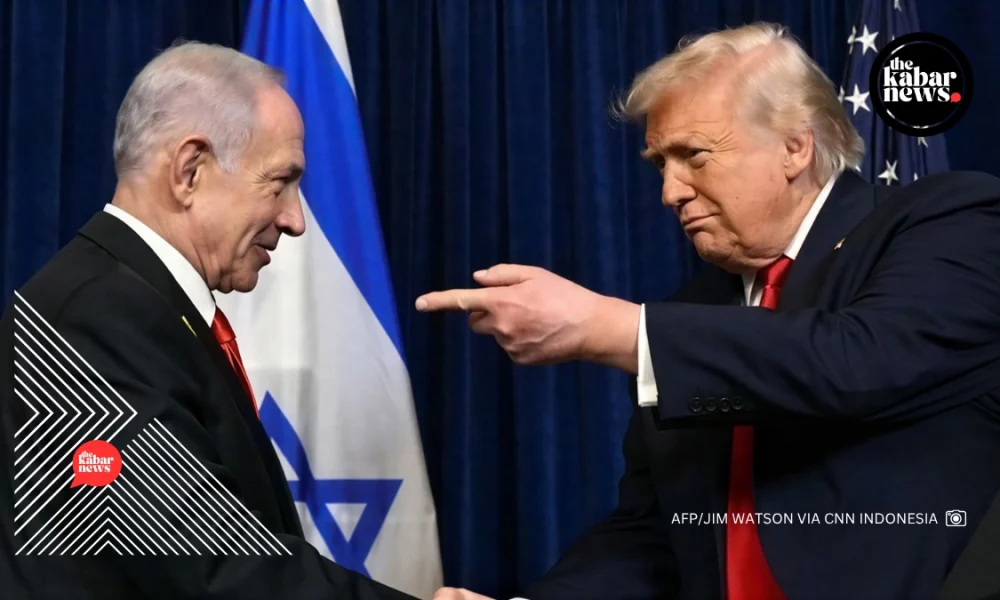
Thekabarnews.com—Israeli media reported Prime Minister Benjamin Netanyahu has allegedly agreed to a request from U.S. President Donald Trump not to respond militarily soon to Iran’s recent attack on northern Israel.
The move comes amid a backdrop of heightened tensions between Israel and Iran. World watchers remain hopeful the two sides can avoid a broader regional conflict.
Reports say Trump directly asked Netanyahu to exercise restraint following Iran’s attacks on locations in northern Israel.
The details of the two leaders’ discussion were not published. However, the request was apparently aimed at averting further escalation and creating room for diplomatic attempts.
The latest events come after months of growing instability in the Middle East. Military exchanges, proxy conflicts, and security concerns have stoked worries of greater regional war.
Concerns have focused on Iran and Israel, which have exchanged accusations and warnings amid escalating geopolitical tensions.
Regional countries and international partners have been concerned about security following reports of an Iranian strike on northern Israel.
Any direct military response could escalate tensions and potentially involve multiple parties in the region.
Trump’s alleged intervention is the latest diplomatic move to reduce tensions between the two rivals.
Leaders from around the world have encouraged both sides to avoid taking acts that could spark a bigger conflict. Such acts could also upset an already fragile security climate.
But decisions about military responses are frequently a blend of domestic security concerns and wider strategic calculations.
The Israeli delays in reacting, along with the reports about them, may be an effort to maintain diplomatic flexibility. Meanwhile, the country examines its security options.
The Israeli government and U.S. authorities have not commented publicly on the purported request and answer.
The international community is still facing challenges, despite claims of restraint.
The two countries still consider each other major strategic threats. Any incident in the future may easily fuel fears of an escalation.
The Middle East has experienced repeated rounds of conflict and de-escalation in recent years. This points to the important role of diplomatic communication between regional and international parties.
Regional leaders and international stakeholders must avoid miscalculations, especially as several conflicts and security challenges continue to destabilize the region.
The decision warned that the reported judgment has attracted considerable worldwide interest because of its prospective effects on regional stability. It may also impact the global energy markets and wider geopolitical ties.
Governments worldwide remain vigilant to events. Investors and international agencies are sensitive to any sign of further escalation.
At least for the moment, the reports say, diplomatic considerations may have overridden calls for a swift military reaction.
But the situation is changing. Future moves will likely be determined by security assessments, political calculations and continued diplomatic interaction among regional and world leaders.
With tensions continuing to emerge, the international community will be watching intently. They hope moderation will help to avoid a broader confrontation in one of the world’s most strategically crucial regions.





No Comment! Be the first one.