



Indonesia-EU trade pact opens door to zero tariffs
BRUSSELS, The Kabar News—Indonesia and the European Union (EU) have signed two long-awaited agreements designed to reduce tariffs and expand investment. These agreements will also strengthen economic...
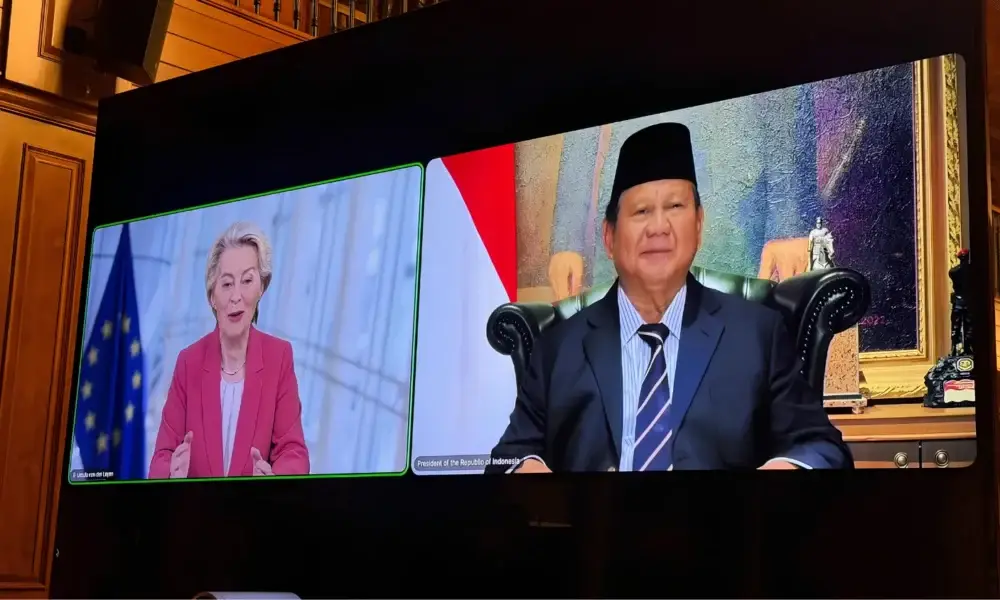
BRUSSELS, The Kabar News—Indonesia and the European Union (EU) have signed two long-awaited agreements designed to reduce tariffs and expand investment. These agreements will also strengthen economic ties after a decade of negotiations.
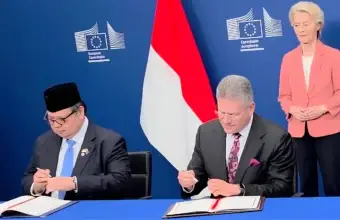
Indonesian Trade Minister Budi Santoso and European Commissioner for Trade and Economic Security Maroš Šefčovič signed the Indonesia-European Union Comprehensive Economic Partnership Agreement (I-EU CEPA) in Brussels on Saturday, Nov. 21. European Commission President Ursula von der Leyen witnessed the signing.
Coordinating Economic Minister Airlangga Hartarto also signed the accompanying Investment Protection Agreement. This agreement establishes legal safeguards for investors from both parties. The signing followed at least 19 rounds of negotiations that began in July 2016.
“After a decade and at least 19 negotiating rounds, Indonesia and the EU have finally signed the I-EU CEPA in Brussels,” Budi said, according to the Trade Ministry.
Read also: DPR leaders pledge to resign if asset bill misses deadline
The agreements do not immediately reduce tariffs. Both sides must first complete their respective approval procedures, including securing consent from the European Parliament. The European Commission expects provisional implementation in early 2027 once the internal processes have concluded.
When the agreement takes effect, the EU will immediately eliminate tariffs on 90.4 percent of its tariff lines covering Indonesian goods, the Trade Ministry stated.
The initial zero-tariff treatment will cover products such as palm oil and some derivatives, rubber products, footwear, textiles and garments. Leather shoes, sneakers and other sports footwear are also expected to receive duty-free access.
The EU will gradually remove tariffs on another 7.92 percent of tariff lines over periods ranging from three to 15 years. Overall, preferential access will cover more than 98 percent of EU tariff lines for Indonesian exports.
“More than 98 percent of EU tariff lines will provide preferential market access for Indonesia’s leading export products,” Budi said.
Read also: Trump raises global tariffs to 15 percent after the Supreme Court ruling
However, exporters must still comply with rules of origin, sustainability requirements and EU product standards to qualify for preferential tariffs. The agreement includes environmental and labor commitments, with the Paris Agreement treated as an essential element. It also contains a dedicated protocol on sustainable palm oil.
The agreement connects Indonesia with a market of about 450 million people. In 2025, bilateral trade in goods reached €28.9 billion. This comprises €18.7 billion in EU imports from Indonesia and €10.2 billion in EU exports, according to the European Commission’s trade data.
The EU was Indonesia’s fourth-largest trading partner and accounted for around 6 percent of the country’s total trade. Bilateral trade in services amounted to €9.3 billion in 2024.
The European Commission estimates that the CEPA could lift Indonesian exports of goods and services to the EU by more than 14 percent over 15 years. It also projects that the agreement could raise Indonesia’s gross domestic product by €27 billion compared with a scenario without the pact. These figures remain projections rather than guaranteed outcomes.
Investment links have also expanded. Indonesia’s Investment Ministry recorded US$14.8 billion in realized investment from EU member states between 2021 and September 2026. This amount is equivalent to about 5 percent of total foreign investment during that period. The investment covered sectors including chemicals, pharmaceuticals and electricity.
The CEPA is expected to create further opportunities in electric vehicles, electronics and renewable energy. The separate investment agreement is intended to protect investors against unjustified discrimination or expropriation. At the same time, it will preserve each side’s authority to regulate.
You May Also Like: Sponsored Offers
The signing is a major diplomatic coup, but its economic effects will depend on ratification and implementation. Indonesian businesses must meet European standards. Additionally, the government will have to help smaller exporters understand the terms of the agreement. How successful it is implemented will determine whether lower tariffs will translate into stronger exports, new investment and wider employment opportunities.



No Comment! Be the first one.