



Tax facilities back Danantara’s state-firm consolidation
JAKARTA, The Kabar News—The Indonesian government has granted targeted tax facilities to sovereign investment manager Danantara to support its consolidation of state-owned enterprises and their...
JAKARTA, The Kabar News—The Indonesian government has granted targeted tax facilities to sovereign investment manager Danantara to support its consolidation of state-owned enterprises and their subsidiaries. The Finance Ministry seeks to accelerate investment while pursuing its year-end revenue outlook.
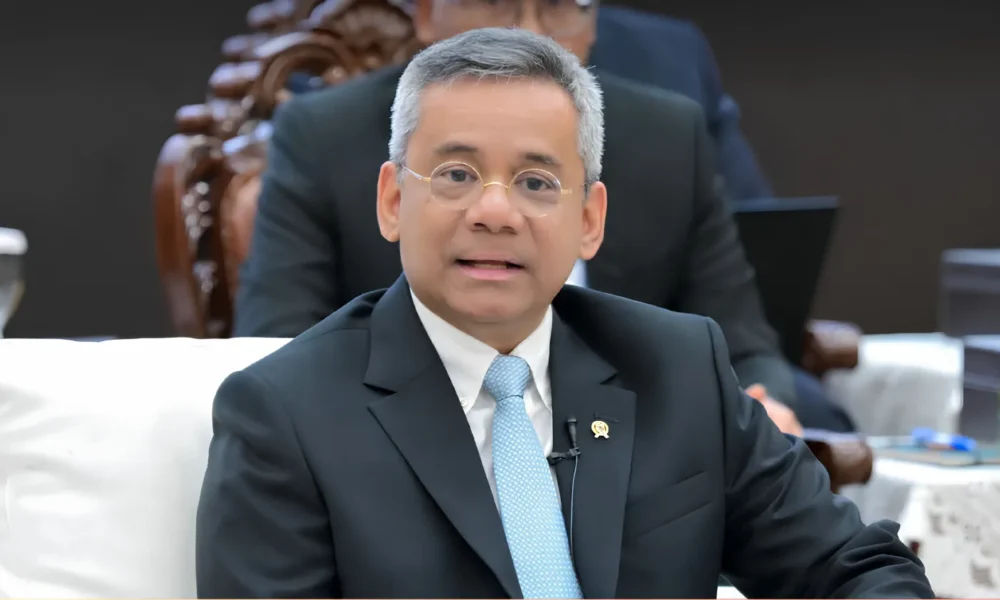
Finance Minister Suahasil Nazara said in Jakarta on Tuesday, Nov. 24, that the facilities would prevent certain tax costs from obstructing mergers, demergers and other transactions at the start of the restructuring process.
The government has set out the policy in Government Regulation No. 41/2026, which covers transactions involving the Daya Anagata Nusantara Investment Management Agency (BPI Danantara), its investment and operational holding companies, and eligible entities under their control.
The regulation does not grant Danantara or all state-owned enterprises a blanket tax exemption. Instead, it provides specific treatment for qualifying transactions that meet reporting, documentation and compliance requirements.
“Danantara wants to improve and streamline its structure from more than 1,000 companies to 300,” Suahasil said at the Investortrust Economic Outlook 2027. “Some have tax liabilities, but we are saying, ‘Go ahead, you do not need to pay tax upfront. After that, however, you must work hard.”
Read also: Danantara streamlines 364 firms in major SOE overhaul
Government Regulation No. 41/2026 allows eligible restructuring entities to use book value rather than market value when transferring or acquiring assets through approved corporate restructuring.
Using market value can immediately create a taxable gain, even when a transaction merely transfers assets between entities under the same state-controlled structure. Book-value treatment can therefore defer the tax consequences. As a result, it reduces upfront costs during consolidation.
The regulation also sets a zero-percent final income tax rate for certain share transfers conducted as grants to reorganize state ownership. In addition, it allows qualifying transfers of assets between restructuring entities to receive value-added tax and luxury-goods tax treatment. Under this treatment, the government does not collect those taxes.
The facilities apply to specified mergers, consolidations, demergers, acquisitions and ownership-restructuring transactions. Eligible entities must notify the Directorate General of Taxes and provide supporting documents within the prescribed period.
Read also: Danantara takes control of four state asset managers
Companies must also meet fiscal-compliance requirements, including settling outstanding tax debts, to use the book-value facility. Tax authorities may recalculate an asset transfer at market value if an entity fails to meet the conditions. These safeguards mean the policy does not erase every existing tax liability.
The facilities remain available until Dec. 31, 2029, provided eligible entities submit the required notification by the deadline. PP No. 41/2026 took effect on Oct. 19.
The Finance Ministry expects Danantara to use the restructuring process to build fewer but stronger state-controlled businesses. A more compact structure could reduce overlapping operations and direct capital toward productive projects.
Suahasil said Indonesia needed investment to grow by about 7 percent and raise the investment-to-gross-domestic-product ratio from approximately 30–31 percent to 35 percent. The government expects Danantara to attract private capital. In addition, Danantara will support industrialization and job creation.
Read also: Indonesian govt to restructure free meals program after SPPG exceed target
He illustrated the policy through an analogy about allowing a productive asset to grow before collecting its returns.
“People often say the tax office likes to slaughter the chicken,” Suahasil said. “This time, we are not slaughtering it. We are feeding it, giving it incentives and waiting for the eggs.”
The minister said the government expected the restructured companies to generate employment, construction activity, and goods and services. Those activities could eventually broaden the tax base.
The Finance Ministry estimates that all Indonesian tax expenditures—not only the Danantara facilities—will reach Rp576.4 trillion (US$34.4 billion) in 2026. This total is equivalent to 2.24 percent of GDP.
Tax expenditures represent revenue that the government deliberately forgoes through incentives or preferential treatment to support households or economic activity. The ministry has not disclosed the specific revenue impact of the Danantara facilities.
The policy comes as the government continues to pursue its 2026 tax-revenue outlook. By the end of October, tax receipts had reached Rp1.7968 quadrillion. This figure is up 23.2 percent from a year earlier, according to Finance Ministry data.
The government needs another Rp514 trillion in November and December to reach its year-end outlook of Rp2.3108 quadrillion. That figure represents the amount still required to meet the outlook, rather than revenue already overdue from taxpayers. The outlook itself remains about Rp47 trillion below the original 2026 state-budget target of Rp2.3577 quadrillion.
You Might Find This Interesting: Sponsored Content
The tax facilities therefore create a policy trade-off. They reduce or postpone certain receipts from restructuring transactions in the short term. Meanwhile, the government expects stronger state companies and new investment to generate broader tax revenue later.
Whether that strategy succeeds will depend on transparent restructuring, measurable efficiency gains and new commercial activity. The government will also need to disclose the value of the facilities. This disclosure will help the public compare the short-term fiscal cost with Danantara’s eventual economic contribution.




No Comment! Be the first one.