



Why did Bank Indonesia governor Perry Warjiyo resign?
JAKARTA, thekabarnews.com—Perry Warjiyo has voluntarily resigned as governor of Bank Indonesia, citing personal reasons. This ends his leadership of the central bank nearly two years before his...

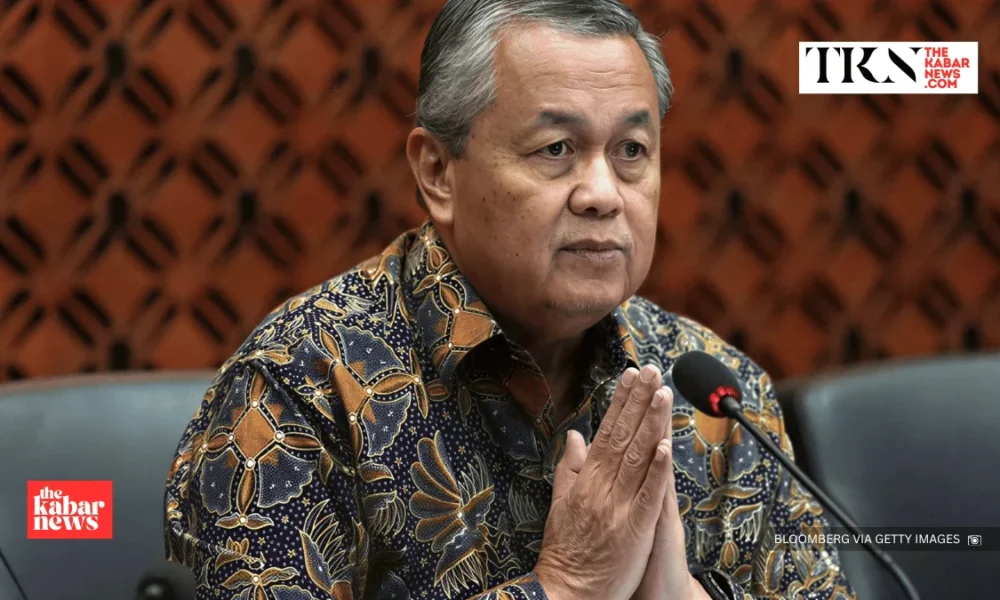
JAKARTA, thekabarnews.com—Perry Warjiyo has voluntarily resigned as governor of Bank Indonesia, citing personal reasons. This ends his leadership of the central bank nearly two years before his second term was due to expire.
The government announced the resignation in Jakarta on Monday, July 27. State Secretary Prasetyo Hadi said President Prabowo Subianto had accepted Perry’s decision. He also stated that the president would issue a presidential decree formally discharging him from office.
“In his letter, he only stated that he was submitting his resignation for personal reasons,” Prasetyo said. He rejected suggestions that health problems or political pressure had prompted Perry’s departure, according to the State Secretariat.
Perry had led Bank Indonesia since 2018. He began a second five-year term in May 2023, which was scheduled to run until 2028.
The government has not connected Perry’s resignation to the rupiah’s performance. The currency’s prolonged weakness had placed his monetary-policy leadership under increasing public and parliamentary scrutiny.
During a House of Representatives Commission XI meeting on May 18, lawmaker Primus Yustisio of the National Mandate Party urged Perry to consider resigning. This came after the rupiah weakened to nearly Rp17,700 per US dollar.
Perry defended Bank Indonesia’s approach and distinguished exchange-rate stability from a specific currency level. He also predicted that seasonal dollar demand would ease after the second quarter.
“The year-to-date average is now around Rp16,900. In our experience, April, May and June are usually high; in July and August, it will strengthen,” Perry said.
That anticipated recovery had not materialized by the time of his resignation. Bank Indonesia’s Jakarta Interbank Spot Dollar Rate (JISDOR) stood at Rp17,973 per US dollar on July 27. The rupiah had been trading near Rp17,972 when markets opened that morning, as reported by Bank Indonesia exchange-rate data.
The central bank held its benchmark BI Rate at 5.75% during its July 21–22 policy meeting. It sought to stabilize the rupiah and keep inflation within the government’s 2.5%±1 percentage-point target range.
Senior Deputy Governor Destry Damayanti has assumed the role of acting BI governor. Article 50(2) of Law No. 23/1999 requires the senior deputy governor to perform the governor’s duties when the position becomes vacant. The law also applies when authorities have not appointed a permanent successor.
“The five of us will continue to carry out the duties and mandate entrusted to Bank Indonesia collectively,” Destry said. She assured the public that the transition would not interrupt central-bank operations.
President Prabowo had not nominated a permanent replacement as of July 27. The House’s Commission XI said it would conduct an objective and professional fit-and-proper test once the president submits a candidate.
Perry’s departure follows several changes among Indonesia’s senior economic officials. OJK chairman Mahendra Siregar, deputy chairman Mirza Adityaswara and Indonesia Stock Exchange president director Iman Rachman resigned in late January 2026. This followed a market rout that triggered two trading halts.
Those departures were separate events, and authorities have presented no evidence linking them to Perry’s resignation. Sri Mulyani’s exit was also different. President Prabowo replaced her as finance minister with Purbaya Yudhi Sadewa during a September 2025 cabinet reshuffle, according to the Finance Ministry.





No Comment! Be the first one.