



West Java records highest layoffs as more than 20,000 workers lose jobs
BANDUNG, Thekabarnews.com—This year, the rising number of layoffs in West Java, Indonesia, dampened Labor Day celebrations. The province saw the largest number of job cuts in the country in the past...

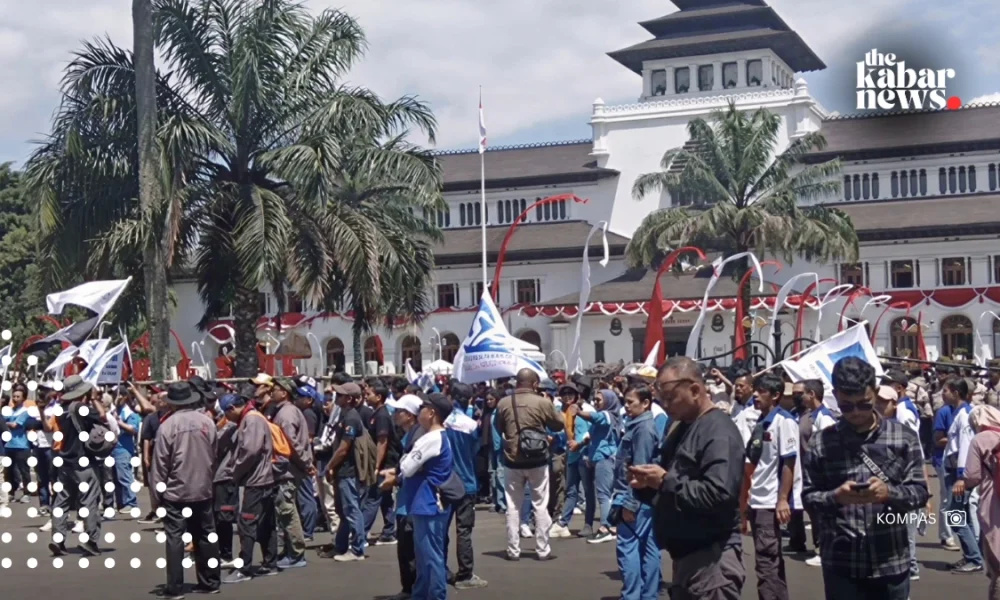
BANDUNG, Thekabarnews.com—This year, the rising number of layoffs in West Java, Indonesia, dampened Labor Day celebrations. The province saw the largest number of job cuts in the country in the past year.
The province is the country’s employment termination hub. In the past year, 20,536 workers lost their jobs, according to data from the Manpower Ministry.
Most of the affected workers were in labor-intensive industries, especially large-scale export-oriented manufacturing.
West Java recorded 18,815 job losses in 2025, according to data from the Manpower Ministry.
Pressure on the labor market is still there in the new year. Another 1,721 workers in the province lost jobs in the first quarter of 2026 alone.
West Java is still one of the industrial centers of Indonesia. In particular, it is strong in the production of cars, electronics, garments, and export-oriented products.
Any decline in global demand or shift in industrial competition immediately affects the market. As a result, the region as a whole experiences a precarious employment situation.
“Layoffs are the most serious issue this year during Labor Day,” said Muhamad Sidarta, chairman of the West Java regional board of the Federation of Metal, Electronics, and Machinery Workers Union (FSP LEM SPSI), on Monday.
“Job security is the number one thing for workers across the province,” he added, Friday, May 1, as quoted in Kompas.
Sidarta said the automotive industry and supporting components sectors, mainly in Karawang and Bekasi, have laid off around 15,000 workers since June 2025.
Most were contract employees and got laid off slowly over the next year and a half.
“Some important reasons,” said Siddhartha.
These include rising competition among companies, waning global demand, and the quick entry of cheaper Chinese-imported electric vehicles onto the local market.
Electric vehicles are driving intense price competition for local manufacturers, particularly companies producing conventional automotive parts and supporting components.
When the need for production slows, companies are more likely to cut back on contract labor first.
Trade unions have called on the government to strengthen its industrial protection policies. They also urged leaders to develop transition policies for workers affected by structural changes in the automotive sector.
They also wanted more help for domestic manufacturing so there wouldn’t be job losses in labor-intensive industries.
The problem stems from an industrial shift, where changes in global supply and technological advancements disrupt traditional manufacturing industries.
But the effects for workers are immediate and personal—lost wages, uncertainty for families, and reduced economic security.
Labor Day is a time to remember workers’ rights and welfare. The increase in layoffs in West Java is a reminder that job protection is one of Indonesia’s major economic problems.






No Comment! Be the first one.