



U.S. strikes Iranian radar sites in Strait of Hormuz
Thekabarnews.com—Washington has conducted military strikes on Iranian coastal radar and monitoring sites in the Strait of Hormuz. This marks a major escalation of the ongoing standoff between the...

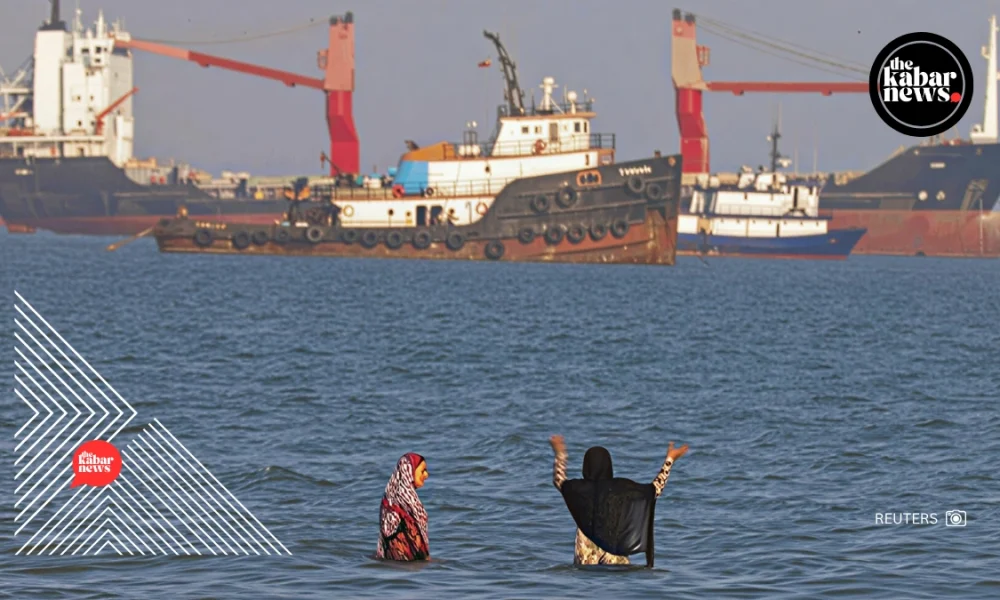
Thekabarnews.com—Washington has conducted military strikes on Iranian coastal radar and monitoring sites in the Strait of Hormuz. This marks a major escalation of the ongoing standoff between the United States and Iran.
The incident occurred just days after the US military said it shot down four Iranian drones threatening maritime commerce. These events are happening in one of the world’s most strategically important trade lanes.
The U.S. officials said, as cited in Reuters, that they were employing the drones against ships operating in the regional waterways.
U.S. forces targeted Iranian monitoring and radar systems in Goruk and on Qeshm Island, both along the Strait of Hormuz. U.S. Central Command (CENTCOM) said the same in a statement on social media platform X.
The Strait of Hormuz is a crucial conduit for global energy supplies. Much of the world’s oil and liquefied natural gas cargoes pass through the narrow channel on a daily basis. Any instability in the region will have immediate ramifications for global energy markets and global trade.
Iran’s response to the strikes was rapid. The Islamic Revolutionary Guard Corps (IRGC) said it had carried out missile strikes in response against U.S. military sites in the region.
Iranian sources said soldiers also opened fire on four commercial tankers that tried to cross the strait without permission.
The reports haven’t been independently verified. Moreover, international shipping authorities have yet to issue any specific assessments of the status of the vessels involved.
The escalation also fuelled tensions in the region, with security issues reported by neighboring Gulf governments.
State media said the country’s air defense systems shot down multiple incoming missiles and drones. However, officials did not publicly identify the origin of the projectiles.
Bahraini officials, meanwhile, sounded emergency warning sirens and urged residents to take shelter as a precaution.
Iran then said it had launched ballistic missile attacks against U.S. military bases in Kuwait and Bahrain.
But the American military questioned how effective the strike was. U.S. officials said air-defense systems shot down six of the seven missiles fired. Furthermore, the seventh did not reach its target.
The latest meeting could scupper diplomatic efforts to resolve the crisis, now in its third month.
The US and Iran are negotiating a short-term deal to halt fighting and set the stage for wider peace talks. But after several rounds of talks, the two sides have not reached a final settlement.
The recent military escalation could also undermine diplomatic progress by increasing political pressure on both governments. Consequently, it could erode trust between the negotiating parties.
Continued unrest in the Strait of Hormuz could have implications beyond the Middle East.
In the case of energy markets, regional developments are very sensitive. Any disruption of maritime traffic can affect global oil prices, supply chains and economic stability.
The two countries have exchanged accusations and military posturing. Meanwhile, international observers are calling for restraint to avoid a wider regional confrontation.
Diplomats scramble to salvage talks and uncertainty is high. Military units on both sides are on heightened alert around the Gulf.





No Comment! Be the first one.