



Tito calls for concrete IMT-GT projects in Sumatra
MEDAN, thekabarnews.com – Indonesian Home Minister Tito Karnavian has called on the Indonesia-Malaysia-Thailand Growth Triangle (IMT-GT) to deliver measurable projects that directly benefit...

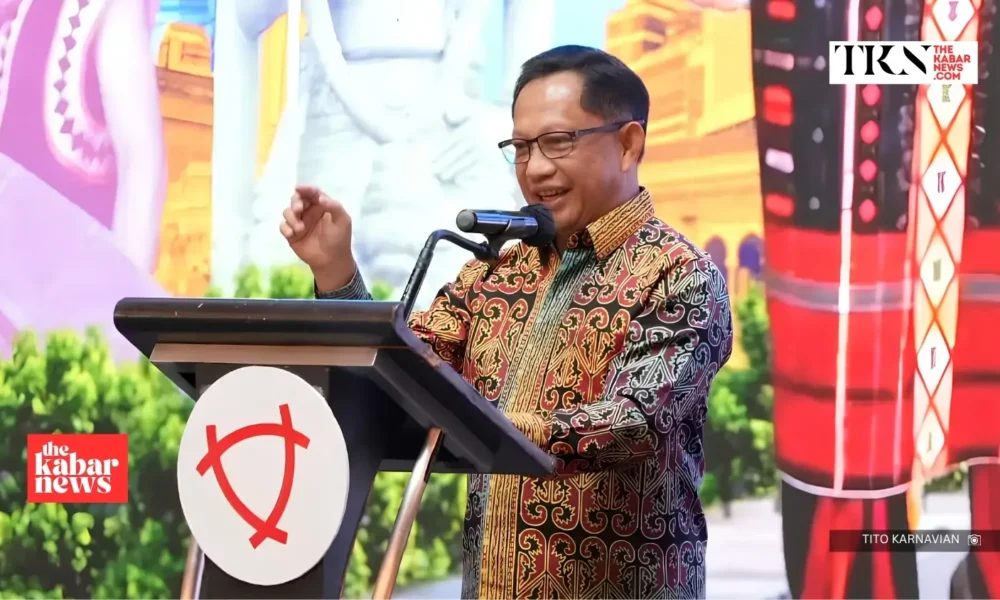
MEDAN, thekabarnews.com – Indonesian Home Minister Tito Karnavian has called on the Indonesia-Malaysia-Thailand Growth Triangle (IMT-GT) to deliver measurable projects that directly benefit communities. Instead of functioning mainly as an intergovernmental discussion forum, IMT-GT should provide more concrete results.
Tito conveyed the message during the gala dinner for the 32nd IMT-GT Ministerial Meeting at the JW Marriott Hotel in Medan, North Sumatra. This occurred on Wednesday evening, September 9.
“I encourage the Indonesia-Malaysia-Thailand Growth Triangle (IMT-GT) cooperation not to stop at being a dialogue forum but to develop into a platform that produces concrete and measurable programs and projects that provide direct benefits to people in all three countries,” Tito said.
He argued that IMT-GT’s central challenge was no longer maintaining regular meetings. Instead, it is turning regional plans into cooperation that communities and businesses could experience directly.
“The question is: How do we make it happen? How do we turn the vision into reality? That is the real issue,” Tito said.
Tito urged central and regional governments to develop partnerships between provinces, states and cities.
He suggested sister-city and sister-province arrangements linking Indonesian regions with counterparts in Malaysia and Thailand. According to him, these are practical channels for sustained cooperation.
Such partnerships could support investment, trade and transport connectivity. In addition, they allow local governments to exchange knowledge in sectors relevant to their communities.
The IMT-GT Chief Ministers’ and Governors’ Forum represents 35 subnational jurisdictions. These include Indonesia’s 10 Sumatran provinces, 11 states in Peninsular Malaysia and 14 provinces in southern Thailand.
Its mandate includes resolving obstacles to projects and aligning local development priorities with the IMT-GT Vision 2036.
Tito identified Sumatra’s population, productive workforce and natural resources as foundations for closer regional cooperation.
The island has an estimated population of about 63 million and lies near Peninsular Malaysia and southern Thailand. As a result, businesses have relatively quick access to neighboring markets.
Rubber offers one example of the region’s potential. Tito said Indonesia, Malaysia and Thailand should develop downstream industries rather than relying mainly on exports of raw materials.
According to Statistics Indonesia, several Sumatran provinces remain major rubber producers. In 2024, South Sumatra produced approximately 619,550 tonnes, while North Sumatra produced 251,520 tonnes. Jambi recorded 222,560 tonnes and Riau produced 180,740 tonnes.
The 32nd Ministerial Meeting, held in Medan on September 10, reaffirmed three primary areas of cooperation: agriculture and agro-based industries, tourism, and halal products and services.
The participating countries also identified digital transformation as an important tool for improving regional productivity.
Tito encouraged governors and other regional leaders to use the forum to maintain direct communication. They should also build projects beyond ceremonial agreements.
He said stronger cooperation at the local-government level would help translate IMT-GT’s regional vision into investment, employment and higher-value economic activity.





No Comment! Be the first one.