



Prabowo plans up to 50 ethanol plants for E20 fuel
President Prabowo Subianto has ordered plans for at least 30 and potentially 50 ethanol plants to support Indonesia’s proposed E20 gasoline program. Announced during an integrated military harvest...

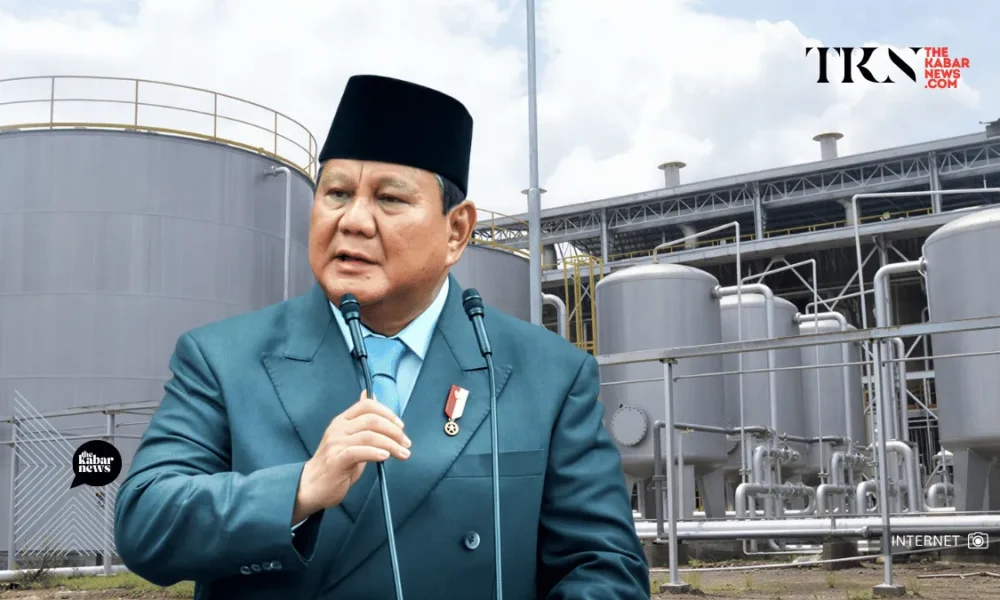
President Prabowo Subianto has ordered plans for at least 30 and potentially 50 ethanol plants to support Indonesia’s proposed E20 gasoline program. Announced during an integrated military harvest event in Malang, the expansion aims to reduce fuel imports, strengthen energy security, and create new demand for locally grown agricultural feedstocks.
MALANG, thekabarnews.com—President Prabowo Subianto has announced plans to build at least 30 new ethanol plants. As Indonesia prepares to expand the use of ethanol-blended gasoline, the total could potentially rise to 50.
Prabowo announced the decision on Friday, July 17, during the Integrated Indonesian Military Harvest at Abdulrachman Saleh Air Base in Malang, East Java. The event covered rice, sugarcane and soybean harvests at 43 locations nationwide.
The president said officials informed him during the event that Indonesia could develop gasoline containing 20% ethanol, commonly called E20. The country’s limited production infrastructure remains a major obstacle.
“Officials told me we can reach E20. We need factories, and currently we have only one. I have decided that we will build at least 30 factories—up to 50 if necessary,” Prabowo said, as reported by ANTARA News.
The announcement did not specify the proposed plants’ locations, individual production capacities, budgets or construction timetable.
Indonesia consumes approximately 40 million kiloliters of gasoline annually. Implementing E20 nationwide would require about four million kiloliters of ethanol each year, according to the Energy and Mineral Resources Ministry.
Energy and Mineral Resources Minister Bahlil Lahadalia said domestic refineries previously produced only 14.3 million kiloliters of gasoline annually.
Additional capacity from the Balikpapan refinery reduced the estimated supply deficit, but Indonesia still imports roughly 20 million kiloliters.
The government plans to produce ethanol from sugarcane, cassava and corn. It has also pledged to serve as an off-taker, or guaranteed buyer, for domestically produced ethanol. This policy aims to create stable demand and circulate more revenue among farmers and rural producers.
“India is already at E20. Brazil is already at E100. How can Indonesia not do it?” Prabowo said.
India officially reached 20% ethanol blending in 2025, five years ahead of its original deadline. Its ethanol production capacity expanded from 4.21 billion liters in 2014 to approximately 20 billion liters in 2026, according to an Indian government Press Information Bureau fact sheet.
Brazil requires conventional gasoline to contain 30 percent ethanol, or E30, nationwide. It also sells hydrous ethanol, commonly described as E100, as a separate fuel for compatible flex-fuel vehicles. Brazil’s E100 use does not mean all gasoline contains 100 percent ethanol, according to Brazil’s Ministry of Mines and Energy.
Indonesia launched its mandatory B50 biodiesel program on July 9, blending equal proportions of palm-based biodiesel and conventional diesel.
The government projects that B50 could eliminate annual diesel imports of three million to four million kiloliters. As a result, it could save up to Rp170 trillion in foreign exchange.
Because the program has only recently begun, those figures remain official projections rather than full-year results, the Energy Ministry reported.




No Comment! Be the first one.