



How Anker grew from laptop batteries to tech giant
Anker started out in 2011 as a small Chinese seller of replacement laptop batteries and has since become a consumer electronics company. Ex-Google engineer Steven Yang founded the company and...

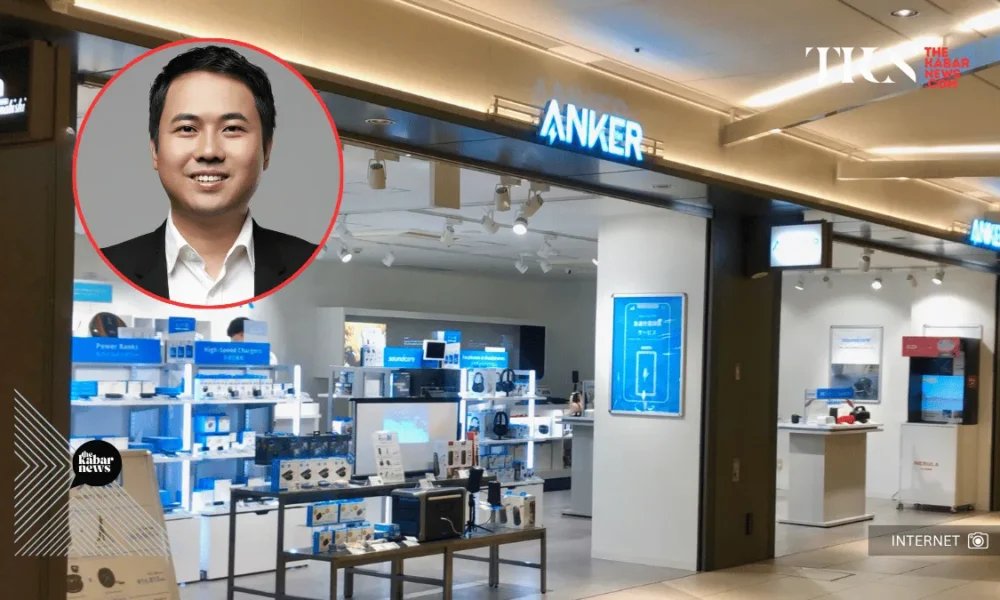
Anker started out in 2011 as a small Chinese seller of replacement laptop batteries and has since become a consumer electronics company. Ex-Google engineer Steven Yang founded the company and leveraged Amazon to attract international customers. Moreover, Anker Innovations said it aims to hit record sales, 200 million users, and coverage in over 180 regions by 2025.
Thekabarnews.com—Anker is one of the most well-known brands in the world for chargers, power banks, and consumer electronics accessories. It began with a former Google software engineer who saw the potential to sell better, cheaper products made in China to consumers around the world.
Steven Yang founded the company in 2011 after he left Google in California. He went back to China with less than $1 million, including savings from his mother, to launch the business. The South China Morning Post reported the news.
Elsewhere in the world, retailers carried non-Chinese goods. Anything produced in China was cheap and low-grade. I want to show foreigners good Chinese products. “I did it because of that,” Yang told the paper in a 2013 interview.
Anker has released replacement laptop batteries on Amazon. Yang and his team searched online customer reviews for complaints about battery life, reliability, and value. Then they worked with manufacturers in Shenzhen to find alternatives.
As cell phones became more important to consumers, Anker branched out into wall chargers. It also expanded into portable power banks, charging cables, and other mobile accessories.
Amazon gives us the ability to reach customers in key global markets immediately, without the need to build a large traditional retail network.
According to the company’s corporate prospectus, Anker was the best seller of mobile-charging products on Amazon in North America, Europe, and Japan in 2014. Later, the company extended to physical stores like Best Buy and Walmart.
Anker also developed its own charging technologies, such as PowerIQ, which identifies a connected device and delivers the right power level.
It later added more brands to its portfolio. This includes Soundcore for music products, Eufy for smart-home devices, Nebula for projectors, and Anker SOLIX for energy-storage systems.
Anker Innovations had a revenue of RMB 30.51 billion (around US$4.5 billion or Rp81.3 trillion) in 2025, up 23.49% year-over-year. In the 2025 annual report, net profit attributable to shareholders soared 20.37% to RMB2.55 billion.
Online sales reached RMB21.43 billion, accounting for 70.22% of the total revenue, which shows that e-commerce is still the core of Anker’s business model.
The 41 percent rise is the one most often quoted, and it is calculated from the total revenues of Anker Innovations in 2024, which were RMB24.71 billion. However, the focus is not solely on the income or sales from wireless charging in 2023.
By the end of 2025, the company employed 6,304 people, including 3,549 research and development employees. It reported well over 200 million users and sales in more than 180 countries and regions.
But as Anker has grown, so too have questions about product safety. In September 2025, the U.S. Consumer Product Safety Commission recalled about 481,000 Anker power banks following 33 reports of flames and explosions. The CPSC will provide a recall notice to consumers for affected model numbers.





No Comment! Be the first one.