



Indonesia’s MBG spending reaches Rp173.21 trillion
JAKARTA, The Kabar News—Indonesia had spent Rp173.21 trillion on its Free Meals (MBG) program by Oct. 31, 2026, as the nationwide initiative expanded to 58.2 million beneficiaries, according to...
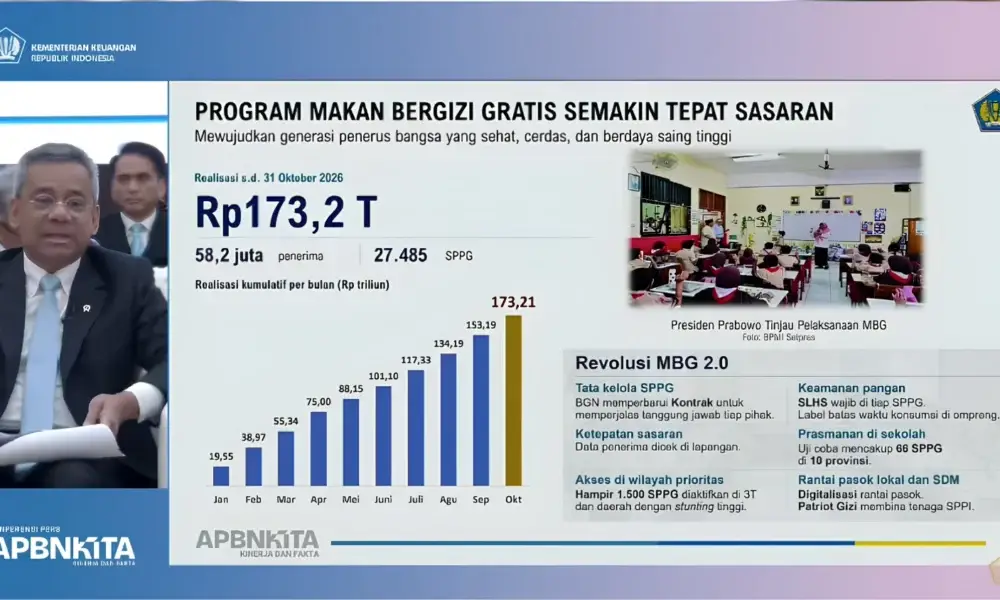
JAKARTA, The Kabar News—Indonesia had spent Rp173.21 trillion on its Free Meals (MBG) program by Oct. 31, 2026, as the nationwide initiative expanded to 58.2 million beneficiaries, according to Finance Minister Suahasil Nazara.
The government distributed the meals through 27,485 Nutrition Fulfillment Service Units (SPPGs). The figures show the scale of one of President Prabowo Subianto’s key social programs, but recent food-safety incidents have intensified scrutiny of its kitchens and oversight system.
“As of Oct. 31, the MBG program had realized Rp173.21 trillion in spending,” Suahasil said during the APBN KiTa state-budget press conference in Jakarta on Friday, Nov. 13.
He said the National Nutrition Agency (BGN) had introduced governance reforms after its new management began working in July. The changes cover kitchen operations, recipient verification and direct inspections in the field.
Read also: BGN suspends SPPG in Kubu Raya after hundreds of students return MBG packages
BGN has also strengthened food-safety requirements and expanded services in disadvantaged regions and areas with high stunting rates. Suahasil said the agency had tested buffet-style meal distribution at schools. Furthermore, it encouraged kitchens to use local supply chains and workers.
“We appreciate the various reforms carried out by BGN because they will improve the quality of the MBG program’s implementation,” he said.
The rapid expansion has increased the need for consistent hygiene standards at thousands of kitchens. The Health Ministry requires every SPPG to obtain a Hygiene and Sanitation Eligibility Certificate (SLHS). This certificate is written evidence that it meets food-handling requirements. Its circular also identifies hygiene controls as essential to preventing contamination in ready-to-eat meals.
BGN said in September that it imposed temporary suspensions on an average of 20 to 30 SPPGs per day following field monitoring. The agency may suspend a kitchen after investigators find unsafe food, poor sanitation or unresolved corrective recommendations. In addition, it verifies public complaints before imposing sanctions.
Read also: SPPGs must provide their own delivery vehicles
Food safety again drew attention after students in Dramaga, Bogor regency, reported illness on Oct. 27. The Bogor administration said 481 students underwent initial examinations and 22 were referred to hospitals.
BGN used a narrower measure, reporting that 40 students required observation and 13 remained under observation late that evening. The different figures therefore referred to different stages of examination and treatment.
BGN temporarily suspended SPPG Bogor Dramaga 4 while investigators tested food samples. The agency said its preliminary inquiry examined peanut sauce prepared by a third party. However, it warned against drawing conclusions before laboratories completed their analysis.
Read also: Sudaryono warns SPPGs against profit chasing
The program’s performance cannot be assessed solely by spending, kitchen numbers or beneficiary coverage. Authorities must also publish comparable data on food-safety incidents, inspection results and corrective action.
As MBG continues to grow, consistent enforcement across every SPPG will determine whether the government can deliver meals at scale without compromising children’s safety.





No Comment! Be the first one.