



Indonesia plans bank accounts to deliver state aid
JAKARTA, thekabarnews.com—President Prabowo Subianto has asked the government to prepare bank accounts for Indonesian residents. This initiative could potentially create a new channel for...

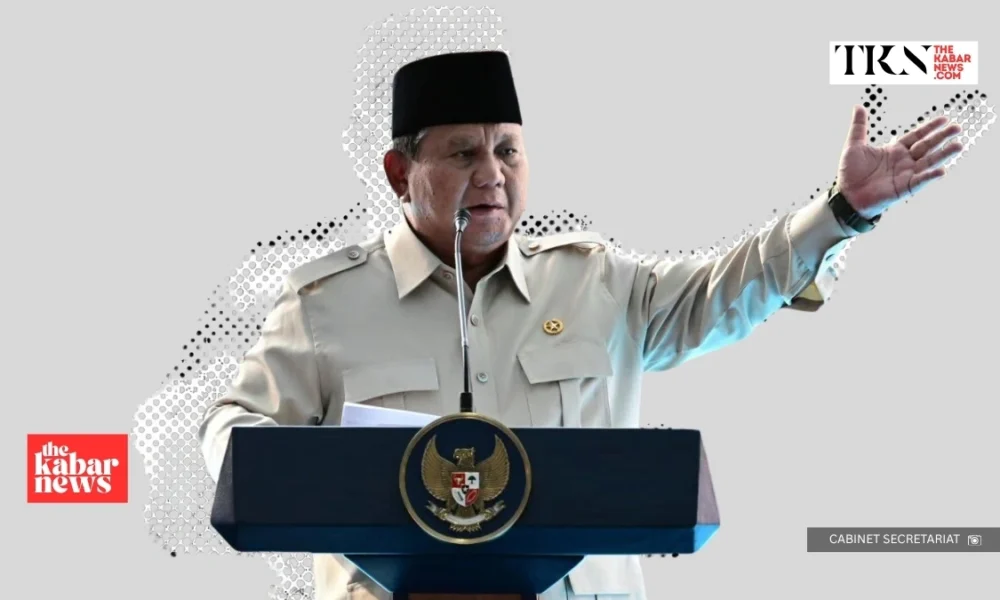
JAKARTA, thekabarnews.com—President Prabowo Subianto has asked the government to prepare bank accounts for Indonesian residents. This initiative could potentially create a new channel for distributing social assistance and other state programs.
Coordinating Economic Affairs Minister Airlangga Hartarto announced the plan after a meeting with Prabowo at the Presidential Palace in Jakarta on Monday, September 7.
The government asked Bank Rakyat Indonesia (BRI) and Bank Syariah Indonesia (BSI) to support the initiative.
“The President asked that Indonesian residents have bank accounts. BRI and Bank Syariah Indonesia have therefore been asked to prepare accounts for the public,” Airlangga said.
His use of the Indonesian term “rekening koran” refers in this context to a bank account. It does not mean merely a printed bank statement.
The government plans to use population records maintained by the Home Ministry’s Population and Civil Registration Directorate General (Dukcapil) as the identity-data foundation. Then, officials would match the information with Bank Indonesia’s payment infrastructure.
“The data will come from Dukcapil and will be matched with the systems at Bank Indonesia, particularly the payment system and gateway system. It will use QRIS,” Airlangga said.
Indonesia uses QRIS as its standardized quick-response payment system. It allows users to make payments through approved banking and electronic-money services, but it does not replace a bank account.
Bank Indonesia (BI) operates the National Payment Gateway as the broader infrastructure connecting payment channels. This includes systems used to distribute non-cash government assistance.
Bank Indonesia has also supported the development of digital government-to-person payment systems.
Airlangga said the government could eventually transfer various programs to the accounts created for residents.
However, officials have not announced when the initiative will begin or whether it will cover every citizen automatically.
The government has also kept the registration process, account charges, and consent requirements for residents who already hold bank accounts private.
Financial institutions would still need to follow applicable customer identification and banking rules.
The proposal forms part of the government’s effort to expand financial inclusion.
Indonesia’s 2026 National Survey of Financial Literacy and Inclusion recorded a financial-inclusion index of 93.61 percent and a literacy index of 69.57 percent.
The survey covered 75,000 households across all 38 provinces. The inclusion figure measures access to formal financial services. The literacy index evaluates people’s knowledge and ability to make financial decisions. Both indicators increased from 2025, according to Statistics Indonesia.
The remaining gap between access and understanding suggests that opening more accounts must be accompanied by consumer education and protection.
The plan’s impact on social-assistance delivery will ultimately depend on the technical rules, data safeguards and access provided to residents in underserved areas.






No Comment! Be the first one.