



From Deng Xiaoping to Donald Trump: How global power shifted from Washington to Beijing
Thekabarnews.com—The global balance of power between the US and China has changed from a simple hierarchy to a complex competition for economic and political supremacy over the past half-century....

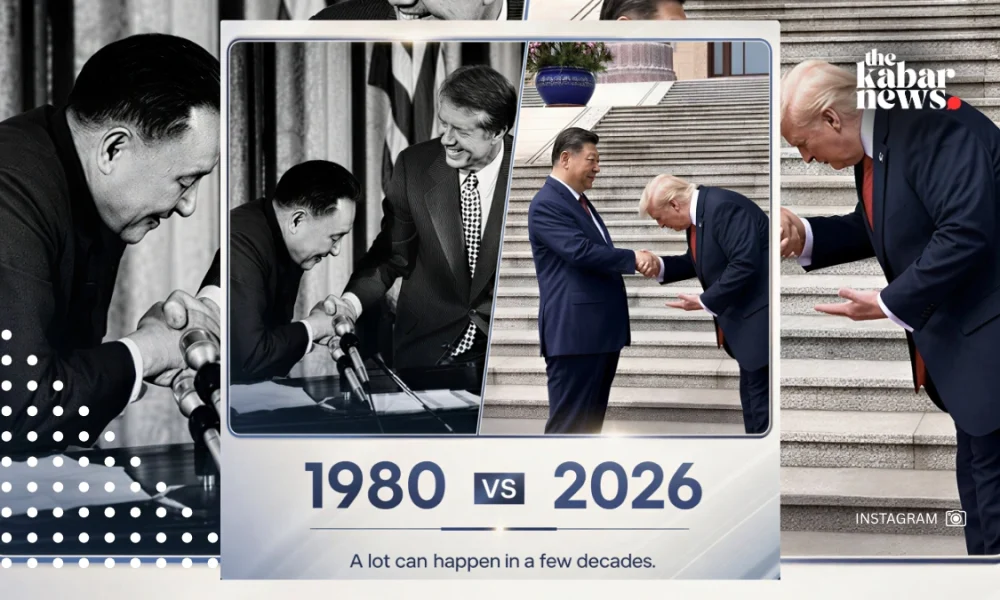
Thekabarnews.com—The global balance of power between the US and China has changed from a simple hierarchy to a complex competition for economic and political supremacy over the past half-century.
Late seventies, early eighties. After Mao’s death, Deng Xiaoping confronted China with a stark truth: if it was to survive, it had to be patient, calm, and humble.
At the time, China was not strong enough economically or militarily to take on the United States directly. Deng preferred pragmatism to confrontation.
He advocated economic reform and a stance of political humility toward Washington, particularly in the days of former U.S. President Jimmy Carter.
Rather than challenging American power on the ground, China quietly adjusted to the global rules laid down by Western powers in the wake of the 1973 oil crisis and the advent of neoliberal globalization.
The world’s factory became China as multinational companies started to move their manufacturing offshore to cut costs.
Factories relocated. Supply chains were transformed. And then the capital. China’s integration into the world system gradually turned into control over its vital elements.
China didn’t just participate in globalization; it consumed the West’s industrial base. The geopolitical picture looks quite different half a century later.
China is now the center of global manufacturing, supply chains, and industrial production. Capital is flowing into Beijing, not out of it.
Now China is entering the arena that was just the United States for so long, in everything from electric cars to rare earth processing to high-end infrastructure. It is the biggest strategic shift of the modern age.
The formerly shy and crabbed country is now self-assured. The US, by contrast, is awash with nagging concerns about deindustrialization, fraying supply chains, and the future of US global leadership.
Some analysts believe President Donald Trump saw this shift and came back with his own counter-strategy.
His trade wars and tariffs, his effort to bring manufacturing back to the U.S., were not short-term economic policies but an effort to rebuild what many are calling the foundations of a declining empire.
American political cycles tend to be more short-term in their planning, whereas China has shown patience over the decades.
This contrast between Chinese patience and American urgency is the source of much of the tension in the world today. Diplomatic diplomacy goes well beyond formal policy.
Body language, symbolism, and political posture matter. Leaders’ posturing, bargaining, and displays of power often impact public perception as much as economic data do.
Image is important in international politics. As philosopher Jacques Derrida said, language and symbols justify power.
And that’s what makes the posturing between Washington and Beijing so revealing. The story is different.
The world that watched China adjust to primacy now watches America adjust to China’s arrival.
It’s no longer a question of whether power has shifted but of how the remaining architecture of American influence will adapt to a world in which Beijing is no longer the subordinate.






No Comment! Be the first one.