



Hajj and Umrah are not rewards for perfection but mercy for imperfect souls
Thekabarnews.com—Many Muslims regard being invited to Baitullah, the House of Allah ﷻ in Makkah, as the ultimate spiritual achievement. They often assume that the person blessed to perform Hajj or...

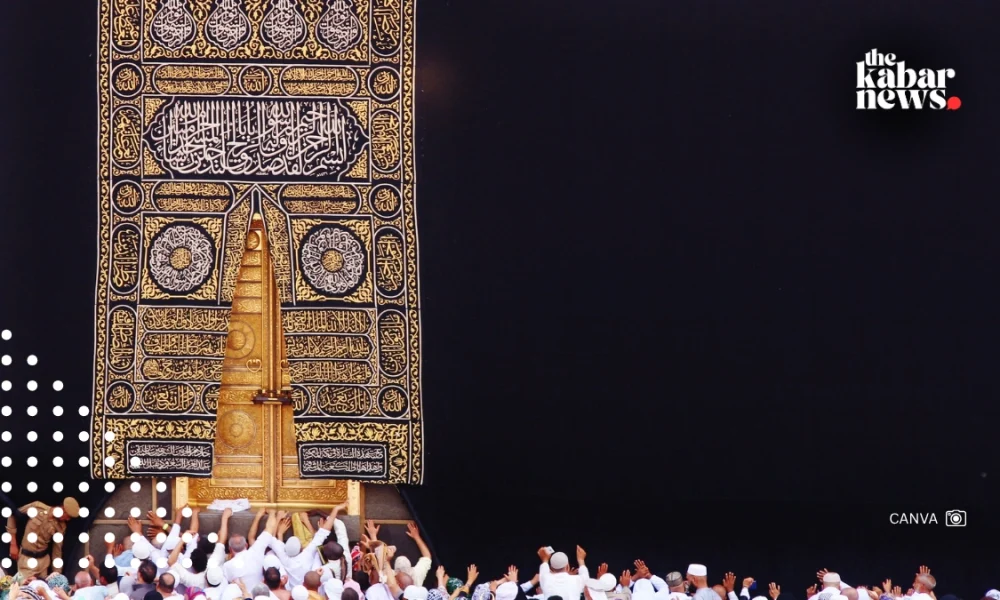
Thekabarnews.com—Many Muslims regard being invited to Baitullah, the House of Allah ﷻ in Makkah, as the ultimate spiritual achievement. They often assume that the person blessed to perform Hajj or Umrah must be among the most righteous, most pious, and most deserving servants of Allah ﷻ.
But perhaps the truth is far more modest.
Being invited to stand before the holy Kaaba is not necessarily being the holiest of people. It can even mean the opposite at times. Perhaps we are the ones with the worst sins, the deepest regrets, and the longest list of silent mistakes behind nice smiles and normal routines.
And yet with all that, Allah still calls us by our names.
Maybe the invitation to Baitullah is not a reward for our perfection but a mercy for our brokenness.
Allah doesn’t wait for His ﷻ servants to become perfect before accepting them. Invitation to perfect people only. Who of us ever did deserve to come?
All souls are flawed. All hearts engage in wars we cannot see. We are all trying to navigate through this dunya with weakness, disappointment, guilt, and private pain.
Some come to Makkah with tears that no one knows about. Some come after years of unanswered prayers and emotional exhaustion. Many people stand before the Kaaba and are ashamed of the sins they repeatedly returned to. However, Allah ﷻ provides an opportunity.
Such is the beauty of the mercy of God.
Allah ﷻ invites us not because we are virtuous most of the time, but because Allah ﷻ wants us to come back to him. He ﷻ provides us a sacred respite from the noise of worldly life so that we can hear the whispers of our souls again.
A time for reflection before the titles of the Kaaba are lost. Money means nothing. Social standing does not count anymore. And all are equal, with nothing but humility before the greatness of Allah ﷻ.
Perhaps that’s what our hearts have been longing for all along.
A place where we no longer have to pretend we’re strong. “There is no shame in a place to cry.” A place for broken people to find forgiveness in silence. A place where tired spirits can breathe at last.
There is something so healing about standing in Baitullah and knowing how small this world really is. Suddenly, the ambitions that once consumed us feel fleeting. The burden of our daily cares becomes lighter. For a moment dunya loosens its hold, and we begin to see the beauty of simply being a servant of Allah ﷻ.
Not a people person. This is not for the commendation of men.
A servant is simple before his master.
Occasionally the truest prayers are not prayers of confidence but prayers of guilt, helplessness, and regret. Maybe that’s why Allah ﷻ takes some of us there. To make us cry like we’ve never cried before, to confess the sins we hid, and to finally whisper in all honesty, “Ya Allah, I really need You,” is the purpose of this prayer.
Baitullah teaches us that proximity to Allah ﷻ is not about playing at being clean. It’s about returning, no matter how far we’ve come. It is about believing that the mercy of Allah ﷻ is more than our sins.
Never be proud of yourself when Allah ﷻ calls you to His house one day. But let us instead be ashamed. Maybe the invitation itself is evidence, not of our greatness, but of Allah ﷻ’s boundless love for the imperfect servants who keep trying to come back.
اللَّهُمَّ يَسِّرْ لِي زِيَارَةَ بَيْتِكَ الْحَرَامِ، وَارْزُقْنِي الْحَجَّ وَالْعُمْرَةَ، وَاجْعَلْهُمَا حَجًّا مَبْرُورًا وَعُمْرَةً مَقْبُولَةً، وَذَنْبًا مَغْفُورًا، وَسَعْيًا مَشْكُورًا
“O Allah, make it easy for me to visit Your Sacred House; grant me Hajj and Umrah; and make them a blessed Hajj, an accepted Umrah, forgiven sins, and rewarded efforts.”




No Comment! Be the first one.