



Trump delegation discards all China-issued items before boarding Air Force One
Thekabarnews.com—Reports say the delegation of U.S. President Donald Trump threw away everything they were given during their time in China. This occurred before boarding the presidential aircraft,...

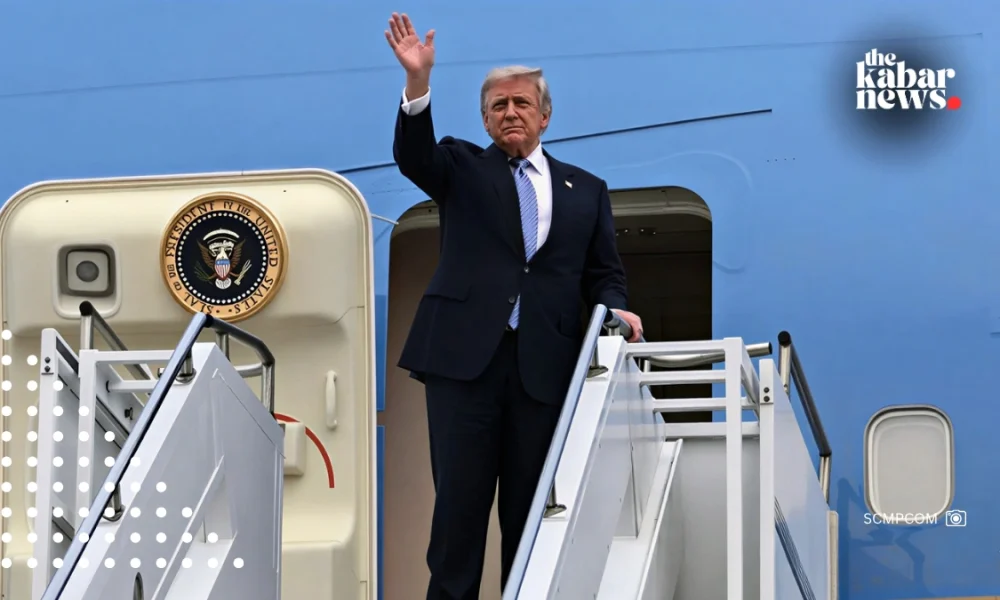
Thekabarnews.com—Reports say the delegation of U.S. President Donald Trump threw away everything they were given during their time in China. This occurred before boarding the presidential aircraft, Air Force One, on Friday, May 15.
The move came under the spotlight after American journalist for The New York Times Emily Goodin reported about it. She said White House staff told everyone to leave behind all items from China and not to take them to the aircraft.
“We collected everything Chinese officials handed out, including press credentials, delegation badges, and temporary mobile phones given to White House staff during the visit,” Emily Goodin said.
“American staff collected all the items given by the Chinese officials, including ID cards and burner phones from White House staff and delegation badges, boarded AF1, and threw them in the trash under the stairs,” Goodin wrote on her X account.
She said that officials did not allow anything from China inside Air Force One. The delegation readied itself to fly straight back to the United States.
Later, White House reporters confirmed that the items thrown overboard were media passes, temporary communication devices, and official delegation identification badges.
The incident drew public notice. However, officials familiar with diplomatic travel said U.S. state delegations routinely follow this practice when visiting certain countries. This rule is particularly true for those seen as not being close strategic allies of Washington.
Security experts say the White House uses this standard security measure to reduce potential surveillance risks.
Officials often treat electronic equipment taken overseas as disposable and leave it behind after the trip. Devices are not returned to secure presidential transport systems. Likewise, officials also frequently leave behind phones and access cards.
These measures are particularly common for visits involving sensitive diplomatic discussions or travel to countries with high cybersecurity concerns.
Trump’s team was back in the U.S. Friday after a multi-day visit to Beijing that started last Wednesday.
The trip saw Chinese President Xi Jinping give Trump a warm official welcome and special hospitality.
High-level discussions on trade, geopolitical tensions, and broader bilateral relations between the two world’s largest economies accompanied the visit.
Despite the formal diplomatic warmth of the visit, the tight sequestration of all materials issued by China is indicative of the ongoing climate of strategic caution between Washington and Beijing.
These differences highlight the intricate nature of U.S.-China relations. Public diplomacy may appear cordial. Nonetheless, underlying deep institutional mistrust continues to shape operational decisions.
The dumping of delegation badges and phones under the stairs of Air Force The act of dumping delegation badges and phones under the stairs of Air Force One symbolized more than just a security protocol.
It was a microcosm of the delicate dance of diplomacy and distrust that still defines one of the most important geopolitical relationships of our time.



No Comment! Be the first one.