



DLH explains viral trash pile at Flamboyan Market
Pontianak’s Environmental Agency (DLH) says it deliberately suspended waste collection at Flamboyan Market after the market association allegedly failed to pay transportation fees for several years....

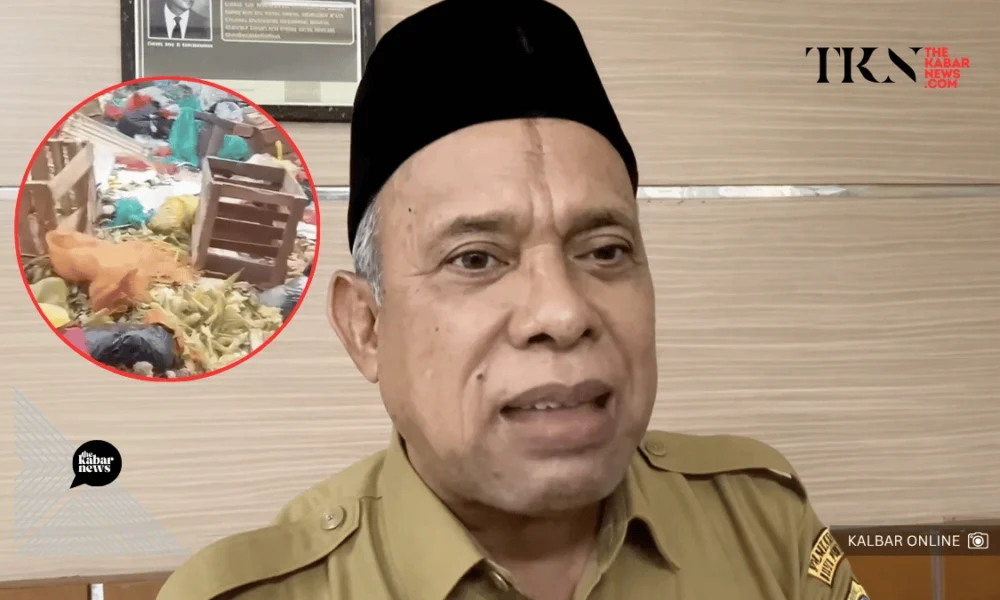
Pontianak’s Environmental Agency (DLH) says it deliberately suspended waste collection at Flamboyan Market after the market association allegedly failed to pay transportation fees for several years. The dispute surfaced after a video of accumulated rubbish went viral. This raised questions about responsibility, merchant payments, public health and when collection services will resume.
PONTIANAK, thekabarnews.com—Pontianak’s Environmental Agency (DLH) has confirmed that it deliberately stopped collecting waste from Flamboyan Market. They attribute the growing rubbish piles shown in a viral video to an unresolved payment dispute with the market’s management.
DLH Head Syarif Usmulyono said the agency’s operational cooperation arrangement divides responsibility between the municipal service and the market operator. Market workers move rubbish to a temporary collection point, while DLH transports it elsewhere for processing.
“The waste is taken out of the market to the temporary collection point, and we transport it from there. The market management or association is responsible for the transportation fee,” Usmulyono said.
Usmulyono alleged that Flamboyan Market’s management had failed to pay its waste transportation bills for several years. He described it as the only market currently owing such fees to the agency.
“The only market that has not paid its bill to us is Flamboyan Market,” he said.
The payment obligation has previously received formal municipal attention. Pontianak Mayor Edi Rusdi Kamtono signed Circular Letter No. 24.1/2026 on April 6. This letter specifically addresses mandatory sanitation-service payments at Flamboyan Market, according to Pontianak’s official legal-document portal.
Usmulyono said DLH had repeatedly invited market representatives to mediation sessions and meetings but claimed they did not attend.
“It is not that we failed to collect the waste; we deliberately stopped. That makes it the market management’s responsibility,” he stated.
He also addressed claims that individual traders had already paid sanitation fees to their association.
“If traders say they paid the association, we do not know about that. The fact is that the association did not pay us,” Usmulyono said.
The statements represent DLH’s account of the dispute. No independently verified response from Flamboyan Market’s management or traders’ association was available at publication time. The amount allegedly owed and the conditions for resuming collection also remain undisclosed.
Flamboyan is one of Pontianak’s largest traditional markets and generates considerable organic waste from vegetables, fruit, meat and other daily trading activities. Prolonged accumulation can create odors, attract pests, obstruct drainage and interfere with market operations.
The disagreement comes as Pontianak faces a broader increase in waste generation. The Pontianak administration reported in July that seasonal fruit waste had pushed volumes up by about 20%. Sanitation crews had to increase collection trips and overtime.
Around 377.83 tonnes of waste still enter Pontianak’s final processing site each day. The city’s waste-reduction rate stands at 18.87%, according to the Pontianak municipal government.
Resolving the Flamboyan dispute will require clear accounting of fees collected from traders. It will also require consideration of the association’s outstanding obligations and an agreed timetable for restoring waste transportation.
Until both parties publish those details, responsibility for the unpaid charges remains a contested claim rather than a fully established finding.





No Comment! Be the first one.