



Ketapang wildfires kill pangolins and threaten wildlife
KETAPANG, thekabarnews.com—Forest and land fires (Karhutla) in Ketapang Regency, West Kalimantan, have killed a protected Sunda pangolin and several snakes, highlighting the growing ecological damage...

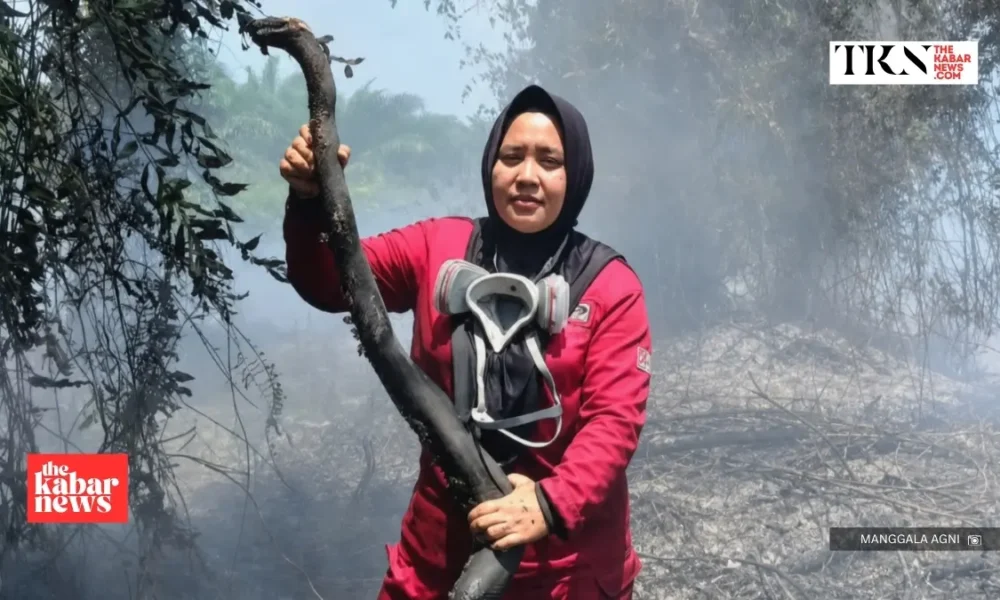
KETAPANG, thekabarnews.com—Forest and land fires (Karhutla) in Ketapang Regency, West Kalimantan, have killed a protected Sunda pangolin and several snakes, highlighting the growing ecological damage caused by Indonesia’s prolonged 2026 wildfire season.
Manggala Agni firefighters discovered the dead pangolin near Tanjung Pura Main Road in Sungai Awan Kiri village, Muara Pawan district, on Wednesday, August 19. The Kalimantan X/Ketapang operational unit confirmed the discovery on Friday, August 21.
Personnel also found dead snakes and burned bee nests while suppressing fires in the affected area.
“So far, snakes are the animals we have most frequently found dead due to forest fires,” acting Ketapang Manggala Agni Operations Chief Efendi said, as quoted by RRI.
Efendi confirmed that one of his team members had discovered the pangolin at the fire site.
Manggala Agni Prevention and Innovation Coordinator Fitria Sri Handayani said firefighters had repeatedly encountered wildlife and damaged habitats during field operations.
“Apart from pangolins and snakes, our teams frequently encounter burned bee nests while handling fires in the field,” Fitria said.
The Sunda pangolin (Manis javanica) receives legal protection in Indonesia under Environment and Forestry Ministry Regulation No. P.106/2018.
The Forestry Ministry’s conservation authority also identifies the species as critically endangered and listed under Appendix I of the Convention on International Trade in Endangered Species, the highest level of international trade protection.
Indonesia’s protected-fauna database includes the Sunda pangolin among species protected nationally.
Wildfires threaten animals not only through direct contact with flames and smoke but also through the destruction of their habitats.
They also destroy shelter, food sources, nesting sites and the vegetation corridors wildlife uses to escape.
Manggala Agni personnel had not found orangutans or sun bears among the confirmed casualties when the report was issued.
Efendi said larger mammals could detect danger and flee earlier than slower-moving animals. However, the absence of recovered carcasses does not establish that those species escaped without harm.
Habitat loss, fragmented feeding areas and prolonged smoke exposure may continue affecting wildlife after firefighters extinguish the visible flames.
Authorities had not released a comprehensive assessment of the number of animals killed, injured or displaced.
The wildlife discoveries occurred as fires expanded across Ketapang during an exceptionally dry season. Efendi previously said validated data showed that approximately 12,000 hectares burned in the regency between January and July 2026.
“From January to June, the figure was around 8,000 hectares. After validation in July, another 4,000 hectares were added, bringing the total to 12,000 hectares,” he said.
Firefighters continue to conduct ground suppression, patrols, water bombing and post-fire cooling.
The findings show that authorities must complement emergency firefighting with habitat monitoring and wildlife rescue operations because the ecological consequences can persist long after the smoke disappears.





No Comment! Be the first one.