



Indonesia’s Shadow Cabinet holds first Jakarta meeting
JAKARTA, thekabarnews.com—Indonesia’s newly formed “Shadow Cabinet” held its first full meeting in Cikini, Central Jakarta, on Monday, July 27. At this meeting, it formally began its work as a civil...
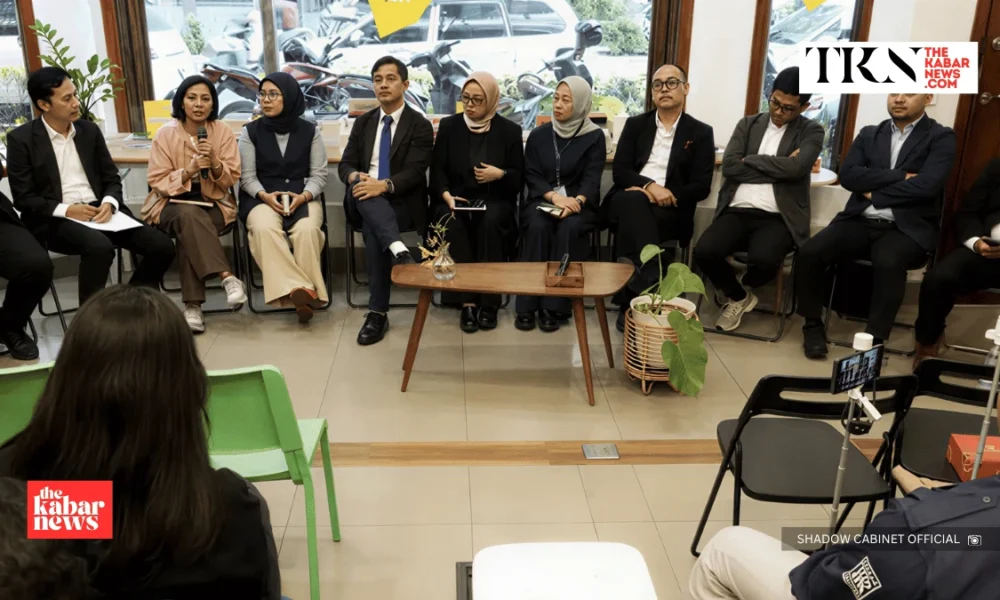
JAKARTA, thekabarnews.com—Indonesia’s newly formed “Shadow Cabinet” held its first full meeting in Cikini, Central Jakarta, on Monday, July 27. At this meeting, it formally began its work as a civil society watchdog of President Prabowo Subianto.
The 15-member group brings together academics, researchers and activists from fields including economics, law, health, education, environmental protection and digital policy. Despite its name, the Shadow Cabinet is not a government institution. Also, it has no executive authority.
Instead, the volunteer-based initiative adapts the shadow cabinet model commonly used by opposition parties in parliamentary systems such as Britain, Australia and Canada.
Indonesia operates under a presidential system, making this an independent civic initiative rather than an official opposition cabinet.
Constitutional law expert Feri Amsari serves as the group’s state secretary. He said its members formed the initiative because they believe parliamentary oversight of the executive has weakened.
“Civil society has decided not to wait for the mechanism to be fixed from above, but to build it independently with competent, non-partisan people whose track records can be held accountable,” Feri said.
The Shadow Cabinet says members will monitor government ministries, assess major policies and publish evidence-based alternatives.
Its immediate agenda includes public dialogues, university visits, open policy debates and a public fundraising campaign for small-scale community services.
Within three months, it plans to publish two evaluations. Firstly, a report card measuring the performance and policy delivery of Prabowo’s Red and White Cabinet. Secondly, a separate assessment of the Shadow Cabinet’s own work.
“The president for us is the people—the public whose wishes we must follow,” Feri said during the group’s press conference.
The Shadow Cabinet has created portfolios covering 15 strategic areas. Its members include economist Bhima Yudhistira for finance and budget governance. Irma Hidayana covers health. Nenden Sekar Arum focuses on research and digital affairs. The Greenpeace Indonesia activist Iqbal Damanik handles environmental policy.
The Shadow Cabinet plans to examine issues including healthcare commercialization, fiscal governance, natural-resource exploitation, digital rights, food security and access to essential public services.
It will also establish “shadow hearings,” publish policy papers and develop a public dashboard to track government promises. This information is according to the group’s official website.
Members serve without salaries. The initiative says it rejects corporate and foreign funding and intends to use public crowdfunding that is auditable.
The organization cannot overturn laws, direct ministries or control public budgets. Its influence will depend on the credibility of its research, public participation and whether government officials engage with its recommendations.
Under Article 20A of the 1945 Constitution, the House of Representatives holds formal legislative, budgetary and oversight powers.
DPR lawmaker Putra Nababan acknowledged in February that parliamentary monitoring still required improvement.
“Oversight must not become merely a paper tiger,” he said through the DPR’s official news service.
The Shadow Cabinet now faces its test. It must turn public criticism into accurate, measurable, and workable policy alternatives that improve government accountability and public services.


No Comment! Be the first one.