



West Kalimantan governor warns regional budgets are under severe pressure
JAKARTA, Thekabarnews.com—West Kalimantan Governor Ria Norsan said the rising personnel expenditure and the problems with the regional transfer funds are putting enormous pressure on local budgets. ...

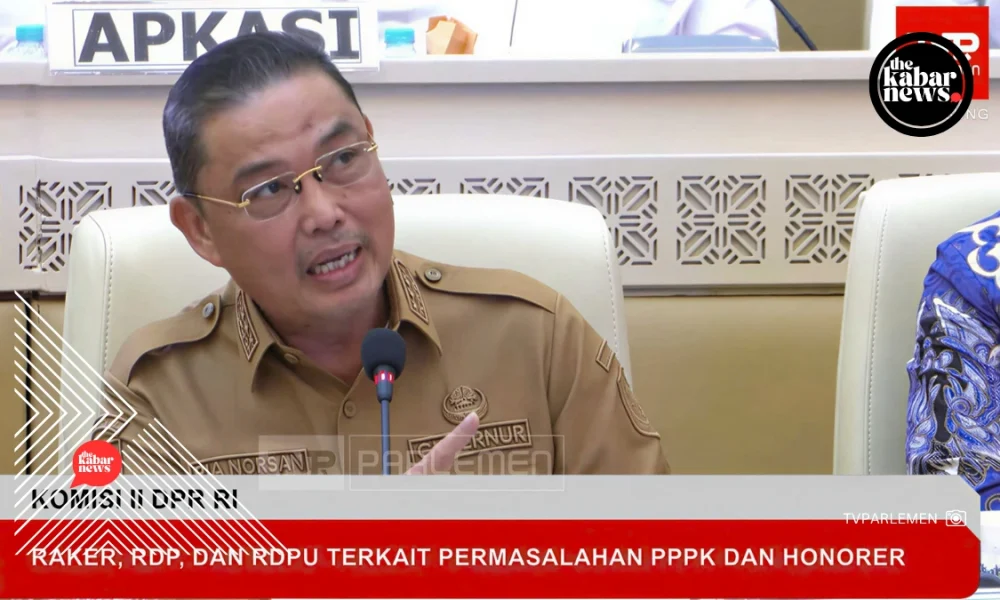
JAKARTA, Thekabarnews.com—West Kalimantan Governor Ria Norsan said the rising personnel expenditure and the problems with the regional transfer funds are putting enormous pressure on local budgets.
Governor Ria Norsan calls on the central government to provide a more sustainable financing mechanism for regional administrations.
“The fiscal condition of the regional governments is getting harder,” Norsan told a working meeting with Commission II of the House of Representatives (DPR RI) in Jakarta on Monday, June 8.
He used a vivid analogy, saying local administrations felt as if they had been “hit by a ladder, chased by a mad dog, fallen to the ground, and then been chased by another mad dog.”
“Regional finance burdens mainly consist of salaries for government contract employees (PPPK) and management of Regional Transfer Funds (TKD),” Norsan said.
“We need a response from the federal government,” he said to parliamentarians.
The West Kalimantan provincial government has been able to cut personnel expenditure to 28.88 percent of the total budget. This was possible thanks to expenditure controls and stronger locally generated revenue, Norsan remarked.
But he said many district and municipal governments continue to have serious financial problems.
Of the regencies and municipalities in West Kalimantan, only Sambas Regency was able to control personnel expenditures within the limits of government regulations.
“Some six local governments in the province have serious fiscal challenges and need loans from a regional development bank to pay the salaries of PPPK,” he said.
The provincial government cannot dismiss PPPK employees. “That would be brutal,” Norsan said.
His remarks came amid growing financial pressures on many local governments due to the nationwide recruitment of PPPK personnel. This occurred under Indonesia’s civil servant reform program.
Norsan’s words echoed similar remarks made by several other regional leaders at the parliamentary meeting.
Regional leaders argued that recruiting PPPK staff has improved public services but has also significantly increased local governments’ operating expenses. In addition, the problem is compounded by the ongoing recruitment of PPPK staff.
Regional leaders have called on the central government to adopt a long-term financing model. This would help reduce the fiscal burden on the provinces, regencies, and municipalities.
Many regional administrations have been unable to balance personnel costs with infrastructure, healthcare, education, and other key public service spending. This issue comes under current funding arrangements.
Personnel expenditure is one of the largest parts of regional government budgets in Indonesia.
High wage bills can crowd out fiscal space. Thus, they limit the ability of local governments to finance development projects, and improve public services.
Regional administrations grappling with national staffing policies and healthy fiscal conditions are ratcheting up their focus on the issue.
Closer coordination between the central and regional governments will be critical. This can guarantee that civil service reforms do not inadvertently harm local public finances.
The debate continues in Parliament. Meanwhile, regional leaders hope the central government formulates funding policies that will allow such progress for local administrations to meet salary obligations.
At the same time, such an outcome should be possible without cutting economic development or vital public services.
The debate in West Kalimantan, as in many other provinces, has moved from discussion of personnel management to a broader debate about the long-term sustainability of Indonesia’s regional fiscal system.




No Comment! Be the first one.