



Israel and Lebanon agree on ceasefire linked to Hezbollah’s pullback
Thekabarnews.com—Israel and Lebanon agree on a new ceasefire draft plan to ease tensions along the volatile border. Both governments have made their agreement conditional on Hezbollah ending all...

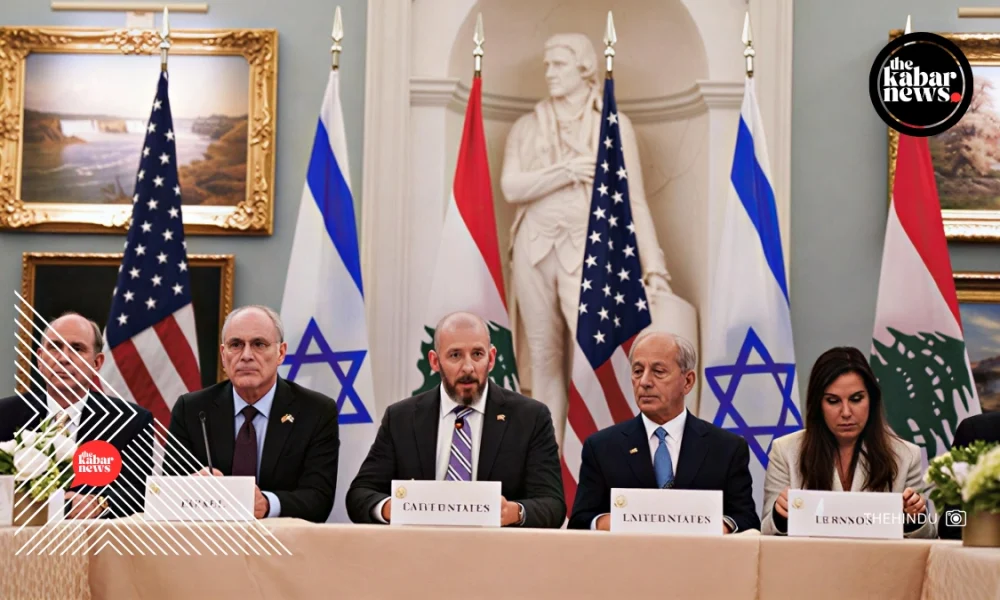
Thekabarnews.com—Israel and Lebanon agree on a new ceasefire draft plan to ease tensions along the volatile border. Both governments have made their agreement conditional on Hezbollah ending all military activity. Moreover, they require expelling all its operatives from southern Lebanon.
The U.S. State Department issued a joint statement describing security conditions that both sides say are necessary to maintain stability. These measures also aim to prevent further escalation in the region.
The truce would only take effect if Hezbollah stopped all military activity and withdrew all forces from the strategic zone south of the Litani River. This area has long been a flashpoint in the tense relationship between Israel and the Iranian-backed Lebanese group.
The ceasefire is conditional on Hezbollah halting fire entirely. It also depends on all Hezbollah personnel leaving the southern Litani sector, the statement said.
The announcement is the latest diplomatic step to ease hostilities after months of cross-border exchanges. These exchanges had raised fears of a broader regional conflict.
International mediators, including the United States, have been actively engaging with both governments to establish a foundation for reducing the risk of renewed violence. Furthermore, they are working to restore security along the border.
The Litani River has been a contentious issue in past agreements between Israel and Lebanon. Earlier UN resolutions had called on armed groups to stay north of the river. In addition, Lebanese state authorities and international peacekeepers had been increasing their responsibility for security in the area.
Periodic clashes and security incidents over the years have kept tensions simmering.
The new terms of the ceasefire may be difficult to enforce. This is especially so given Hezbollah’s military presence and influence in Lebanon’s political landscape.
Meanwhile, a successful withdrawal could reduce the likelihood of future military clashes and open the way for wider diplomatic engagement.
The United States has been working to prevent the conflict from spiraling into a broader regional crisis. Washington has repeatedly called for de-escalation and respect for existing arrangements for international security.
Success of the truce will ultimately depend on the mechanisms put in place to implement and verify it. Implementation may require close coordination with enforcement of the agreed terms and the Lebanese authorities need to monitor implementation accordingly.
The announcement comes amid geopolitical tensions across the Middle East, where wars between state and non-state actors are increasingly a concern. These developments affect regional stability and international security.
The framework could form the basis of a more lasting arrangement that would lessen the likelihood of future confrontations.
Both governments say they support the terms of the truce. However, peace will be difficult to sustain without constant dialogue and confidence-building measures. You must also adhere to the agreed-upon security commitments.
For now, the deal signals that it may open a path for de-escalation in one of the Middle East’s most sensitive flashpoints.
In the coming weeks, we will see whether the framework for the ceasefire can deliver lasting stability on the ground. Ongoing tensions could still undermine our diplomatic efforts.





No Comment! Be the first one.