



West Java leads Indonesia’s domestic tourism boom in 2026, BPS data shows
Thekabarnews.com—Domestic tourism is still a major contributor to Indonesia’s economic growth. The latest data from Statistics Indonesia (BPS) indicates that West Java will be the most-visited...

Thekabarnews.com—Domestic tourism is still a major contributor to Indonesia’s economic growth. The latest data from Statistics Indonesia (BPS) indicates that West Java will be the most-visited province in the country by 2026.
The report tracks the movement of domestic tourists across the archipelago. It shows Indonesian travelers made tens of millions of trips over the year. This highlights the growing role of local tourism in underpinning regional economies.
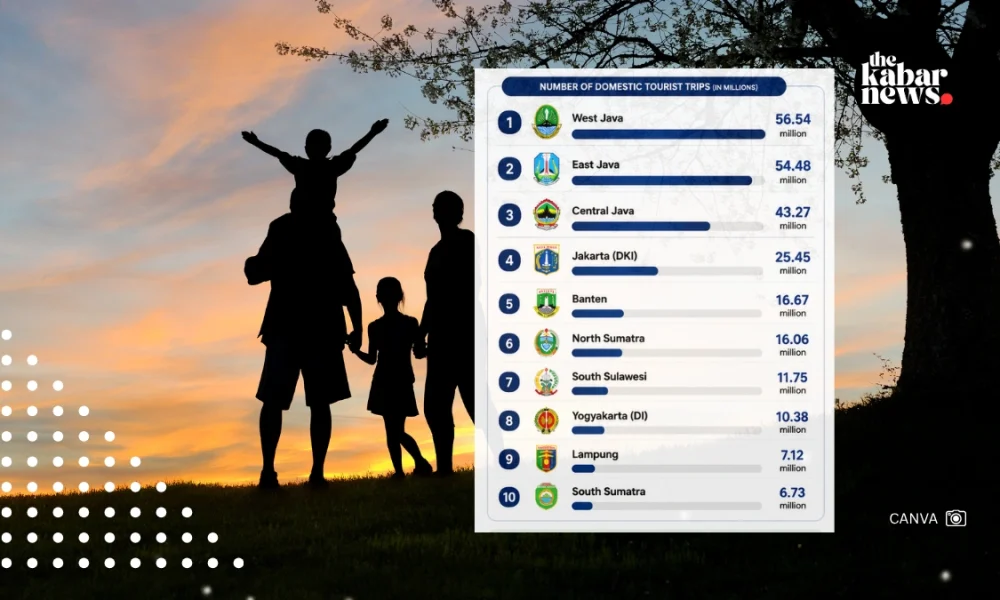
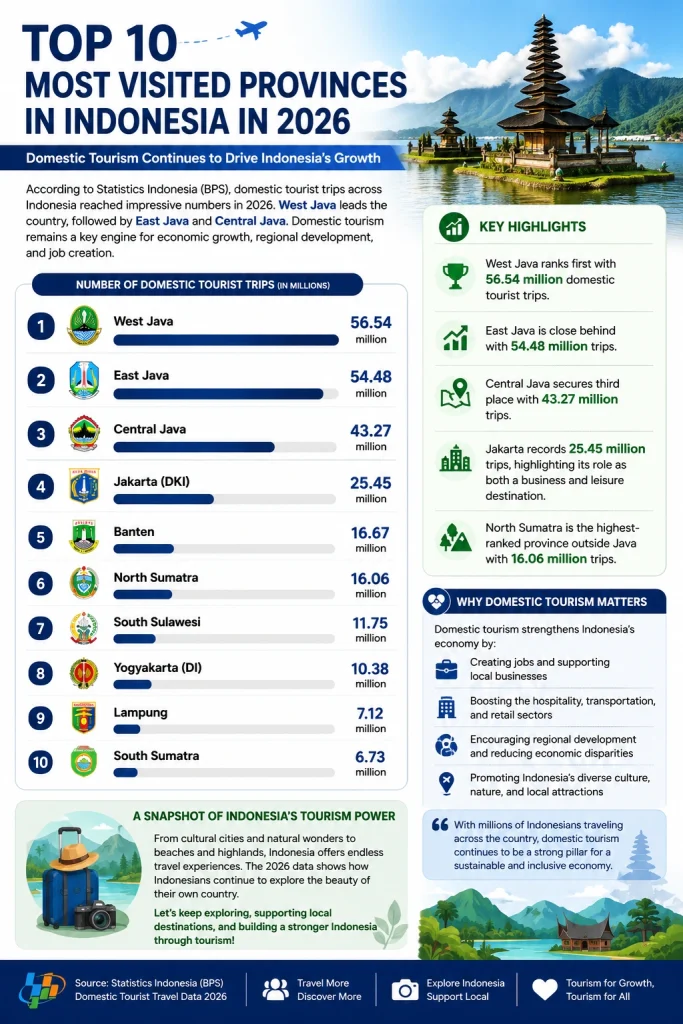
With about 56.54 million trips, West Java recorded the highest number of domestic tourist visits. The province narrowly edged out East Java, which received about 54.48 million domestic visitors during the same period.
Central Java took third place, with 43.27 million trips. This further confirms the strong appeal of the island of Java as the main destination for domestic tourism.
Jakarta booked the fourth position with 25.45 million trips, with Banten completing the top five with 16.67 million visits.
Outside Java, the most popular destination was North Sumatra (16.06 million domestic tourist trips). The province’s mix of cultural attractions, food tourism, and natural destinations continues to draw people from across the country.
The next was South Sulawesi with 11.75 million visits. This was followed by the Special Region of Yogyakarta with 10.38 million domestic arrivals.
Thanks to its historical sites, educational institutions, and cultural heritage, Yogyakarta is still one of the most recognizable tourism destinations in Indonesia.
Lampung and South Sumatra finished the top ten with 7.12 million and 6.73 million trips, respectively. Domestic travelers have become increasingly important to Indonesia’s tourism industry.
Domestic tourism may provide a steadier, more consistent stream of economic activity for hotels, restaurants, transport providers, retail outlets, and local communities. Even though the focus is often on international arrivals, domestic tourists remain essential.
The dominance of provinces on Java Island is a reflection of the population distribution, transportation infrastructure, and economic activity concentration in the country.
More than half of Indonesia’s people live on the island of Java. This makes it much easier to get from one city to another and from one province to another.
Meanwhile, destinations outside Java continue to enhance their tourism appeal with investments in infrastructure, destination branding, and improved connectivity.
The trend and belief is that the growth of domestic tourism can help Indonesia achieve broader economic goals. This happens by creating jobs, supporting small businesses, and encouraging more balanced regional development.
Latest data also show some shifts in the travel patterns of Indonesian consumers. They are increasingly looking for short-distance holidays, cultural and culinary tourism, and nature-based destinations within the country.
As the tourism industry in Indonesia continues to grow, domestic tourists are expected to remain a major driver of that growth.
The latest data from BPS demonstrates the vast size of Indonesia’s domestic tourism market and its growing contribution to the national economy. These data recorded well over 56 million trips in West Java alone.






No Comment! Be the first one.