



BPS reveals top 10 Indonesian provinces with the highest economic growth in 2026
Thekabarnews.com—Statistics Indonesia (BPS) released the latest report on provinces with the highest economic growth in 2026, showing strong performance from Eastern Indonesia. Resource-based...

Thekabarnews.com—Statistics Indonesia (BPS) released the latest report on provinces with the highest economic growth in 2026, showing strong performance from Eastern Indonesia. Resource-based regional economies also performed strongly.
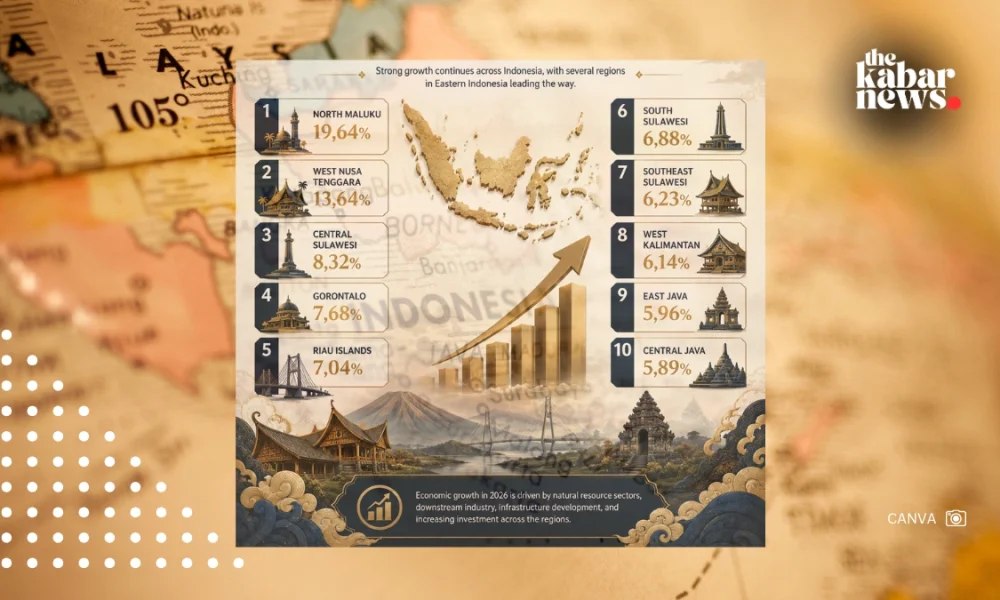
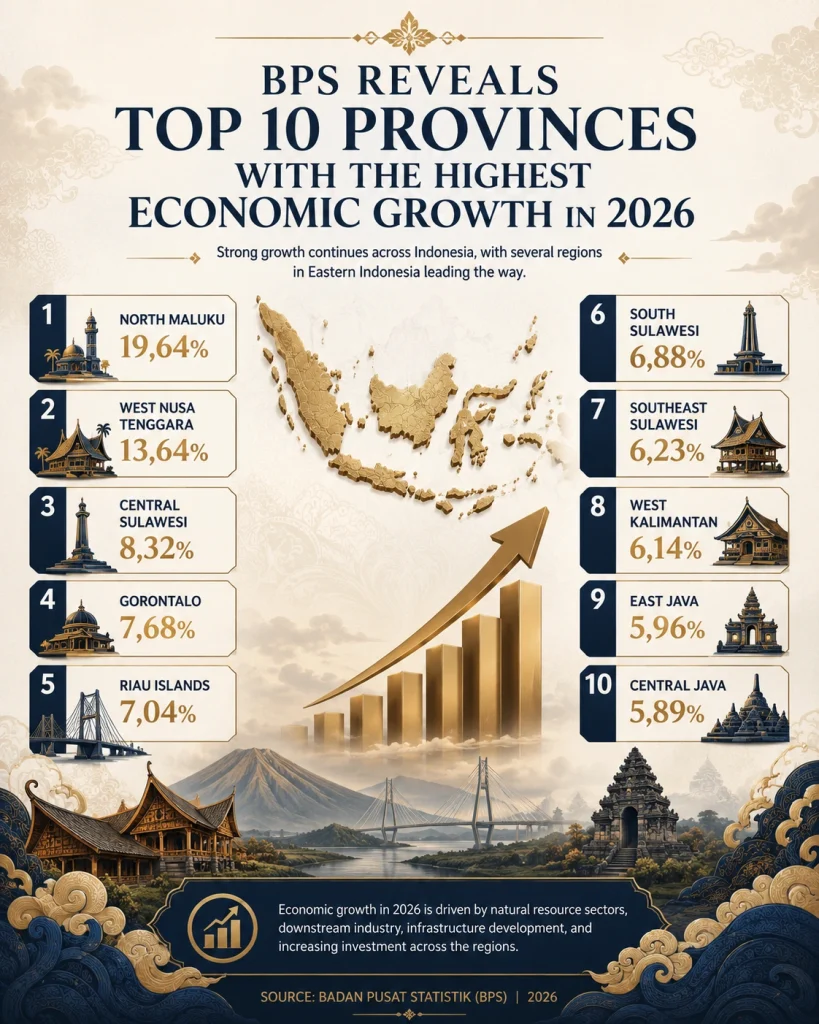
This year, North Maluku experienced the highest economic growth in the country, reaching an impressive 19.64 percent, according to BPS data.
Second was West Nusa Tenggara (NTB) with 13.64 percent, and third was Central Sulawesi with 8.32 percent.
Provinces outside of Java continue to show robust expansion, particularly in mining sectors, downstream industries, energy, and strategic investment projects.
Here is the full list of 2026’s top 10 provinces with the highest economic growth:
1. North Maluku–19.64 percent
2. West Nusa Tenggara–13.64 percent
3. Central Sulawesi–8.32 percent
4. Gorontalo-68 percent
5. Riau Islands–7.04 percent
6. South Sulawesi-6.88 percent
7. Southeast Sulawesi–6.23 percent
8. West Kalimantan–6.14 percent
9. East Java—5.96 percent
10. Jawa Tengah—5.89 percent
One of the provinces that attracted attention was West Kalimantan, which occupied the eighth position with 6.14 percent growth. This performance leads the province to be ahead of major economic centers such as East Java and Central Java.
Natural resource extraction, particularly mining commodities like nickel, bauxite, and alumina, and industrial downstream processing have been major drivers of rapid growth in provinces like North Maluku. In addition, Central Sulawesi and West Kalimantan have also benefited.
The development of infrastructure and foreign direct investment has also been important to accelerate regional growth. But economists also caution that high growth figures do not always signal inclusive development.
Analysts have pointed out that provinces heavily reliant on extractive industries are vulnerable to swings in global commodity prices. Moreover, these provinces may have difficulty creating strong local added value for communities.
This is particularly true for provinces like West Kalimantan, where mining and commodity exports continue to be important drivers of economic growth.
The BPS data also show the sustained better growth rates of the eastern Indonesian provinces than those of many of the western regions. These are encouraging signs for the government’s promotion of downstream industrialization and regional economic equalization.
The ranking provides a wider view of Indonesia’s evolving economic landscape. In this context, resource-rich provinces are emerging as the main engines of national growth.
Sustainable development will depend not just on high numbers but on how growth translates into better jobs, higher household incomes, and long-term regional resilience.






No Comment! Be the first one.