



BPSDM Kalbar closes CPNS training with focus on BerAKHLAK values and technology
PONTIANAK, Thekabarnews.com—The head of the West Kalimantan Human Resources Development Agency (BPSDM Kalbar), Windy Prihastari, formally closed the 2026 Basic Training Program (Latsar) for Civil...

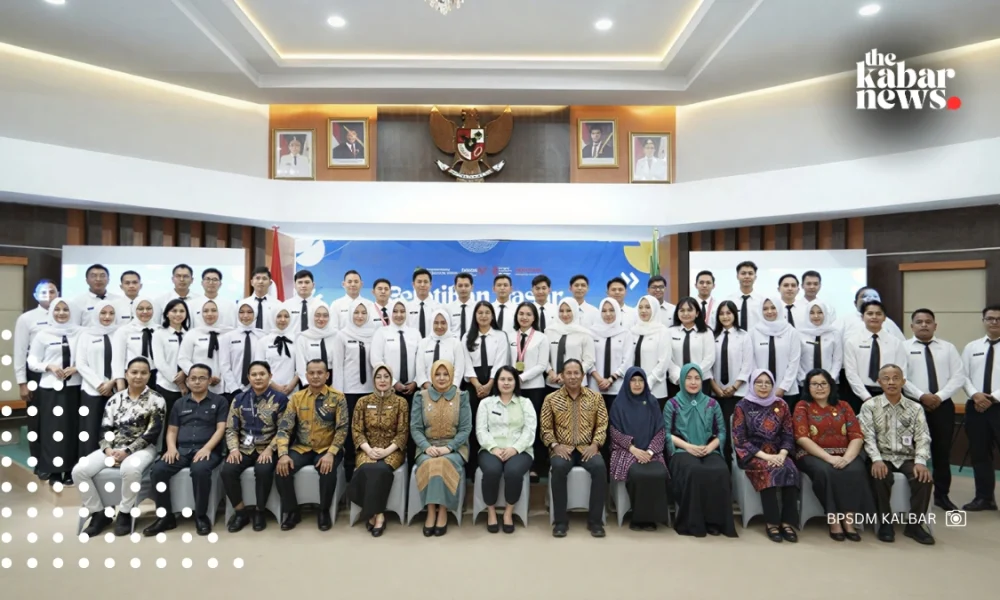
PONTIANAK, Thekabarnews.com—The head of the West Kalimantan Human Resources Development Agency (BPSDM Kalbar), Windy Prihastari, formally closed the 2026 Basic Training Program (Latsar) for Civil Servant Candidates (CPNS) Groups II and III, Batches V and VI.
Windy was clear about integrity, professionalism & digital transformation in the public service. The conference’s theme was “Core Values of BerAKHLAK and Utilization of Information Technology in Serving Civil Servants.”
The ending ceremony is an important reminder that today the State Civil Apparatus (ASN) must be competent, disciplined, adaptable, professional, people-oriented, and technology-friendly. ASNs must focus on serving public services.
Authorities emphasized that the initiative prepares future ASNs to face the challenges of modern public administration. Meanwhile, it also focuses on maintaining high standards of ethics.
“Public personnel are here to serve the public and to establish public confidence in government institutions,” Windy stated.
Windy claimed that the principles of BerAKHLAK must form the center of ASN work culture. These principles are service-oriented, accountable, competent, harmonious, loyal, adaptive, and collaborative.
“We need ASNs who are problem solvers, responsive to change, and leverage digital tools to drive efficiency and transparency,” she said.
BerAKHLAK is the national core value framework for Indonesian civil workers, namely service orientation, accountability, competence, harmony, loyalty, adaptability, and collaboration.
The plan was released as part of a major restructuring of the bureaucracy. This effort aims to raise professionalism and public satisfaction with government services.
“Now the civil service has got to master the technology,” Windy remarked.
As more and more public services go online and are linked to databases, faster responses from consumers are required. Therefore, she said digital literacy is now crucial.
She said that ASNs who did not adjust to the rise of technology would become barriers to reform in the public sector. They would become obstacles instead of catalysts.
She stressed the importance of applying the concepts gained during the course in their everyday work situation.
The basic training program is the first stage in creating the attitude and professional identity of new civil servants. This process comes before their full integration into government institutions.
The program instructed the participants on leadership development, discipline building, ethics education, and service competency upgrading.
The effectiveness of bureaucratic reform is not only in legislation. It is also in the quality of young ASNs that enter public organizations, experts say.
Local authorities are entrusting the next generation of civil servants with the task of regaining public confidence. In addition, they are enhancing service delivery and placing a greater emphasis on ethics and digital skills.
The cancelation of the 2026 Latsar CPNS program is part of a wider national effort to reform Indonesia’s bureaucracy. The goal is to become more efficient, transparent, and customer-oriented.
The lesson for West Kalimantan is apparent: the modern ASNs must have integrity. They must also be competent and brave to adapt to change.





No Comment! Be the first one.