



Pupuk Indonesia launches Rp77 trillion mega project to build seven fertilizer plants by 2029
Thekabarnews.com—Pupuk Indonesia Holding Company (PIHC) has officially announced an investment of Rp77 trillion to build seven new fertilizer plants throughout Indonesia. This is one of the country’s...

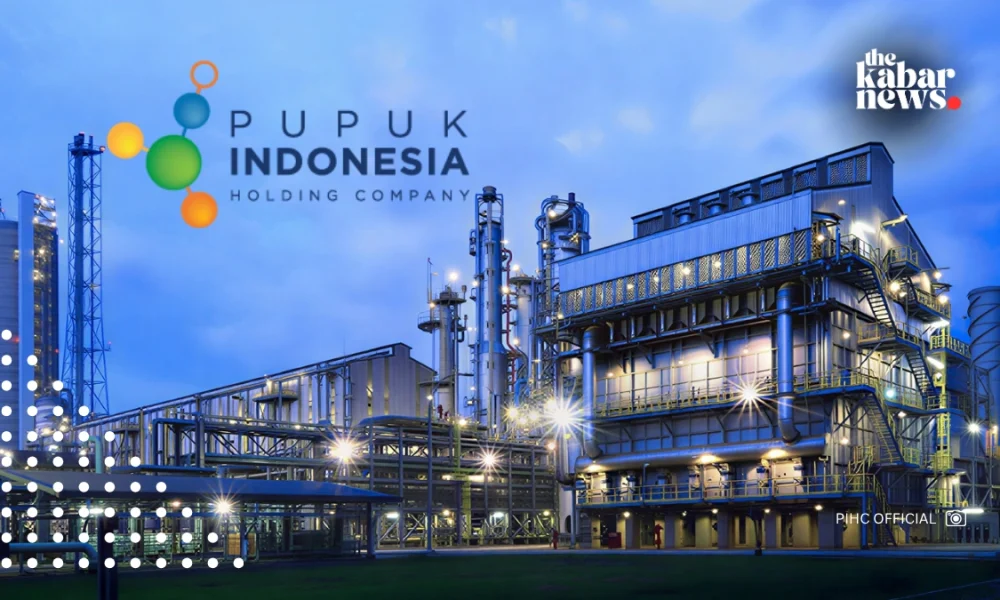
Thekabarnews.com—Pupuk Indonesia Holding Company (PIHC) has officially announced an investment of Rp77 trillion to build seven new fertilizer plants throughout Indonesia. This is one of the country’s largest industrial expansion projects to boost national food security.
New factories will develop in Palembang, Cikampek, Gresik, Bontang, Lhokseumawe, Fakfak, and East Kalimantan, with full operations targeted by 2029.
The project will produce a broad range of fertilizer and chemical products, including ammonia, urea, NPK fertilizer, and soda ash. These products are considered essential to support agriculture, industrial supply chains, and long-term economic resilience.
The company officials said the expansion is not only an industrial growth strategy. Moreover, it is a major national step toward securing stable fertilizer availability for farmers, reducing dependency on imports, and strengthening domestic production capacity.
The additional production capacity is expected to improve the management of Indonesia’s subsidized fertilizer system. This system remains a key part of the government’s agricultural support program.
The company hopes to help stabilize fertilizer prices and ensure farmers have timely access to essential agricultural inputs. They aim to achieve this by strengthening supply management.
PIHC believes the project can strengthen exports, particularly through ammonia and soda ash. These products have strong demand in international agricultural and industrial sectors.
The investment is timely, with global fertilizer markets still facing uncertainty from geopolitical tensions, supply chain problems, and higher raw material costs.
Recently, global energy price volatility and international trade restrictions have posed serious challenges for fertilizer-producing countries. As a result, these challenges are increasing pressure on governments to boost domestic production.
Indonesia, one of Southeast Asia’s largest agricultural economies, relies on stable fertilizer distribution to keep rice production, plantation output, and wider food security in check.
The new plants will help mitigate supply risks and also contribute to the long-term national agricultural productivity, officials say.
The megaproject also helps broader government efforts to build strategic industries and reduce reliance on imported industrial raw materials.
Besides agriculture, products such as soda ash are important for glass manufacturing, detergents, chemicals, and other industrial sectors. Therefore, the project is economically significant beyond just fertilizer production.
The investment could also create significant employment opportunities and spur economic development in the seven project locations.
PIHC said that it’s not just about making the fertilizer. It’s about industrial independence, food security, and long-term national resilience.
The project, anticipated to be fully operational by 2029, represents a significant milestone for Indonesia’s industrial and agricultural future.
With pressures on food supply rising around the world, Pupuk Indonesia’s Rp77 trillion expansion could be one of the most critical strategic investments to secure the country’s supply of fertilizer. This investment will help secure supply over the next decade.





No Comment! Be the first one.