



Engineers propose ‘white light’ traffic signal for self-driving cars
Thekabarnews.com—Engineers are working on a new way to set up traffic lights. This will add a fourth light, a white light, for cars that drive themselves. When self-driving cars reach an...

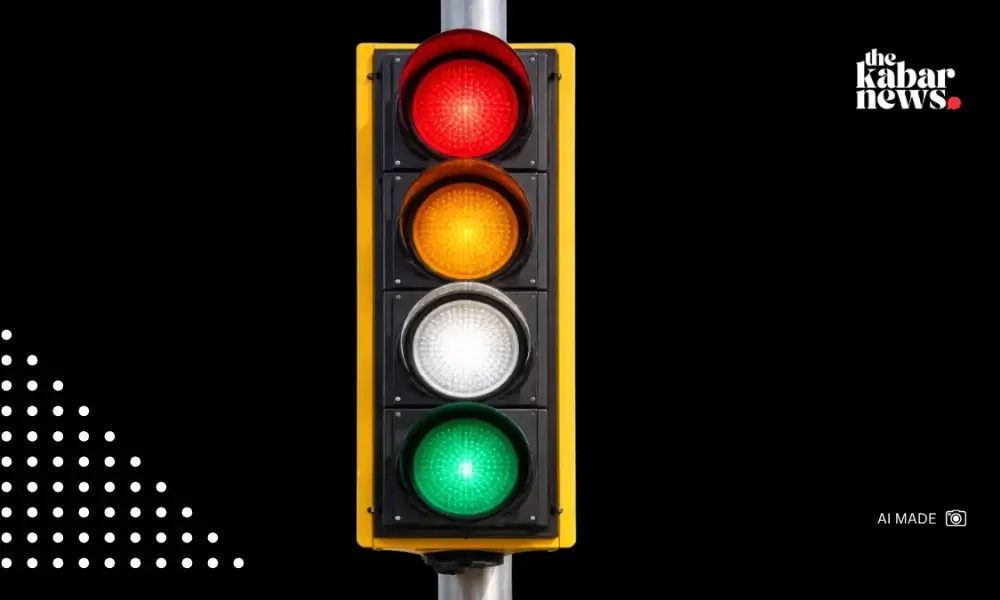
Thekabarnews.com—Engineers are working on a new way to set up traffic lights. This will add a fourth light, a white light, for cars that drive themselves.
When self-driving cars reach an intersection, they will talk to each other to find out how to get through. Self-driving cars would work together to figure out who has the right of way. Then they move in groups that are in sync.
In this system, they would not just use regular stop lights. Instead, the car in front would follow the self-driving car ahead of it.
Vehicle-to-vehicle (V2V) communication technology lets cars talk to each other without wires. If a group of self-driving cars becomes close enough to each other, they can keep traffic moving at an intersection. They do these tasks without a central system.
If there are still too many cars on the road, the system will switch back to regular traffic lights—red, yellow, and green. This is how they work with the way the road is now.
The proposal’s decentralized setup is one of its most intriguing aspects. There used to be a main system that kept track of traffic lights and other information. The new method lets each self-driving car do its computing tasks, which lets them all work together as a network.
This system is stronger because it does not depend on just one point of control. Cars can still work together even if communication with traffic infrastructure is slow or stops.
The initial results from the traffic simulation are satisfactory. Adding a white signal phase to situations that were supposed to look like real-world driving conditions cut the total delays by 40.2 percent to 98.9 percent. This figure is in comparison to regular traffic systems.
You will still reap the benefits, even if you only use it once in a while. Only 10 percent of cars drove themselves, which made things go about 3 percent faster.
When 30 percent of people used it, delays declined by more than 10 percent. Less stop-and-go driving reduces fuel use and helps protect the environment.
The idea is still being tested, even though the results look promising. Until further tests, rule changes, and infrastructure improvements occur, a large number of people cannot use it.
People might be able to use self-driving cars for the first time in places like ports, logistics hubs, or freight corridors, where they can be controlled. Furthermore, there should be more of them there than on the road.
The suggested white light system is a step toward better traffic management. This system is more adaptable and works better with other people as transportation technology improves.
It envisions a future where cars adhere to road rules. Furthermore, cars play a role in establishing this future, even though it has not yet materialized.



No Comment! Be the first one.