



Mojtaba Khamenei named Iran’s supreme leader following death of Ali Khamenei
Tehran, Thekabarnews.com—Ali Khamenei’s father died in a military attack involving the US and Israel on February 28, 2026. Iran has now officially named Mojtaba Khamenei as the new Supreme...

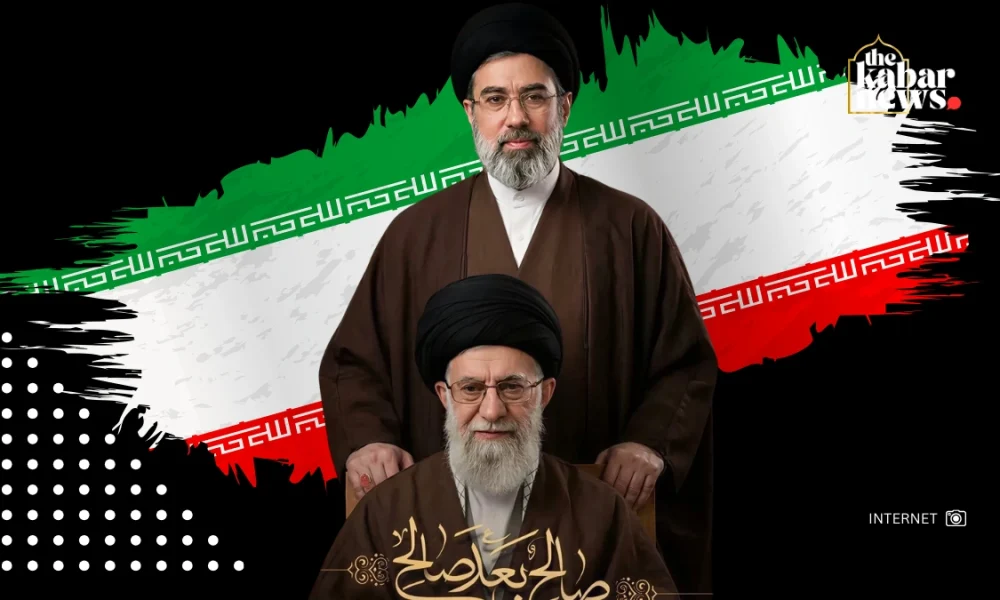
Tehran, Thekabarnews.com—Ali Khamenei’s father died in a military attack involving the US and Israel on February 28, 2026. Iran has now officially named Mojtaba Khamenei as the new Supreme Leader of the country.
International media had been speculating for weeks about who would replace Ali Khamenei as head of the Islamic Republic. This speculation followed more than 30 years with him in charge. News media in the West and Israel had already named Mojtaba Khamenei as one of the top candidates.
The Iranian constitution backs up the decision. It says that the Assembly of Experts, a group of 88 clerics, can choose the country’s highest political and religious leader.
Reports say that the attack that killed Ali Khamenei also killed a number of his family members. Iranian news said that Mojtaba’s wife, mother, and one of his sisters died on the first day of the war.
Mojtaba Khamenei survived the attack because he was not at the site of the bombing.
Mojtaba Khamenei had never held an office or participated in a national election before becoming the Supreme Leader. Most experts, on the other hand, thought he was a strong leader in Iran.
Mojtaba stayed close to the Islamic Revolutionary Guard Corps (IRGC), which is a key part of Iran’s security and political system. This group is quoted in Al Jazeera.
Mojtaba Khamenei had a lot of power, but he did not often speak in public or at political events. Many Iranians knew his name because he was part of the ruling class. However, not many had heard him speak in public.
For the last twenty years, people both inside and outside of Iran have often linked Mojtaba Khamenei to the government’s handling of protests against it.
Reformist politicians were the first to claim that Mojtaba Khamenei was involved in the 2009 presidential election, which resulted in Mahmoud Ahmadinejad being re-elected. There were many protests after the election. These protests made up the Green Movement.
Later, security forces, including the Basij paramilitary units that are part of the IRGC, stopped those protests. Officials at the time said that the protesters were working with people from other countries. This suggested that they were receiving foreign support to undermine the election results, which fueled further tensions and accusations of external interference in domestic affairs.
Mojtaba Khamenei is a hojatoleslam, which is a lower rank than ayatollah in the religious hierarchy. People are currently debating Mojtaba Khamenei’s religious qualifications as a result of this situation.
Analysts do say, though, that this incident happened when Ali Khamenei became Supreme Leader in 1989. At that time, the Iranian government amended the law to allow his appointment. This was despite concerns regarding his clerical rank.
The new leader took over at a very tense time in Iran’s recent history. This change happened right after a lot of military strikes occurred all over the country. Therefore, the situation contributed to political instability and uncertainty regarding the future governance of Iran.
Before Mojtaba was chosen, a temporary leadership council ran the government for a short time. The council included Alireza Arafi, the head of the judiciary, Gholam-Hossein Mohseni-Ejei, and President Masoud Pezeshkian.
People say that Mojtaba Khamenei becoming Supreme Leader is a big deal in Iran’s political history, especially since the country is having problems at home and tensions are rising in the Middle East. As a result, his leadership could significantly influence both domestic policies and international relations in this volatile context.

No Comment! Be the first one.