



Trump slaps 104 percent tariff on Indonesian solar panels, trade tensions rise
Thekabarnews.com—The US government has imposed significant tariffs on solar panel and solar cell imports from several countries, including Indonesia. The purpose of this action is to safeguard...

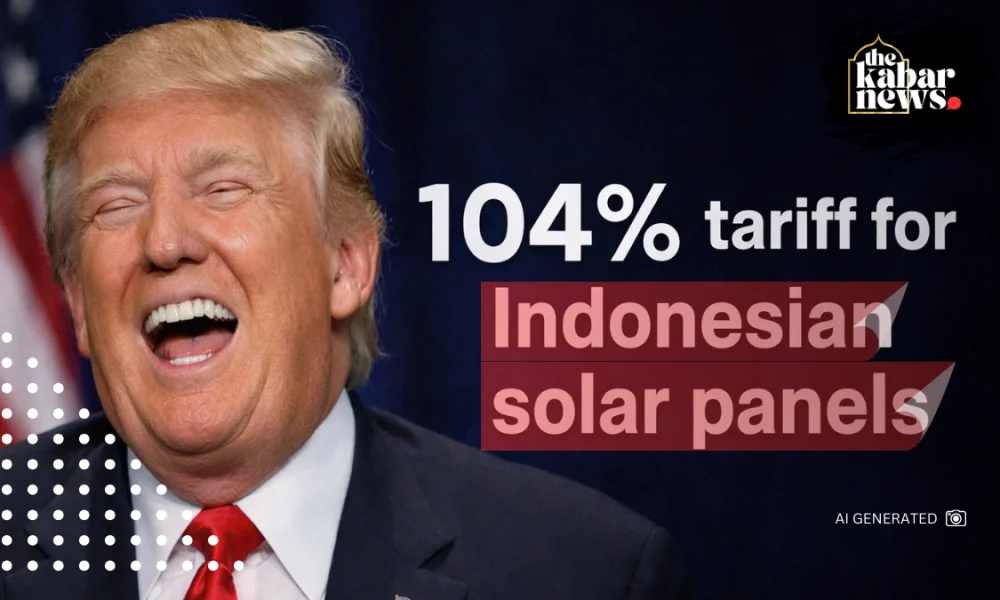
Thekabarnews.com—The US government has imposed significant tariffs on solar panel and solar cell imports from several countries, including Indonesia. The purpose of this action is to safeguard American manufacturers.
During the time that Donald Trump was in office as president, the regulation imposed a countervailing charge of 104.38 percent on solar products manufactured in Indonesia. Notably, US authorities imposed one of the largest tariffs ever on renewable energy imports.
Apart from Indonesia, the United States government imposed a tariff of 125.87 percent on solar panels originating from India. The US also imposed an 80.67 percent tariff on solar products from Laos.
The choice demonstrates that trade conflicts are growing in the renewable energy sector. This occurs as countries work to improve their solar manufacturing sectors.
The policy followed objections filed by the Alliance for American Solar Manufacturing and Trade, which represents several US solar companies.
The association stated that allowing individuals to bring in as many inexpensive solar panels as they desire puts the producers in the US at risk. Furthermore, it makes the solar industry there less sustainable in the long run.
The Department of Commerce (DOC) of the United States of America reports that businesses that transported solar panels from Indonesia, India, and Laos received government funding. This enabled them to sell their products at prices that were significantly lower than those of panels manufactured in the US.
Officials believed that these subsidies made the competition unfair. As a result, they decided to implement countervailing duties.
The purpose of the tariffs is to restore a sense of fairness by compensating for what the authorities in the US consider to be prices that are too low.
Those who are in favor of the proposal believe that the steps will stimulate manufacturing in the US. They also encourage individuals to invest their money in renewable energy sectors in the US.
However, this decision has the potential to have an impact on solar supply chains located all over the world. Although Indonesia is rapidly becoming one of the most important exporters of solar components, the additional tariffs would make it less competitive in the market in the US.
Increasing import duties, according to those who are knowledgeable in the field, could result in higher costs for solar installations in the US.
According to the opinions of trade experts, governments frequently resort to the use of countervailing duties. They do this to deal with allegations of unfair subsidies.
On the other hand, the new tariffs bring to light how difficult it is to find a balance that is fair and appropriate between safeguarding American businesses and encouraging the utilization of renewable energy sources.
This new development will prompt us to closely monitor the global solar energy market. It may also affect how the US interacts with countries like Indonesia that export solar panels.






No Comment! Be the first one.