



Controversial statement by US ambassador sparks Middle East tensions
Thekabarnews.com—Many people in the Arab world are angry about what US ambassador to Israel Mike Huckabee said. People are now more worried about the region’s stability and the future of...
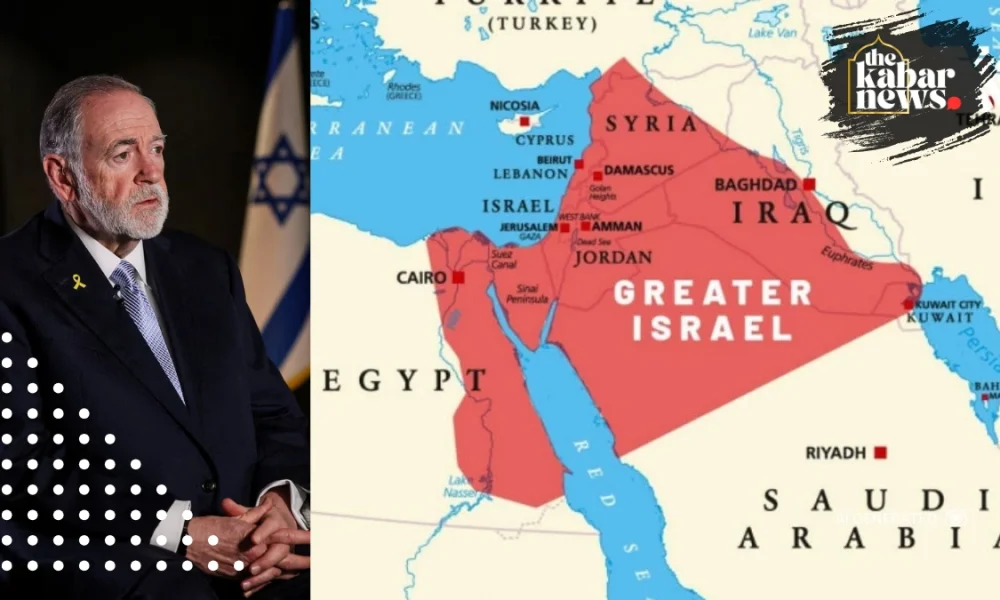
Thekabarnews.com—Many people in the Arab world are angry about what US ambassador to Israel Mike Huckabee said. People are now more worried about the region’s stability and the future of diplomacy in the Middle East.
Huckabee told Tucker Carlson that he thinks Israel should get more land, from the Nile River in Egypt to the Euphrates River in Iraq. Critics have long viewed the idea—often linked to the concept of a “Greater Israel”—as a controversial perspective. It is based on religious and political beliefs.
Huckabee said that God gave Israel the right to the land. People who have seen the speech say it sounds a lot like what Christian Zionists think. Furthermore, politicians and groups from the area quickly spoke out against what he said, saying that using language like that could make things worse in a place that is already unstable.
The Arab League, which has 22 member states, strongly condemned the statement as extreme and not in line with established diplomatic norms. Officials said that talking about expanding territory across several sovereign states could make the area less stable. These moves could also put peacekeeping efforts at risk.
The Organization of Islamic Cooperation (OIC) also spoke out against this. They said that supporting large-scale territorial annexation could make the Middle East unstable for a long time. The group stressed how important it is to follow international law and respect the sovereignty of each country.
Many Arab governments and experts believe that Huckabee’s comments are more than just religious talk. They believe they are a political issue that could impact security in the area.
Observers say that statements supporting broad territorial claims could complicate diplomatic efforts. These efforts focus on achieving a peaceful resolution to the Israeli-Palestinian conflict.
People are also closely watching President Donald Trump’s foreign policy, especially in the Middle East. Analysts say that what high-ranking diplomats say in public often has a lot of symbolic weight. It can also change how people in the region see Washington’s strategic goals.
People from other countries are now waiting for the White House to make an official statement about what the ambassador said. In the meantime, protests and criticism from the public have begun in several Arab capitals.
These developments reflect growing concerns about sovereignty and the future of peace negotiations in the region.
Experts in diplomacy say that we need to be careful when we talk about sensitive geopolitical issues. This is especially true since things are still tense in the Middle East.


No Comment! Be the first one.