



BGN promises phased openings for 3T MBG kitchens
JAKARTA, The Kabar News—The National Nutrition Agency (BGN) has promised to begin opening compliant free-meal kitchens in remote regions. This decision came after meeting partners who protested...
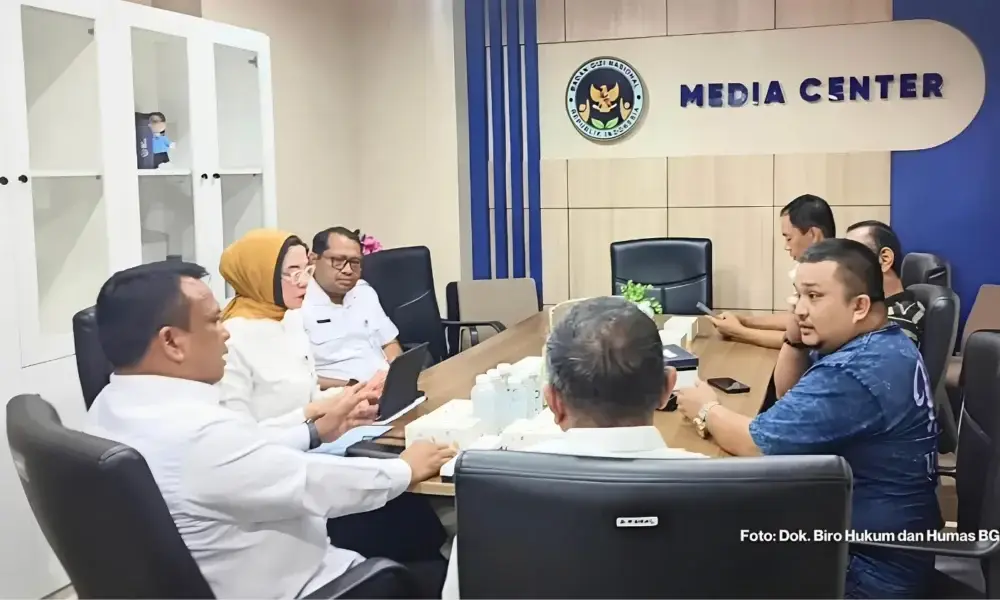
JAKARTA, The Kabar News—The National Nutrition Agency (BGN) has promised to begin opening compliant free-meal kitchens in remote regions. This decision came after meeting partners who protested outside its Jakarta headquarters over delayed investment payments and revised operating rules.
BGN said its leadership met partners from disadvantaged, frontier and outermost (3T) areas on Nov. 17. The talks focused on the verification and operation of Nutrition Fulfillment Service Units (SPPGs). These units prepare meals for the Free Meals (MBG) program.
“Based on the meeting, kitchens in 3T areas that have met all requirements and comply with the latest standards will be opened in stages,” BGN said.
The agency described the meeting as a direct dialogue intended to collect feedback and align the next steps. In addition, BGN said it would inspect each kitchen gradually to ensure that the facilities met its latest standards before allowing operations to begin.
Read also: MBG kitchen partners camp outside BGN over payments
However, the statement did not specify how many kitchens had passed verification. It also did not provide a payment schedule for partners who said they had financed construction with private funds.
Representatives from several provinces began camping outside BGN’s headquarters on Nov. 16. The participants included five partners from West Kalimantan, as well as operators from other parts of Indonesia.
They raised four main concerns: repayment of construction costs, changes to technical guidelines, revised operational cost arrangements and uncertainty over their future partnerships with BGN.
Dabit Ragom, a participating partner from Kapuas Hulu regency in West Kalimantan, said the initial technical guidelines required BGN to process payment after partners completed the physical construction.
“Our kitchens have not started operating. Under the first technical guidelines, BGN was supposed to pay us after we finished the physical construction, but we still have not received payment,” Dabit said.
Read also: Aisha Gaddafi’s personal warning to the Iranians: “I saw my country collapse.”
He claimed that West Kalimantan partners had waited for approximately 11 months. The partners subsequently faced revised requirements that required them to install equipment and prepare the kitchens for full operation. Only after these steps could BGN process the facilities further.
“I want BGN to pay us according to the first technical guidelines and the promise made before we built the kitchens,” he said.
The partners argue that changing the requirements after construction began imposed additional costs on investors. These investors had already committed substantial funds. However, BGN has not publicly confirmed the amount owed to the West Kalimantan group or whether every facility qualifies for reimbursement.
BGN requires kitchens to complete several stages before serving meals. The agency checks building specifications and equipment while also reviewing food handlers’ training and operational readiness.
Read also: Two cultures in urban planning: between data and emotion
In October, BGN activated 480 SPPGs across 16 provinces in 3T areas and regions with high stunting rates. The agency later announced another 980 kitchens for Sumatra, Kalimantan and Bali, according to official BGN data.
BGN has said that activation does not immediately mean full operation. A kitchen may initially serve 500 recipients before gradually increasing its capacity. This can happen only after it demonstrates that it can meet food-safety and service standards.
The agency reported on Nov. 20 that approximately 3,400 additional facilities had entered verification and validation. It also acknowledged that islands and isolated communities require a different model to give kitchen partners greater operational certainty.
“Regions such as remote areas and islands need a specific arrangement so that partners who build kitchens have certainty in running the program,” BGN head Sudaryono said in an agency statement.
You Might Find This Interesting: Sponsored Content
The phased opening agreement could resolve the operational uncertainty for kitchens that satisfy the new requirements. It does not, by itself, settle the partners’ claims over earlier construction costs or changes to the financing scheme.
BGN will therefore need to publish facility-level verification results and explain which technical guidelines govern each partnership. A clear payment mechanism will also be necessary to determine whether the Nov. 17 dialogue produces a lasting settlement or only allows a limited number of kitchens to begin operating.





No Comment! Be the first one.