



Govt to upgrade part-time PPPK status in 2027
JAKARTA, The Kabar News—The Indonesian government and the House of Representatives (DPR) have agreed to gradually convert part-time government employees with work agreements (PPPK) into full-time...

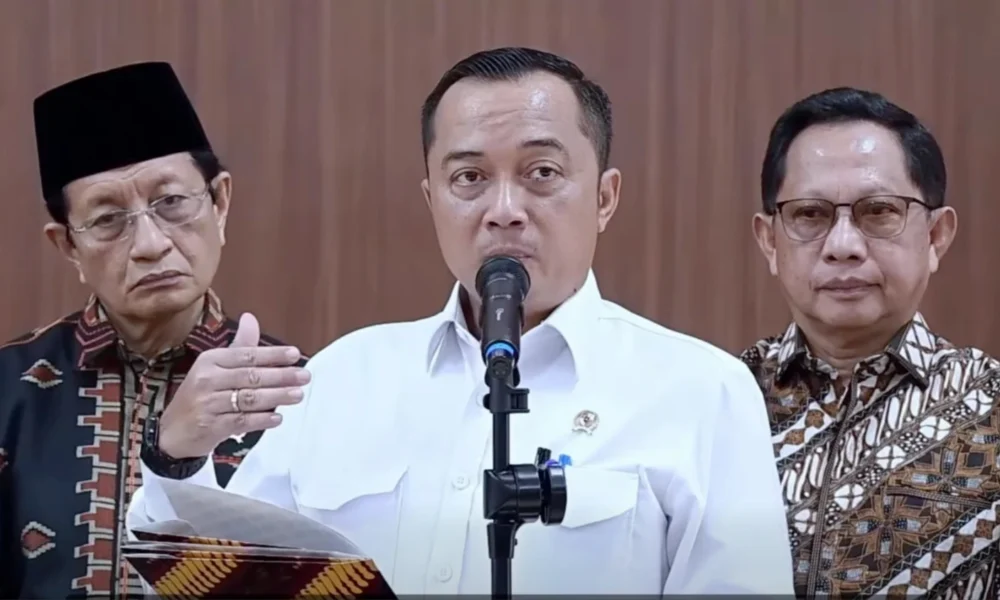
JAKARTA, The Kabar News—The Indonesian government and the House of Representatives (DPR) have agreed to gradually convert part-time government employees with work agreements (PPPK) into full-time employees beginning Jan. 1, 2027.
State Secretary Prasetyo Hadi announced the decision after a coordination meeting with House leaders at the parliamentary complex in Jakarta on Friday, Nov. 6. The policy will cover employees across several professions, including teachers, university lecturers, firefighters and public-order officers.
Health workers and technical personnel will also qualify for the conversion, subject to administrative verification and the staffing requirements of their respective institutions.
“Today, we decided that part-time PPPK employees will be appointed as full-time PPPK employees,” Prasetyo said.
Read also: It’s quite heartless of the govt to pay PPPK teachers only Rp200,000 a month
The government described the agreement as part of its broader effort to resolve employment uncertainty affecting former non-civil-service workers. The conversion will take place in stages because ministries and regional governments must adjust their staffing allocations and budgets.
According to the State Secretariat, the government will begin implementing the policy on Jan. 1, 2027. However, it has not yet published a detailed conversion schedule for each institution or profession.
National Civil Service Agency (BKN) data showed that Indonesia had 947,421 part-time PPPK employees as of Jan. 1, 2026. They represented about 15 percent of the country’s 6.55 million state civil apparatus employees.
The total included more than 170,000 part-time teachers and nearly 82,000 health workers. More than 694,000 served in administrative or operational positions, according to BKN.
Read also: 32,000 MBG kitchen staff will be PPPK in February
The government initially created the part-time arrangement to give legal employment status to non-ASN personnel who participated in the 2024 civil-service recruitment process but did not secure full-time positions.
Under Ministerial Decision No. 16/2025 government institutions may propose full-time appointments after the Administrative and Bureaucratic Reform Ministry approves additional staffing requirements. The government will use this regulation as its administrative framework while preparing the nationwide transition.
The government will also allow eligible full-time PPPK employees to participate in the 2027 civil-servant candidate (CPNS) selection process.
However, the opportunity does not automatically convert PPPK employees into permanent civil servants.
Applicants must still meet the selection requirements and pass the examination. Prasetyo said the government was considering special age provisions for certain professions, but officials have not announced the final rules.
Read also: PPPK employees will not face layoffs despite budget efficiency in Sanggau
The agreement also extends the employment period of non-ASN teachers at public schools whose contracts expire in December 2026. It covers teachers recorded in the national education database and educators working under the Religious Affairs Ministry.
The government plans to provide similar protection for eligible health and medical workers. The extensions were intended to prevent staffing disruptions while agencies implement the new arrangement.
Prasetyo also said the government planned to open a new CPNS recruitment round in November 2026 to fill staffing needs and support national priority programs.
Read also: Man secretly worked 12 remote jobs at once, earning hundreds of thousands of dollars a year
The number of vacancies, participating institutions and application timetable have not yet been released. Prasetyo said the final recruitment scale would take the government’s fiscal capacity into account.
The policy offers greater employment certainty to part-time PPPK workers, but its implementation will depend on clear technical regulations and adequate funding.
The government must also ensure that the transition does not create disparities between ministries or leave financially constrained regional administrations unable to convert eligible workers.

No Comment! Be the first one.