



Australian air tanker joins East Kalimantan firefight
JAKARTA, The Kabar News—Australia began a seven-day aerial firefighting mission in East Kalimantan on Friday, Nov. 6, to support Indonesia’s efforts to contain persistent forest and land fires...

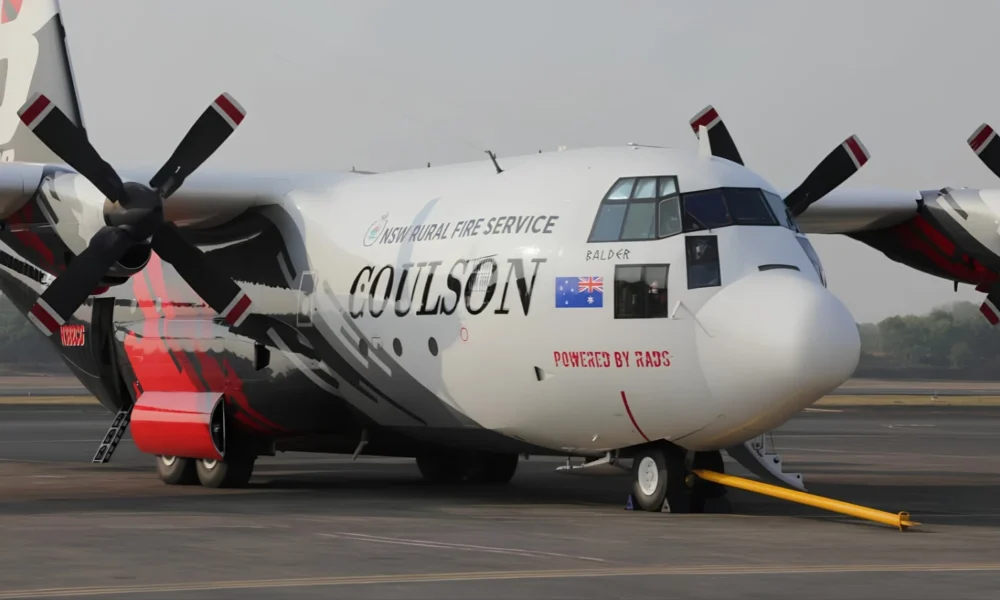
JAKARTA, The Kabar News—Australia began a seven-day aerial firefighting mission in East Kalimantan on Friday, Nov. 6, to support Indonesia’s efforts to contain persistent forest and land fires (karhutla).
The mission, scheduled to run through Nov. 12, involves a C-130 Large Air Tanker operated by the New South Wales Rural Fire Service. Australia also deployed a Cessna Citation lead aircraft and a 20-member team of pilots, aviation crew and firefighting specialists.
Indonesia’s National Disaster Mitigation Agency (BNPB) selected East Kalimantan after a joint technical assessment identified active fires that still required additional aerial support.
The province recorded the country’s second-highest concentration of active fire points after Central Kalimantan on Nov. 5, according to BNPB.
Read also: Rumors of Australia’s entry ban on Donald Trump and his family
“Based on our observations and discussions with the Australian technical team, many fire points remain in East Kalimantan,” BNPB chief Lt. Gen. Kristomei Sianturi said during the mission’s send-off at Halim Perdanakusuma Air Base in Jakarta on Thursday.
BNPB’s operations directorate also reported that the area requiring intervention in East Kalimantan had increased by 53 percent as of 6 p.m. on Nov. 4. This figure refers to land under active response. It does not necessarily represent the province’s total burned area.
Australian Ambassador to Indonesia Rod Brazier said the C-130 could release up to 15,000 liters of water or fire suppressant during each sortie. Authorities expected the aircraft to conduct as many as six sorties per day. However, this is subject to weather, visibility and aviation-safety conditions.
At maximum operational frequency, the tanker could deliver about 90,000 liters per day. BNPB has separately described its daily capacity as reaching approximately 100,000 liters. Still, actual delivery will depend on flight conditions and the distance between water sources, airfields and fire zones.
Read also: Australians shift to bicycles as rising costs make car ownership expensive
“In front of us are two aircraft from the New South Wales Rural Fire Service: a C-130 and a Cessna Citation that will serve as its lead aircraft,” Kristomei said.
The Australian aircraft will complement Indonesian ground crews, water-bombing helicopters and weather-modification operations. The assistance does not replace local command arrangements, with BNPB retaining responsibility for assigning targets and coordinating the national response.
“This deployment of assistance was made possible by close cooperation between Australia and Indonesia, and we fully support the Indonesian government’s efforts to address these fires,” Brazier said.
Australia’s official statement described the mission as specialist aerial firefighting support requested for East Kalimantan.
The operation began amid mourning for three Indonesian Army personnel killed when an Mi-17V5 helicopter crashed during a firefighting mission in Seruyan, Central Kalimantan, on Nov. 4.
Read also: BNPB deploys 39 helicopters as wildfires spread
The helicopter encountered difficulties while collecting water for a water-bombing operation near Tanjung Puting National Park. Five other crew members survived.
Kristomei urged residents and businesses to stop using fire to clear land. He warned that continued burning would undermine the work of ground and aerial crews.
“Let us work together so our children can attend school safely and economic activity can continue without disruption from fire or smoke,” he said. “We must also prevent more people from suffering acute respiratory infections.”
Australia’s support adds heavy aerial capacity to the emergency operation, but aircraft alone cannot prevent new fires.
The mission’s effectiveness will depend on accurate fire coordinates, safe flying conditions and rapid coordination with ground teams. Consistent enforcement against illegal burning will remain essential after the Australian deployment ends.





No Comment! Be the first one.