



Indonesian govt expands KNMP to raise fisher incomes
JAKARTA, thekabarnews.com—The Indonesian government is expanding an integrated fishing-village program. The program aims to improve coastal infrastructure, reduce post-harvest losses and connect...

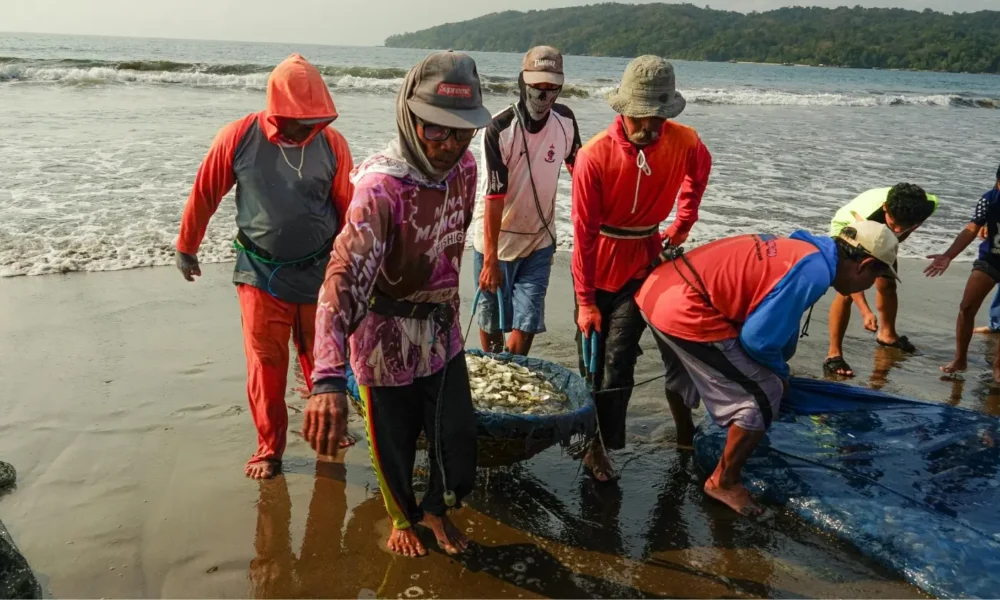
JAKARTA, thekabarnews.com—The Indonesian government is expanding an integrated fishing-village program. The program aims to improve coastal infrastructure, reduce post-harvest losses and connect small-scale fishers with wider markets.
The Red-and-White Fishing Village (KNMP) program brings production, processing, distribution and marketing facilities into participating coastal communities.
The Maritime Affairs and Fisheries Ministry (KKP) is leading the initiative as part of the government’s food security and coastal development agenda.
Government data show that 100 sites have been developed since 2025. The State Secretariat said that 65 first-phase villages were operating, while another 35 were in the second construction phase. The government allocated about Rp1.1 trillion (US$65.7 million) from the 2025 state budget for the initial rollout.
Read also: Kubu Raya regent seeks urgent solution as fuel shortage disrupts economy
KKP said it was building another 1,269 sites in 2026, supported by an allocation of approximately Rp10 trillion. The government aims to establish 5,000 Red-and-White Fishing Villages nationwide by the end of 2029.
Infrastructure varies according to local needs and fisheries potential. Facilities may include jetties, fish-landing shelters, ice plants and cold-storage units. Some villages also receive refrigerated vehicles, boat workshops, fish markets and dedicated fuel outlets.
The facilities address a persistent problem facing small-scale fishers: catches can quickly lose value when villages lack ice, storage or reliable transportation. Therefore, the program seeks to keep fish fresh. It also shortens the supply chain between producers and buyers.
“If farmers need irrigation to increase productivity, fishers need proper jetties, fish-landing sites, cold-chain facilities, cold storage, ice plants and other basic production facilities,” Marine Affairs and Fisheries Minister Sakti Wahyu Trenggono said in August.
Read also: Pontianak is on high alert as tidal flooding threatens early January 2026
However, infrastructure alone does not guarantee higher incomes. KKP has formed an operational task force to help cooperatives manage the facilities, secure financing and develop viable business plans.
“Our focus now is to ensure that all first-phase facilities are used, business units operate and cooperatives are ready to manage them,” KNMP Operational Task Force head Victor Gustaaf Manoppo said.
The Samber-Binyeri village in Biak Numfor, Papua, has become the program’s principal pilot project. KKP data published by the State Secretariat show that monthly fish production there increased by 121 percent. It rose from 552 kilograms to 1,221 kilograms.
Monthly fish sales rose from Rp10.8 million to Rp20.5 million. Meanwhile, average monthly fisher income increased by 89 percent, from Rp6.06 million to Rp11.43 million. The government also reported that fishers extended their average time at sea from nine to 13 days after receiving additional facilities.
Read also: Floods strike Tapanuli Tengah as WALHI questions transparency in revoked permit policy
Across the 65 first-phase villages, operational trials had generated shipments of 273.6 tonnes of seafood worth Rp11.1 billion as of Aug. 14, 2026. According to KKP, products from participating villages also reached buyers in several Indonesian cities.
The expansion now faces a larger test: whether thousands of sites can maintain their equipment, operate financially sound cooperatives and secure stable buyers.
Transparent performance data will be necessary to determine whether pilot locations can sustain the gains they recorded. It is also important to see if they can be replicated across Indonesia’s diverse coastal regions.



No Comment! Be the first one.