



Indonesia’s poverty rate falls to 8.07% in March
JAKARTA, thekabarnews.com—Indonesia’s poverty rate declined to 8.07 percent in March 2026, leaving 22.93 million people below the national poverty line, according to the latest data from Statistics...


JAKARTA, thekabarnews.com—Indonesia’s poverty rate declined to 8.07 percent in March 2026, leaving 22.93 million people below the national poverty line, according to the latest data from Statistics Indonesia (BPS).
The rate fell by 0.40 percentage points from 8.47 percent in March 2025. The number of people classified as poor decreased by approximately 920,000 over the same period, BPS reported.
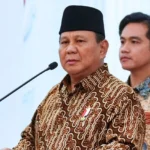
The Government Communications Agency (Bakom RI) highlighted the figures as President Prabowo Subianto and Vice President Gibran Rakabuming Raka reached their second year in office on Oct. 20, 2026.
“The government continues to strengthen poverty-reduction efforts through social protection, the fulfilment of basic needs and community economic empowerment,” Bakom Deputy for Partnerships and Media Relations Kurnia Ramadhana said in Jakarta on Sunday, Oct. 18.
Read also: Indonesia’s poverty rate hits 8.07% as 430,000 exit poverty
The statistics show improvement across the country, but they also show a continuing urban-rural divide. In March, the rural poverty rate reached 10.67 percent, compared with 6.34 percent in urban areas. Rural Indonesia recorded 12.10 million people living below the poverty line, while urban areas recorded 10.83 million.
In March 2026, BPS set the national poverty line at Rp669,235 per person per month. The food expenditure was Rp499,886 or 74.7 percent of the threshold. Non-food essential expenditure was Rp169,349 remaining.
Indonesia also recorded lower inequality in expenditure. The national Gini ratio, a measure of income inequality, dropped to 0.368 in March 2026 from 0.375 a year earlier. The closer the value is to zero, the more equal the distribution; the closer to one, the more unequal.
The latest officially published extreme-poverty figure covers March 2025. BPS estimated that 0.85 percent of the population or 2.38 million people, lived in extreme poverty at that time.
Read also: BPS’ West Kalimantan: The MBG helps lower poverty in 2025
The extreme poverty rate fell from 2.14 percent in 2021 to 0.85 percent in 2025. Over the same period, the national poverty rate declined from 10.14 percent to 8.47 percent.
BPS has cautioned that Indonesia’s national poverty measure differs from the World Bank’s international benchmarks. Both institutions use the National Socioeconomic Survey, but they apply different poverty lines for different purposes.
Under the World Bank’s higher benchmark for upper-middle-income economies, a considerably larger share of Indonesians remains economically vulnerable.
Separately, the government has sought to lower agricultural production costs by reducing the maximum retail prices of all subsidized fertilizers by 20 percent.
The policy took effect on Oct. 22, 2025. It reduced the subsidized urea price from Rp2,250 to Rp1,800 per kilogram and the standard NPK price from Rp2,300 to Rp1,840.
The Agriculture Ministry also simplified distribution regulations to improve farmers’ access to fertilizer. However, available poverty statistics do not independently establish how much this policy contributed to the nationwide decline.
The figures show a measurable improvement, though still 22.93 million Indonesians are below the national poverty line. Maintaining the decline will depend on effective social assistance, stable food prices and policies that bolster household incomes, especially in rural areas.



No Comment! Be the first one.