



Air crews intensify Tanjung Puting wildfire fight
PANGKALAN BUN, thekabarnews.com—Indonesian authorities intensified aerial and ground operations against wildfires in Tanjung Puting National Park on Sunday, Oct. 18, after relocating helicopters to...

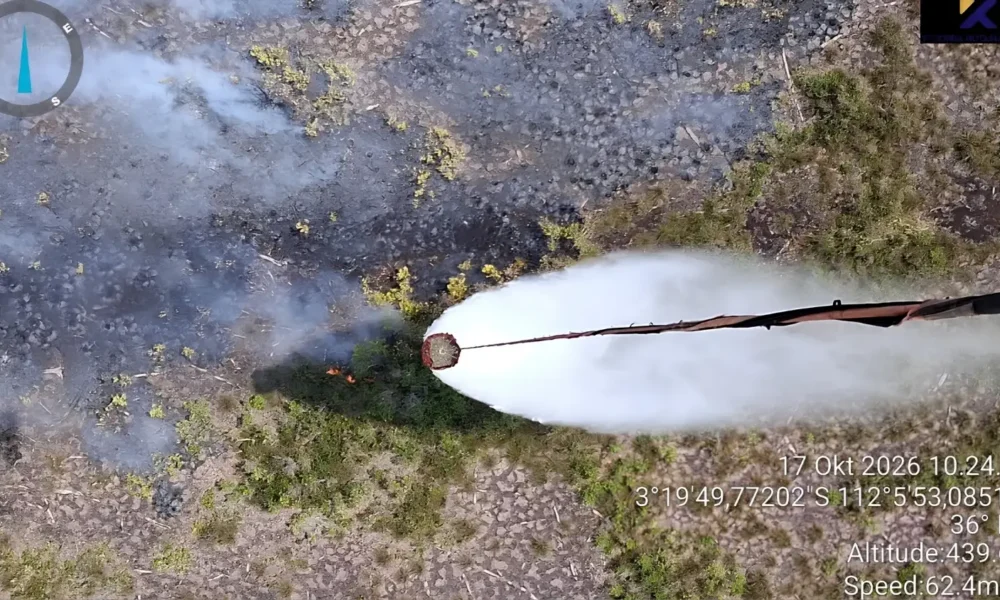
PANGKALAN BUN, thekabarnews.com—Indonesian authorities intensified aerial and ground operations against wildfires in Tanjung Puting National Park on Sunday, Oct. 18, after relocating helicopters to an airport with better visibility.
Forestry Minister Raja Juli Antoni said a helicopter completed 26 water drops over the Sungai Perlu and Tanjung Rengas areas during the first phase of Sunday’s operation. This provisional count exceeded the 16 drops conducted on Saturday. Furthermore, additional missions were planned later in the day.
The government used Kuala Pembuang Airport in Seruyan as an alternative operational base because thick smoke had restricted helicopter flights from other Central Kalimantan airports.
Six water-bombing helicopters were available in the province, but poor visibility around Tjilik Riwut Airport prevented them from operating safely. Authorities subsequently coordinated the deployment of a privately operated helicopter from Kuala Pembuang, where flying conditions were more favorable.
Read also: Raja Juli orders stronger Tanjung Puting firefight
Raja said the government would not force crews to fly in unsafe conditions.
“We would rather not force the operation because doing so could cause casualties. We will not risk the lives of our personnel,” he said, as quoted by Antara.
An Indonesian Air Force helicopter and a Forestry Ministry aircraft repositioned from Syamsudin Noor Airport in Banjarmasin. These aircraft provided further support for the aerial response.
The additional aircraft were expected to operate from Kuala Pembuang, subject to visibility, fuel availability and flight-safety assessments.
Read also: High domestic airfares in West Kalimantan draw criticism, government urged to act
The government recorded 26 water drops in Tanjung Puting on Sunday, according to a field update. The figure remained subject to change as operations continued.
“Every possible effort continues, including strengthening the ground forces,” Raja said.
Ground teams concentrated on locations that aircraft could not reach effectively. In these places, personnel from the Tanjung Puting National Park authority, Manggala Agni, the military, police, regional disaster agencies and volunteer groups used river water and drilled wells to supply portable pumps.
“In the Pesalat and Teluk Pulai resorts, the joint ground team continues to maximize firefighting efforts using water from rivers and drilled wells,” Conservation Area Director Sapto Aji Prabowo said.
Crews also opened access routes toward fire fronts, installed pumps and prepared additional water sources. These measures were intended to support continued suppression and prevent flames from spreading farther into the conservation zone.
Read also: Crews monitor Sanggau hillside after forest fire
Alongside water bombing, authorities continued to coordinate weather-modification operations with the Meteorology, Climatology and Geophysics Agency (BMKG).
The government was also considering experimental dry-ice seeding to reduce dense smoke and improve visibility. However, officials said the method still required evaluation.
Tanjung Puting became a national priority after authorities reported that approximately 513.89 hectares had burned in the park by Oct. 12. This affected area accounted for most of the 639.23 hectares that were then under active response across Indonesia’s six priority provinces.
President Prabowo Subianto ordered special attention for Tanjung Puting because of its status as a national park. The effectiveness of the expanded operation will depend on visibility and water access. Additionally, it will depend on the ability of air and ground crews to contain remaining fire fronts.






No Comment! Be the first one.