



Yudi Suseno says ‘luxury rooms’ are staff homes
BOGOR, TheKabarNews.com—The corrections authority says buildings described by the national Ombudsman as luxury accommodation at Cibinong Class IIA Prison are official residences located within an...

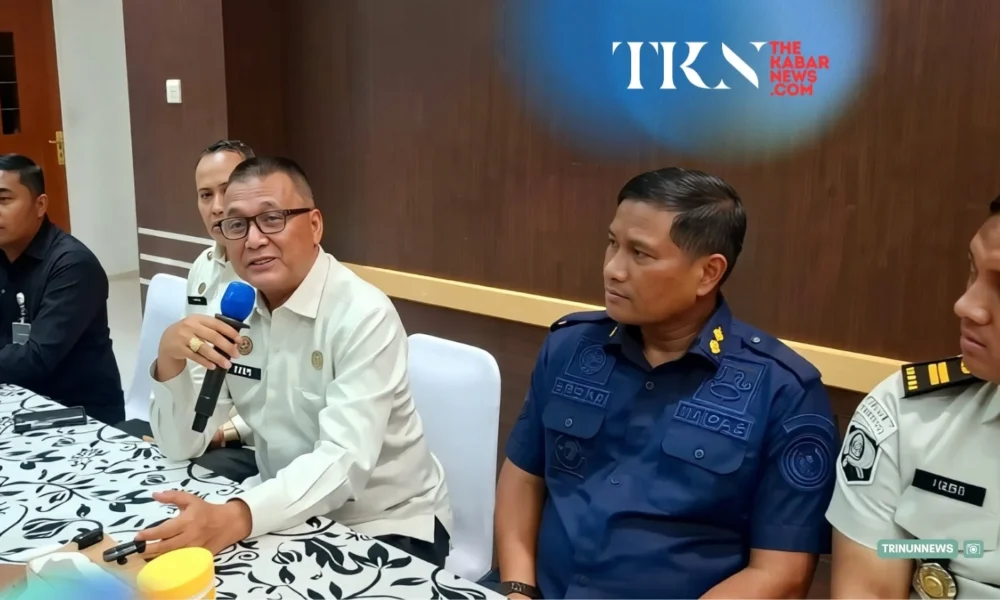
BOGOR, TheKabarNews.com—The corrections authority says buildings described by the national Ombudsman as luxury accommodation at Cibinong Class IIA Prison are official residences located within an inmate-assimilation area. However, an internal team will investigate whether anyone misused them.
West Java Corrections Office head Yudi Suseno issued the clarification at the prison in Bogor regency on Thursday, September 24. This came one day after Ombudsman officials inspected the Pondok Rajeg complex.
“First, the location referred to by the Ombudsman team is an assimilation area, formerly known as the Education and Assimilation Facility (SAE). Several official residences are located there,” Yudi said.
He said the complex contained 11 houses assigned to prison officials under formal administrative decisions. The occupants eligible for such accommodation include Cibinong prison warden Wisnu Hani Putranto.
“The buildings visited by the Ombudsman team were official residences supported by appointment decrees,” Yudi said.
The explanation differs from the Ombudsman’s initial description of the site. Inspectors reported finding about 10 separate units with facilities they considered far better than standard prison accommodation.
The rooms contained residential furniture, televisions and refrigerators. Inspectors also documented fitness equipment, a golf-simulation area under construction and alcoholic drinks inside one refrigerator.
Ombudsman member Fikri Yasin described the facilities as being of “apartment standard.” However, the watchdog said it had not established the identity of every occupant. This means allegations that particular inmates lived in the units remain subject to verification.
Yudi said prisoners participating in assimilation activities could use parts of the SAE area during the day, including for rest periods.
That arrangement, he argued, did not automatically turn the official residences into exclusive inmate accommodation.
Even so, the Corrections Directorate General and its West Java office have formed a team to examine the units’ ownership records and their actual occupants. They are also reviewing reports that inmates may have paid to use them.
“If there are violations or uses that do not comply with the rules, the leadership remains committed to conducting an examination,” Yudi said. “We will take action if a violation is proven.”
The two institutions also gave conflicting accounts of the inspection. Ombudsman officials said prison personnel obstructed their access. In contrast, Yudi said the dispute arose because the regional corrections office had received no prior coordination. He denied ordering staff to block the inspection, as quoted by Metro TV News.
Under Law No. 37 of 2008, the Ombudsman may initiate investigations into suspected maladministration. It may also request information or documents from public institutions.
The buildings’ formal designation does not by itself resolve how officials used them.
The investigation must now compare assignment documents with occupancy records and physical evidence. Only then can authorities determine whether the complex functioned solely as staff housing or provided unauthorized privileges to inmates.





No Comment! Be the first one.