



Nadiem Makarim and Ibrahim Arief: Two young technocrats compared in public spotlight
Thekabarnews.com—The public comparison reveals striking similarities between the personal and professional profiles of Nadiem Makarim and Ibrahim Arief. It depicts both as members of a younger...


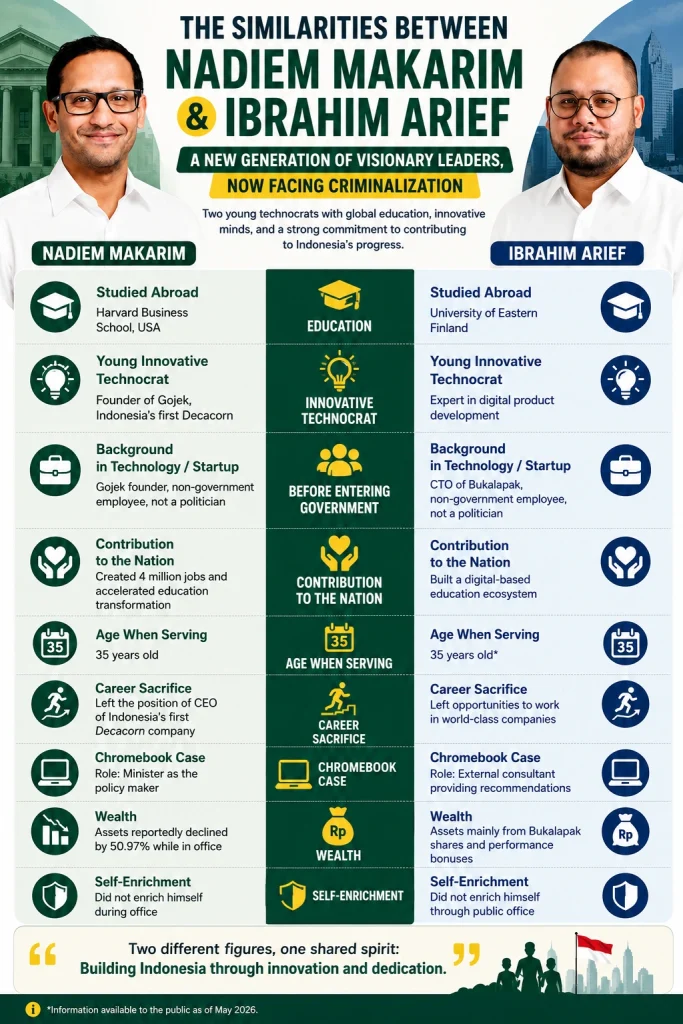
Thekabarnews.com—The public comparison reveals striking similarities between the personal and professional profiles of Nadiem Makarim and Ibrahim Arief.
It depicts both as members of a younger generation of technocrats who entered public service with reformist visions. However, legal and political scrutiny subsequently targeted them.
The public viewed both of them as educated professionals with international academic backgrounds.
Ibrahim is reported to have studied at the University of Eastern Finland. Nadiem studied at Harvard Business School in the United States.
Moreover, the comparison highlights that both are young, innovative technocrats from the tech and startup world. They are not from the typical political crowd.
Nadiem founded Gojek, Indonesia’s first decacorn startup, before joining the government as the education, culture, research, and technology minister.
Meanwhile, Ibrahim is a digital product development specialist and former chief technology officer (CTO) of Bukalapak. Bukalapak is one of the country’s leading tech firms.
The public also states that neither of the men was a career politician. They also had a career in the private sector.
So the public service is a contribution to the nation, not a political ambition.
Nadiem earned recognition for creating millions of jobs and accelerating the transformation of education. Meanwhile, Ibrahim helped build a technology-based education ecosystem.
They also note another similarity, age. Both reportedly entered public service at around 35 years old. This adds a bit more credence to the story of young professionals taking on national roles.
The post also highlights the huge career sacrifices both have made. Nadiem is the head of one of Indonesia’s largest startups. Ibrahim reportedly turned down opportunities to join major global corporations.
The public also addresses the controversy surrounding the Chromebook procurement issue.
The public said Ibrahim was an outside adviser and did not make the final decision. Nadiem was a policymaker in his ministerial capacity.
Nadiem’s wealth plummeted by over 50 percent during his term. Ibrahim’s wealth was derived mostly from stocks in Bukalapak and performance bonuses. This means neither of them misused their public office for personal gain.
Online reactions to the comparison have been mixed. Proponents of the infographic say it is a defense of merit-based leadership and against the perceived unjust criminalization of young reformist professionals.
But critics say public office demands accountability, regardless of a person’s education or success in the private sector.
The larger problem is Indonesia’s chronic tension between technocratic leadership and political accountability.
Nadiem and Ibrahim represent, to the public, the clash between innovation, power, and public trust. This clash often occurs under the spotlight of the nation.






No Comment! Be the first one.