



Jumhur Hidayat as environment minister: Can an activist survive inside power?
EDITORIAL, Thekabarnews.com—Indonesian President Prabowo Subianto made one of the most politically fascinating cabinet appointments of 2026. He appointed Jumhur Hidayat as the environment minister. ...

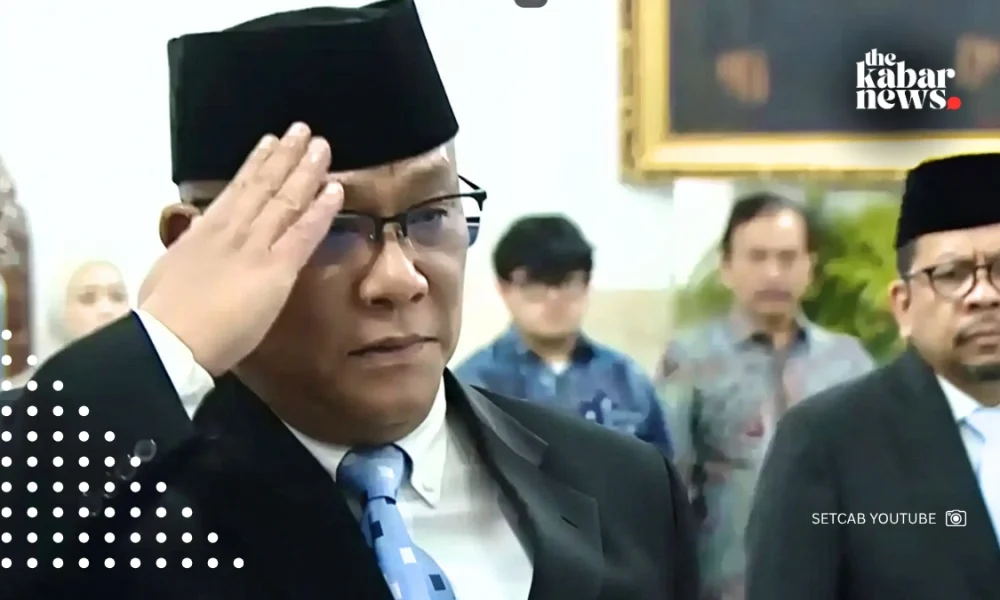
EDITORIAL, Thekabarnews.com—Indonesian President Prabowo Subianto made one of the most politically fascinating cabinet appointments of 2026. He appointed Jumhur Hidayat as the environment minister.
The reason is simple. Jumhur is not just a bureaucrat walking into a ministerial office. Instead, resistance, confrontation, and ideological struggle shaped him into a lifelong activist with strong political convictions.
The atmosphere of his very inauguration was symbolic. Among the audience was his close friend Rocky Gerung, a regular in Indonesia’s public intellectual firmament. Rocky is known for his acerbic criticism and disruptive ideas. President Prabowo welcomed him warmly in a blend of formal ceremony and political symbolism.
But the bigger question is not ceremonial; it is substantive. Will Jumhur be the idealistic activist he has always been? Or will he be another bureaucrat lost in a system that often defeats reformers?
I’ve known Jumhur for more than three decades, since the 1990s, shortly after he came out of prison. His political career can be divided into two main periods. The first was the era of in-your-face activism.
Jumhur was a student who was always at the forefront of defending farmers’ rights and fighting forced evictions of farmers from their land. The Badega, Kacapiring, Cimacan, and Kedung Ombo cases in 1988 were more than just political events. They were battles that forged his character. It was this rebellious phase that eventually saw him land in prison.
Then he stood for a type of frontal activism that would not compromise. He challenged state repression directly, risking arrest, intimidation, and institutional exclusion. His activism was founded on moral economics: standing with common people against structural injustice. Then Jumhur entered the second phase, what I call the institutionalization of ideas.
He shifted from protest to policy work, joining nongovernmental organization (NGO) movements with senior figure Adi Sasono. I still recall instructing him on how to properly tie a tie during a training session in Malaysia—an experience he continues to joke about to this day. As a result, he underwent a subtle transformation, transitioning from a street activist to a policy operator.
His journey continued as he entered the orbit of the former president B. J. Habibie through the Indonesian Muslim Intellectuals Association (ICMI). Later, he led CIDES, a policy institution that provided strategic ideas to the presidency. It was a tangible shift from conflict to conciliation. It was a movement from demonstration to legislation.
Jumhur then entered the state structure in earnest, working as the Indonesian Agency for the Protection of Indonesian Migrant Workers (BP2MI) head from 2007 to 2014. But even in power, his political strand was consistent: pro-people policies, economic justice, and closing the gap between society and the state. Therefore, his appointment as the environment minister is significant.
Indonesian environmental politics is about more than forests and emissions. The problem is about mining interests, land conflicts, industrial pollution, oligarchic power, and the permanent tension between economic development and ecological justice.
This ministry is one of the most difficult places for an activist to maintain integrity. They must navigate mining interests, land conflicts, and oligarchic power while defending ecological justice.
Now the real game begins. Can Jumhur change environmental policy without compromise to the bureaucratic system? Can he serve the public interest inside a political machine built on negotiation and transactional power? My answer—and perhaps my hope—is yes, but not in the old activist mode.
There is no place for romantic activism with idealism floating in the clouds. Power needs skill, patience, and a systematic approach. He’s gone from protesting outside the palace to making policy inside. Such consistency is the true transformative factor.
The hardest thing any activist can do is to be consistent. Many come to power promising to change things. Yet they only sell their ideals to remain in politics. They end up defending the system they used to fight against. Often, they justify their actions as necessary compromises for political survival.
That will not happen to Jumhur. He doesn’t have to be noisy. He has to mind his P’s and Q’s. History judges activists by whether they kept their principles when they assumed power, not by how loud they shouted. (By: Didik J Rachbini)
……….
Do you have an opinion on the issues that are happening right now? If you would like to submit your article by email to thekabarnews@gmail.com




No Comment! Be the first one.