



Bukhara 1220: Genghis Khan’s assault on a sacred city
Thekabarnews.com—In early 1220, Genghis Khan and his Mongol army captured Bukhara, one of Central Asia’s most important centers of Islamic learning and commerce, during their invasion of the...

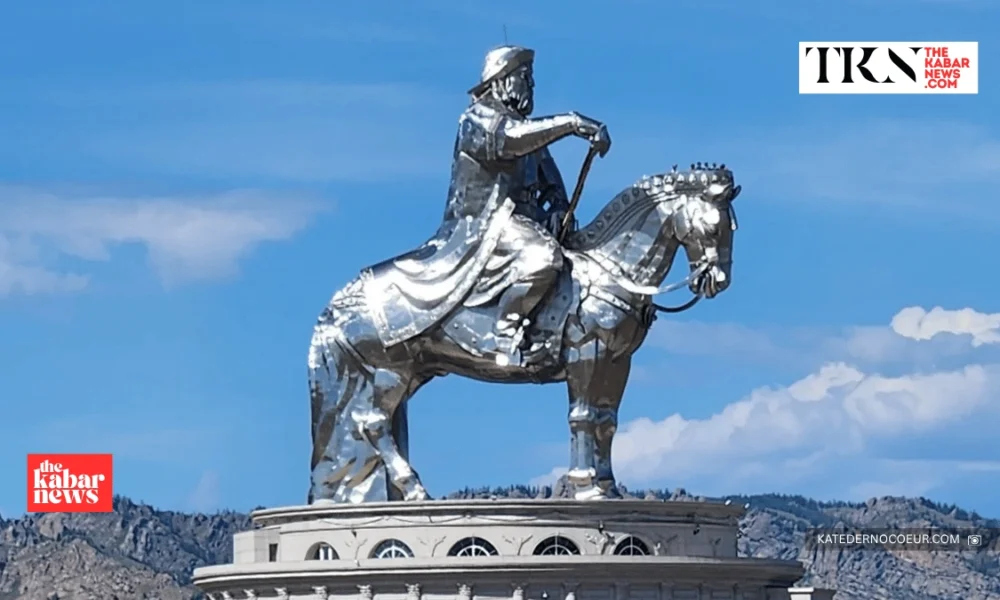
Thekabarnews.com—In early 1220, Genghis Khan and his Mongol army captured Bukhara, one of Central Asia’s most important centers of Islamic learning and commerce, during their invasion of the Khwarazmian Empire.
Khwarazmian officials seized a Mongol merchant caravan at Otrar in 1218, and Shah Muhammad II later ordered the execution of a Mongol envoy who protested the seizure, prompting Genghis Khan to launch a coordinated military campaign. The incident made war effectively inevitable, according to the Encyclopaedia Iranica.
Academic chronologies differ slightly because of medieval calendar conversions. Encyclopaedia Iranica, citing historian Ibn al-Athir, dates Bukhara’s capture to February 10, 1220, with its citadel falling 12 days later.
An Oxford Research Encyclopedia study places Genghis Khan’s arrival during the campaign in March 1220. Both accounts firmly locate the conquest in early 1220.
Persian historian Ata-Malik Juvayni provides the most influential account in Tarikh-i Jahangushay (The History of the World-Conqueror).
Juvayni wrote several decades after the event and later served in the Mongol administration, meaning his narrative is indispensable but not an eyewitness transcript.
According to Juvayni, Genghis Khan rode into Bukhara’s congregational mosque and asked whether the building was the sultan’s palace. After residents told him it was the house of God, Genghis Khan dismounted and climbed the pulpit.
Juvayni attributes this warning to the Mongol ruler: “I am the punishment of God. Had you not committed great sins, God would not have sent a punishment like me upon you.”
The chronicle says Mongol troops emptied the Qur’an cases, used them as horse-feeding troughs, and scattered and trampled the sacred pages.
Mongol troops brought musicians into the mosque and forced prominent residents to care for their horses. Juvayni documented the episode in The History of the World-Conqueror.
After capturing the city, Mongol troops expelled its residents, looted their property and set Bukhara ablaze. Mongol troops killed the remaining defenders after capturing the citadel, according to Encyclopaedia Iranica.
The Mongols subsequently assigned Bukhara’s skilled craftsmen to different divisions of their empire.
Bukhara’s fall struck at a city renowned for scholarship, trade and Islamic theology. It was also the birthplace of ninth-century hadith scholar Imam Muhammad al-Bukhari.
The city nevertheless recovered. Reconstruction began under Mongol-appointed administrators, although archaeological and economic evidence indicates that full recovery was slower than Juvayni suggested.
Islam also spread among later Mongol elites: Berke of the Golden Horde adopted Islam before 1253, while Ghazan Khan’s conversion in 1295 established Islam more firmly within the Ilkhanate.
Today, Bukhara’s historic center is a UNESCO World Heritage Site. UNESCO describes the more than 2,000-year-old Silk Road city as a major center of Islamic culture whose surviving urban heritage demonstrates its ability to endure conquest, destruction and political upheaval.
Bukhara’s legacy ultimately outlasted its conqueror: Genghis Khan’s empire fragmented, while the scholarship associated with Imam al-Bukhari continues to be studied worldwide. (UNESCO)





No Comment! Be the first one.