



Artificial intelligence reshapes export landscape in Japan, South Korea, and Taiwan
Thekabarnews.com—Northeast Asia is turning into a two-speed economy. AI technologies are rapidly developing, and high-tech exports vastly outstrip many traditional manufacturing exports. Economists...

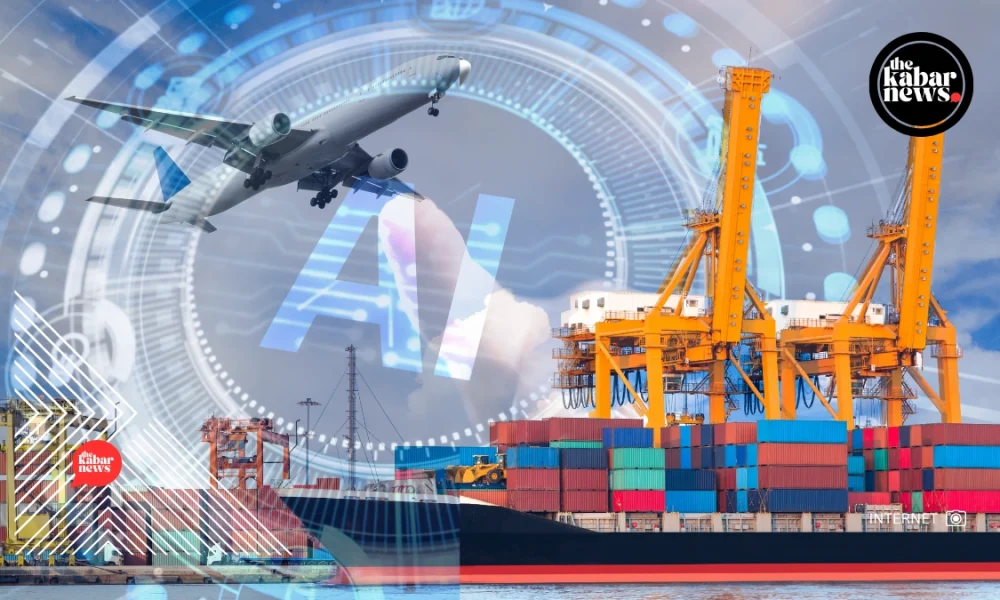
Thekabarnews.com—Northeast Asia is turning into a two-speed economy. AI technologies are rapidly developing, and high-tech exports vastly outstrip many traditional manufacturing exports.
Economists and business analysts increasingly speak of the region’s export industries running on two different tracks. The worldwide AI revolution has generated an unprecedented demand for data center hardware, cutting-edge semiconductors, high-performance computer components, and other tech products.
Costs are going up, competition from China is growing, and the demand for traditional manufacturing industries is falling around the world. Taiwan is one of the biggest winners in the AI boom.
The island economy boomed, expanding 3 to 4 percent a year in good times. Moreover, the global AI investment cycle has disproportionately impacted Taiwan’s economy. It has grown by some 14 percent due to demand for AI-related technology and exports of advanced semiconductors.
Semiconductors are the lifeblood of the nation’s supply of chips for AI applications, cloud computing, and next-generation digital infrastructure.
Global computer companies are racing to improve their artificial intelligence, which is excellent news for Taiwan’s advanced semiconductor makers. As a result, these companies have seen a surge in demand.
However, the industrial landscape is only one aspect of the narrative surrounding the evolution of technology. But the traditional manufacturing sectors in Japan, South Korea and Taiwan are feeling the squeeze.
Trade data show that the bilateral trade balances of all three economies vis-à-vis China have been deteriorating since 2022. This is because Chinese companies face increased competitive pressure in a wide range of sectors.
China has moved up the value chain in electronics, machinery, electric vehicles, batteries, renewable energy equipment, and industrial products.
That means Chinese suppliers are increasingly competing with firms in nearby economies. They compete not just in low-cost manufacturing but in the more profitable parts of the industrial sector.
The corporation needs to move into more complex manufacturing to counter these competitive challenges.
Japan, South Korea, and Taiwan are among those who have sustained their economic edge for decades. They have done so through innovation, R&D investments, engineering excellence, and technology leadership.
AI has accelerated this paradigm and raised the demand for products. These products require a high level of expertise and sophisticated production capabilities.
But too much concentration in a few fast-growing sectors could leave the economy vulnerable. The export of AI-related goods is today a major source of revenue and investment.
Future growth could depend on demand for technology, geopolitical tensions, supply chain disruptions or changes in the global investment cycle.
Governments across Northeast Asia are trying to revive traditional industries and build more resilient economies.
Governments are putting big money into digital transformation and innovative manufacturing, green technology, and workforce development initiatives. They seek to get industry to adapt to changing global conditions.
The divide between the successful AI-driven companies and the failing old-world industries is just a symptom. It is evidence of the tectonic shift in the world economy. The future economic competition will be about technology, innovation, and industry development, not manufacturing.
Taiwan, Japan, and South Korea should seize opportunities presented by the growth of AI. At the same time, they should maintain a diversified and sustainable industrial base.
AI is revolutionizing global trade, and Northeast Asia will continue to be at the heart of the 21st century’s most profound technological and economic transformation.





No Comment! Be the first one.